
Human-in-the-Loop Oversight
Keep AI moving while keeping important decisions under human control.
Talk to Zech, live- AI Decision Review Workflows
- AI Approval & Authorization Workflows
- Confidence-Based Escalation
- Risk-Based AI Escalation
- Exception Management
AI can analyze vast amounts of data, detect patterns, categorize cases, provide recommendations, and automate repetitive tasks. However, not all decisions should be acted upon without review.

ZechionAI creates workflows for human-in-the-loop oversight that automatically assign high risk, policy controlled, uncertain, or sensitive decisions to appropriate reviewers. Your teams remain engaged when it counts, AI takes care of the mundane tasks at scale.
The volume is handled by AI. The judgment is retained by people.
Introduction: The Importance of Human Oversight
Do not eliminate humans from all decisions.
There are some business processes which are simple enough to be managed by the AI within certain rules. Others include exposure, information sensitivity, regulatory issues, customer issues, safety issues, or situations that are not within usual operating procedures.
What is Human-in-the-Loop AI?
The Human in the Loop (HiL) operating model is a process where humans take active steps in reviewing, approving, changing, rejecting or escalating decisions or recommendations made by AI.
Here are the steps of a typical workflow:
- AI analyzes
- Evaluation of confidence and risk
- Determination of the review requirement
- Human review when necessary
- Approval, change, rejection, or escalation of the decision made
- Ongoing improvement informed by results
The criteria for reviewing can be established in line with actual needs of the organization, as opposed to imposing the same amount of human effort on each instance.
- 01
Human-in-the-Loop
An individual checks the selected outputs from AI for an action before taking action.
- 02
Human-on-the-Loop
People are responsible for monitoring AI performance and take action when performance, risk, or exception matters arise.
- 03
Human-in-Command
Humans have final say over critical AI-driven processes and decisions.
The right oversight model for each workflow can be identified from a range of possibilities with the help of ZechionAI, considering the level of risk, business policy, as well as the contribution of AI in the decision.
The future of ZechionAI Human Oversight
AI Process the request
Available information is fed into the AI system, and a suitable output, such as a recommendation, classification, prediction, summary, response or proposed action, is generated.
Step 2 is the Confidence & Risk Evaluation
The workflow considers relevant elements like:
- Confidence score
- Business rules
- Risk level
- Data quality
- Transaction value
- Regulatory requirements
- Decision sensitivity
- Exception conditions
All these factors can be used to calculate if automated processing is appropriate or not.
Automated Decision or Escalation
The lower-risk cases which meet specific conditions can proceed with the automated workflow.
If the case is escalated, it is referred to a human reviewer.
Human Review
Authorized reviewers can:
- Approve a recommendation
- Reject a recommendation
- Edit an AI generated result
- Request additional information
- Escalate a case
- When allowed, override the AI recommendation
Reviewing permissions can be organized by roles, departments, expertise and review authority.
Decision Logging
Important decisions can be recorded with information such as:
- AI recommendation
- The identity or role of the reviewers.
- Final decision
- Explain why you made the decision.
- Timestamp
- Relevant supporting information
- Override details
This helps to establish a more transparent version of decision making.
Continuous Improvement
Review outcomes can be analysed to find:
- Recurring AI weaknesses
- Workflow problems
- Repeated exceptions
- Data-quality issues
- New business rules
- Development and/or process improvement opportunities
User feedback is not per se model training data. ZechionAI can assist with setting up the necessary process to determine which feedback will be utilized for assessment, process improvement, or future model building.
Human-in-the-Loop Sub-Services
ZechionAI can create and deploy customized oversight functions or integrate them into enterprise processes.
AI Decision Review Workflows
Design formal review systems for decisions made by AI that still need a human to act.
AI Approval & Authorization Workflows
Ensure that sensitive AI-based actions must be authorized by authorized persons before they are executed.
Confidence-Based Escalation
The results of the routes were sent to human reviewers if the confidence limit was not met.
Risk-Based AI Escalation
Escalate cases based on business-defined risk categories and sensitivity for decision.
Exception Management
Detect situations that are not normal AI behavior, business rules, or patterns.
Human Override Management
Enable control and logging of overrides by authorized personnel of AI recommendations.
AI Output Validation
Check the results of AI-based recommendations, classification, summaries or decisions before executing them.
Human Review Dashboards
Centralized views of pending cases, priority, confidence, risk, reviewer status and workflow progress.
Reviewer Work Queues
Organize cases according to:
- Priority
- Risk
- Department
- Expertise
- SLA
- Case type
Approval Routing
Automatically route cases to the right employee, manager, expert or compliance officer.
Multi-Level Approval
Support workflows that need a single or multiple levels of authorization.
AI Exception Handling
Develop formal processes for instances when the AI is not confident enough or appropriate enough to handle them.
Human Feedback Capture
Record reviewers' verdicts and comments in organized structures for analysis.
AI Quality Assurance
Review the output of AI solutions against agreed quality requirements and operational expectations.
AI Audit Trails
Keep logs of critical AI recommendations, human actions, approvals and overrides, and final results.
Decision Explainability Support
Present reviewers with relevant information and supporting evidence needed to assess an AI recommendation.
Policy-Based AI Controls
Link AI actions to business policies, approvals, thresholds and business rules.
AI Governance Workflows
Provide internal procedures for accountability, review, escalation, documentation and governance of AI.
Create model Monitoring & Review Triggers
Relate model performance signals and operating conditions to the right human intervention workflow.
Human Review SLA Management
Know how long it takes for reviews to be completed, workload, aging cases and overdue reviews.
Reviewer Performance Analytics
Review volume, outcomes, review overrides, agreement rates and operational trends analysis.
AI-Human Agreement Analysis
Recognize points where AI and reviewers often agree or disagree, so that organizations can better understand where there is more need to evaluate.
Escalation & Incident Management
Define clear escalation procedures for issues, unexpected, and high-risk AI-generated content.
Key Capabilities
These could be part of ZechionAI human oversight solutions:
- Confidence thresholds
- Risk scoring
- Escalation rules
- Human approval
- Human override
- Exception queues
- Reviewer assignment
- Role-based access
- Multi-level approvals
- Decision logging
- Audit trails
- SLA tracking
- Review analytics
- Feedback capture
- Performance monitoring
- Workflow integration
- API integration
- Dashboard reporting
- Governance controls
Type and level of capabilities will vary by application of AI in a business process, risk, and technology environment.
Business Use Cases
Fraud Detection
- AI identifies potential frauds
- Investigator review made
- Approved, rejected, or escalated case
AI can detect suspicious patterns at large scale, while investigators will manage cases needing more context.
Claims Processing
- Claim is detected as potentially invalid by AI
- Claim specialist reviews the claim
- Action is taken based on the claim specialist's review
This can alleviate manual workload on routine cases and maintain expert review for exceptions.
Refund Management
If the refund is recommended by AI, it is approved for a routine refund; otherwise, the high value or unusual refund needs to be approved.
Different approvals can be established depending on the value and risk.
Customer Communications
Employee reads a response and escalates to a sensitive case if necessary, then AI generates or classifies response for communication.
This is especially advantageous in complaints, disputes, when the customer is vulnerable, or if the situation calls for business judgment.
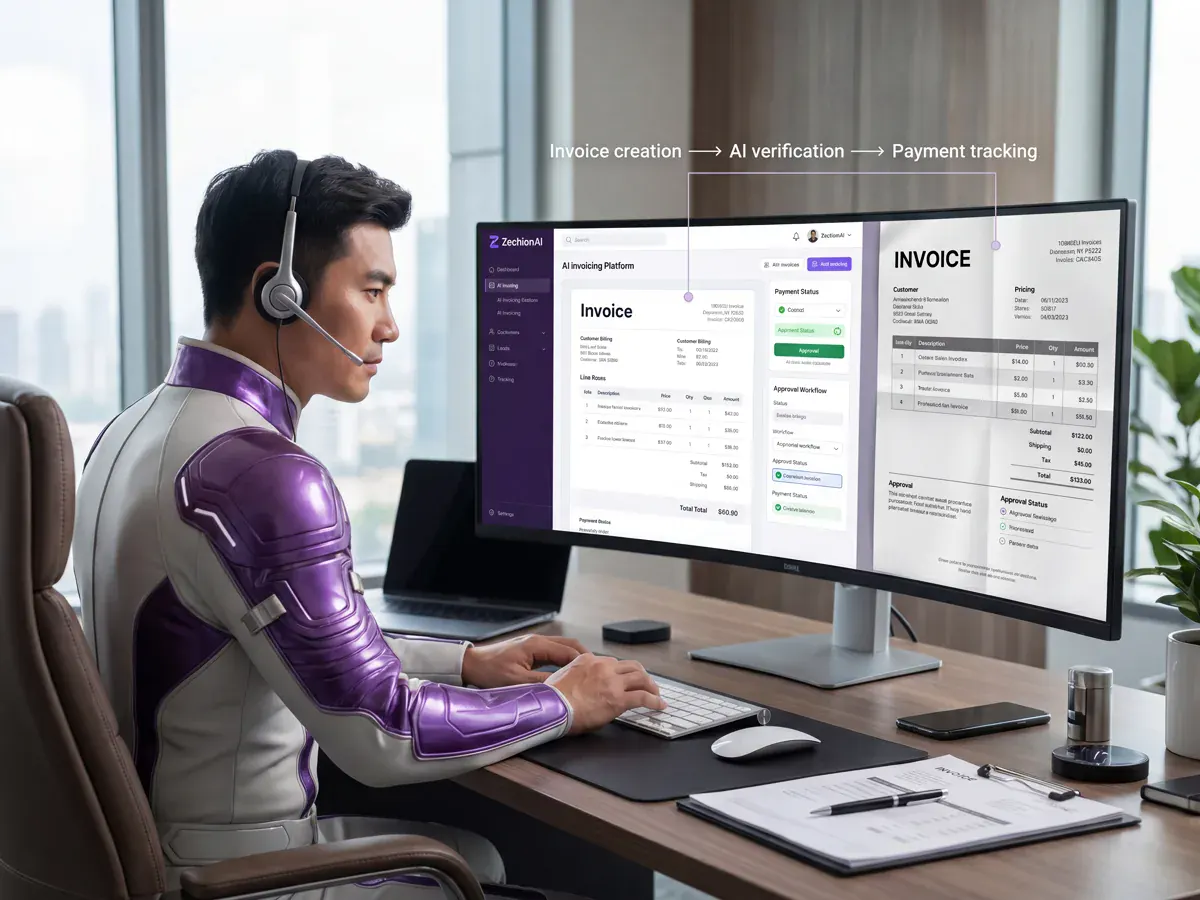
Document Processing
AI categorizes documents → Top quality cases move on → Cases with high uncertainty level move to a specialist queue.
Security Operations
- AI detects anomaly
- Security expert reviews the incident
- Incident contained, dismissed or escalated
Compliance Review
- AI recognizes a possible policy problem
- Compliance Team reviews it
- Final determination is recorded
Business Decisions
AI suggests action → Authorized person checks and either approves, modifies or rejects the action.
Industries We Serve
All industries HealthcareManual intervention can assist: Clinical decision-support review; Medical coding validation; Claims review; Prior authorization workflows; Documentation review; Patient communication escalation; The exception management process for each revenue cycle. AI should complement and enhance the decisions of qualified professionals, not replace them where professional judgment is needed.
 Financial ServicesExamples of use cases are: Fraud review; Transaction monitoring; Credit decision exceptions; Risk alerts; Compliance review; Suspicious activity escalation
 InsuranceZechionAI can assist in human review for: Claims assessment; Underwriting support; Fraud detection; Policy exceptions; Document review
 Retail & E-commerceApplications include: Fraud prevention; Refund exceptions; Customer disputes; Product moderation; Pricing exceptions; Order-risk review
 Hospitality & TourismHuman review can assist: Guest escalations; Booking exceptions; Refund approvals; Fraud alerts; Service recovery decisions
 Transportation & MobilityPotential workflows include: Driver/fleet alerts.; Booking exceptions; Safety-related escalation; Fraud detection; Dispatch exceptions; Customer dispute resolution
 Real EstateUse cases include: Lead qualification review; Property document review; Risk assessment; Tenant-screening workflow support; Pricing exceptions
 EducationHuman oversight can complement: Student support escalation; Academic workflow review; Administrative decision support; Content moderation; Enrollment exceptions
 Corporate ServicesApplications include: HR workflow exceptions; Document review; Procurement approvals; Compliance workflows; Internal service requests
 Construction & Facility ManagementPotential applications include: Safety alerts; Work-order prioritization; Inspection review; Maintenance exceptions; Vendor compliance ZechionAI can customize surveillance processes to suit industry-specific operating needs, authorities, and risk factors.
Business Benefits

Faster Operations
AI can take care of repetitive tasks and let employees concentrate on exceptions and scenarios that demand judgment.
Better Control
Organisations can specify what decisions can be taken automatically and what decisions have to be authorised by human beings.
Reduced Operational Risk
Where needed, sensitive decisions can be reviewed prior to action.
Higher Quality
When automated processing doesn't provide enough context, there's always human expertise to offer more.
Better Accountability
Organizations can create a record of who reviewed, approved, rejected, modified and escalated important decisions.
More Efficient Teams
Having cases available with automated workflows allows employees to devote less time to routine cases and more to cases that really need their attention.
Stronger Governance
Human oversight can be part of a more comprehensive AI governance structure.
Continuous Improvement
Review outcomes can reveal recurring exceptions, bottlenecks, data quality issues and opportunities to enhance AI and business processes.
Why Outsource Human-in-the-Loop Oversight to ZechionAI?
ZechionAI offers a variety of reasons for outsourcing human-in-the-loop oversight.
Creating an enterprise oversight capability goes past a mere addition of an approval button. Organizations require decision criteria, escalation logic, permissions, interfaces, integrations, monitoring, auditability and continuous operational management.
ZechionAI combines these elements.
- 01
Specialized AI Expertise
Collaborate with AI architects, MLOps, automation, governance, integration and operational implementation experts.
- 02
Faster Implementation
Minimize the design and internal resource that is needed for human-review workflows.
- 03
Reduce stress on the developing internal parts of the plant
Don't construct all the components of an oversight from scratch.
- 04
Flexible Engagement
Begin a workflow or manage multiple AI systems and teams.
- 05
Technology-Agnostic Approach
Create a solution that fits your current environment, not forces technology changes.
- 06
Operational Monitoring
Monitoring rates of escalation, volume review, overrides and turnaround times, and all other operational indicators.
- 07
Scalable Architecture
Develop the skills of oversight that can be scaled with the increasing adoption of AI.
- 08
Security & Governance Mindset
Think about who can access the designs, what they should be audited on, how they are to be protected, who should be able to approve them, and any governance concerns.
- 09
Business-Centered Implementation
Emphasize the role of AI in the real business process and who is still responsible for critical decisions.
Advantages of ZechionAI Partnerships
A partnership with ZechionAI can assist organizations to:
- Simplify the process of implementing AI.
- Accelerate deployment
- Access specialized expertise
- Select an engagement that fits the situation.
- Improve operational oversight
- Strengthen AI accountability
- Build scalable architecture
- Link oversight to systems that are in place
- Support ongoing optimization
- Improve governance arrangements
- Decrease dependence on internal resources
- Implement AI more strategically and carefully
The goal is pragmatic, to develop AI workflows that fit into the company's structure, rather than the company changing around an AI that is not integrated into its processes.
Technology & Integration
Human oversight must integrate into the systems that employees are using.
ZechionAI can create workflows for oversight that integrate with environments like:
- CRM systems
- ERP systems
- HR platforms
- Healthcare applications
- Claims systems
- E-commerce platforms
- Payment systems
- Ticketing platforms
- Workflow systems
- Data warehouses
- Analytics platforms
- Internal applications
- APIs
- Cloud environments
- On-premises infrastructure
Integrations can be implemented via APIs, middleware, webhooks, workflow engines or custom integrations, depending on the context.
The desired outcome is to integrate human review into the current operational workflow instead of establishing a disjointed review process.
Security, Privacy & Governance
The security and governance needs are added by human oversight. Reviewers could come across sensitive information about customers, finances, healthcare, operational or business information.
ZechionAI can incorporate controls such as:

- Role-based access
- Least-privilege access
- Reviewer authorization
- Data access controls
- Audit logging
- Decision history
- Encryption
- Secure integrations
- Data retention considerations
- Privacy controls
- Workflow segregation
- Approval controls
- Monitoring
- Incident escalation
- Governance documentation
Requirements for regulation, security, data privacy and retention are specific to the industry, location, technology used, data involved and use cases.
ZechionAI can aid organizations in discovering the controls to be considered when designing and implementing a solution. The need for regulatory compliance must be judged based on the particular requirements of each deployment.
Implementation Process
- 01
Assess
Gain insight into existing AI workflows, risks, systems, decision-making, and business needs.
- 02
Identify
Identify when decisions need to be made by humans and when they can be automated using AI.
- 03
Design
Define escalation thresholds, approval process, reviewer responsibilities, permissions and exception process.
- 04
Integrate
Integrate the oversight workflow into existing applications, AI systems, data sources and operational tools.
- 05
Test
Confirm actions and permissions, workflow, reviewer experience, integration and audibility.
- 06
Deploy
Start-up in a controlled environment and observe the behaviour during operation.
- 07
Improve
Analyze exceptions, overrides, turnaround times, agreement patterns and performance trends to fine-tune the process.
Engagement Options
ZechionAI can interact with organizations in various ways.
- 01
AI Oversight Consulting
Evaluate current AI processes and opportunities for human intervention.
- 02
Workflow Design
Design review, escalation, approval and exception management processes.
- 03
Implementation Services
Construct and incorporate the needed capabilities for human review.
- 04
Managed Human-in-the-Loop Operations
Ensure the continued running of selected workflows that require human review where an external operating model is suitable.
- 05
AI Governance Support
Assist in setting up accountability, review, documentation, escalation and oversight processes.
- 06
MLOps & Monitoring
Relate operational monitoring and model performance signals to appropriate review processes.
- 07
Integration Services
Integrate monitoring processes into enterprise systems.
- 08
Ongoing Optimization
Gain insights on operational performance and improve processes as business needs change.
Engagement may involve a project, a continuous managed services contract or a tailored enterprise contract.
Who is Human-in-the-Loop Oversight?
Human-in-the-loop supervision can be especially beneficial for organisations that:
- Are already leveraging AI in your business operations.
- Are getting ready to embrace wider enterprise AI implementation.
- Work in controlled or regulated areas
- Carry out numerous transactions or cases
- Handle sensitive information
- Make high-impact decisions
- Deploy AI agents or automated workflows
- Automate customer interactions
- Use predictive analytics
- Run several AI systems.
- Looking to greater accountability for AI-informed decisions
What constitutes the right level of oversight varies from one organisation to another. Some may be actively approval-only, others may only be exception based or periodic supervision.
Why Human + AI Works Better
AI for enterprises isn't a choice between automation and human participation.
The operating model provides a proper role for each side.
AI handles scale. People provide judgment.
AI is able to analyze a large amount of data in a matter of seconds, with a consistency of the data that is within the defined parameters. People bring context, accountability, business knowledge, and professional expertise, as well as the ability to deal with things that don't fit a pattern.
It can be particularly helpful if the stakes are high if the decision is wrong.
The goal isn't to place a person before each AI output. It is to place appropriate people in charge of the appropriate decisions.
AI speed, Human judgment, Business rules, Governance, and Accountability.
This is a solid baseline for a responsible application of AI in business.
Related services
- AI Security, Governance & ComplianceSecure AI. Govern AI. Deploy AI Responsibly.
- MLOps & AI OperationsTurn Machine Learning Models Into Reliable, Production-Ready AI Systems
- Fraud DetectionDetect Meaningful Risk. Reduce Unnecessary Friction. Strengthen Fraud Operations.
- Document Processing & OCRTurn Documents Into Structured Data, Intelligent Workflows, and Actionable Information
 Model Fine-Tuning & TrainingCustom AI Model Training & Fine-Tuning for Specialized Business Requirements
 AI Content GenerationAI Content Generation Services for Smarter, Scalable Content Operations
 AI Integration & APIsConnect Your Systems, APIs, Data & AI Into One Intelligent Business Ecosystem
 Managed AI ServicesKeep your AI running at peak performance — 24/7.
Human-in-the-loop AI is an operating model where people actively review selected AI outputs or decisions before they are finalized or acted upon.
Some decisions involve uncertainty, significant risk, sensitive information, professional judgment, or business context that cannot appropriately be handled through automation alone.
The answer depends on the use case. Common triggers include high-risk decisions, low confidence, unusual cases, high transaction values, sensitive actions, regulatory requirements, and exceptions to business rules.
Yes. Confidence thresholds can be incorporated into the workflow so results below defined thresholds are routed to an appropriate reviewer.
Yes. Oversight workflows can be designed around business rules, risk categories, transaction values, departments, roles, and other relevant criteria.
Yes, where the workflow permits it. Authorized reviewers can be given controlled override capabilities, with the action and relevant reason recorded.
Yes. Multi-level approval workflows can require sequential or appropriate multiple approvals depending on the business process.
Yes. Oversight workflows can be connected to appropriate CRM, ERP, healthcare, claims, e-commerce, workflow, data, and internal application environments through suitable integration methods.
The workflow can record information such as the AI recommendation, reviewer role or identity, decision, timestamp, reason, supporting information, and override details.
They can support regulated use cases, but the appropriate controls depend on the industry, jurisdiction, data, application, and specific regulatory obligations.
It can add review time to selected cases, but exception-based workflows are designed so routine cases can continue automatically while people focus on cases that meet predefined review criteria.
Reviewer outcomes can be analyzed for quality assurance, workflow improvement, evaluation, and other approved purposes. Whether feedback is used for model training should be determined through an appropriate governance process.
Yes. Organizations can track measures such as review volumes, turnaround times, overrides, agreement rates, and workload trends.
ZechionAI can provide managed human-in-the-loop operational support where the engagement and use case are appropriate.
Yes. A well-designed architecture can support multiple workflows, departments, reviewer groups, risk levels, and approval structures.
Security and privacy controls are considered as part of the solution design, including access management, permissions, auditability, secure integration, data protection, and appropriate governance processes.
Implementation time varies according to workflow complexity, integration requirements, data environment, approval structure, testing needs, and governance requirements. A simple workflow may require significantly less work than an enterprise-wide deployment.
Yes. Human oversight can be designed around existing AI systems as well as new AI applications, provided the systems expose the information and integration points needed to support the workflow.
The workflow can define what happens when disagreement occurs, including requesting additional information, escalating to a senior reviewer, documenting the override, or triggering a separate investigation.
Start by assessing the potential impact, risk, confidence, sensitivity, financial value, regulatory considerations, reversibility, and business consequences of each decision. ZechionAI can help translate those factors into practical escalation rules.

Keep AI Fast. Keep Decisions Accountable
AI can take on substantial operational volume without requiring every decision to be completely autonomous.
Talk to Zech, live