
AI Agents Development
AI Agents Built Around Real Business Workflows, Data, Tools, and Outcomes
Talk to Zech, live
AI agents can do more than generate responses. When designed correctly, they can retrieve information, work with business systems, use approved tools, execute workflow steps, and escalate decisions to people when human judgment is required.

AI Agents for Real Business Work
ZechionAI designs, develops, integrates, evaluates, secures, deploys, and manages AI agents around the way your organization actually works.
We combine AI models, business data, enterprise applications, APIs, workflows, RAG, automation, security controls, evaluation, and human oversight to create practical agentic AI solutions for businesses, startups, scale-ups, and enterprises.
The objective is not to make every process autonomous.
The objective is to identify where AI agents can safely and economically improve a business workflow—and implement the appropriate level of automation and human control.
- Assess
- Architect
- Integrate
- Build
- Automate
- Evaluate
- Secure
- Deploy
- Monitor
- Optimize
AI agent development is becoming increasingly relevant as organizations look beyond isolated AI assistants and toward systems that can participate in actual business processes.
A business agent might answer an employee’s question using internal knowledge. A more advanced agent could research information across several systems, determine which tools are relevant, retrieve required data, call approved APIs, validate the returned information, and prepare the next workflow action.
Depending on the application, the agent may:
- Interpret a business request
- Understand relevant context
- Retrieve information
- Analyze available information
- Select approved tools
- Call APIs
- Query business systems
- Execute defined workflow steps
- Maintain appropriate state or context
- Request human approval
- Escalate exceptions
- Generate structured outputs
- Record activity for monitoring and evaluation
But agentic AI is not automatically the right answer.
A predictable process may be better handled through conventional software, business rules, workflow automation, or RPA. A knowledge-heavy application may benefit more from RAG. Other situations may call for a copilot, a single AI agent, a multi-agent architecture, or a combination of technologies.
The right solution starts with the workflow—not the technology.
What Are AI Agents?
An AI agent is a software system that combines an AI model with context, instructions, tools, data, workflow logic, and appropriate controls to perform defined tasks.
A typical agent architecture may include:
- Foundation models or large language models
- Instructions and context
- Memory or state management where appropriate
- Retrieval systems
- Business rules
- Tools and APIs
- Workflow orchestration
- Structured outputs
- Guardrails
- Authentication and authorization
- Human approval points
- Evaluation systems
- Monitoring and observability
A simplified architecture looks like:
- User / Event
- Agent
- Context
- Model-Driven Reasoning / Planning
- Tool Selection
- API / Business System
- Result
- Validation
- Action / Response
- Monitoring
Not every agent requires every component.
A straightforward knowledge agent may primarily retrieve information and generate grounded responses. A workflow agent may need several tools, APIs, validation steps, permissions, and human checkpoints.
AI Agent Capabilities Can Include
- Understand: Interpret natural-language requests and structured events.
- Retrieve: Find relevant information from approved data sources.
- Reason: Analyze available context and determine an appropriate next step.
- Use Tools: Select and call authorized functions, APIs, databases, or applications.
- Execute: Perform approved workflow actions.
- Escalate: Send uncertain, sensitive, or exceptional situations to a human.
- Record: Maintain appropriate logs and operational telemetry.
- Improve: Use evaluation results, monitoring, and feedback to identify areas for optimization.
The important distinction is that an AI agent’s autonomy should be designed, bounded, tested, and monitored.
AI Agents vs. Chatbots vs. Automation
AI technologies overlap, but they are not interchangeable.
| Technology | Primary Role | Typical Capability |
|---|---|---|
| Traditional Chatbot | Structured conversation | Predefined responses and workflows |
| Generative AI Assistant | Information and content assistance | Generates responses using an AI model and context |
| RAG System | Knowledge retrieval | Retrieves relevant information before generating an answer |
| AI Agent | Task execution | Can use tools, retrieve information, and progress through workflows |
| Workflow Automation | Deterministic processes | Executes predefined business rules |
| RPA | Interface automation | Automates structured interactions with software interfaces |
| AI + Automation | Hybrid workflow | Combines AI flexibility with deterministic process controls |
| Multi-Agent System | Specialized coordination | Multiple agents collaborate or delegate defined tasks |
Why the Difference Matters
If a process follows a fixed sequence with predictable inputs and outputs, deterministic automation may be more reliable, easier to test, and less expensive.
If employees need to interpret variable information, interact conversationally, retrieve knowledge, or navigate multiple systems, an AI agent may provide additional value.
For many organizations, the strongest architecture is not “AI instead of automation.”
It is:
AI where interpretation is useful + deterministic automation where rules are known + human oversight where judgment matters.
When Should a Business Use AI Agents?
AI agents may be appropriate when a workflow includes meaningful levels of variability, context, information retrieval, or system interaction.
Common indicators include:
- Tasks require multiple steps
- Employees gather information from several systems
- Decisions depend on context
- Users need conversational access to business processes
- APIs or business tools must be used
- Inputs vary substantially
- Knowledge retrieval is required
- Human review is needed at specific checkpoints
- Teams perform repetitive knowledge work
- Employees spend significant time navigating applications
- Exceptions require interpretation before the process can continue
Potential Use Cases
- Customer support
- Sales operations
- Research
- IT support
- Document workflows
- Knowledge management
- Data analysis
- Scheduling
- Internal operations
- Technical support
- Process coordination
- Business intelligence
The strongest opportunities typically begin with a clearly defined workflow, measurable pain point, and realistic success criteria.
When AI Agents May Not Be Appropriate
Sometimes the best AI solution is not an AI agent.
An agent may be unnecessary when:
- A workflow is completely deterministic
- Business rules already solve the problem effectively
- Inputs and outputs are highly predictable
- Conventional software can perform the task more reliably
- AI uncertainty is unacceptable for the task
- Data quality is insufficient
- The process is poorly defined
- There is no meaningful economic benefit
- Human judgment is central to the entire process
- Tool access cannot be secured adequately
- The operational complexity of an agent exceeds its expected value
ZechionAI evaluates these trade-offs before recommending an architecture.
The objective is not to maximize the number of AI agents.
It is to maximize the usefulness of the technology within the constraints of the business.
AI Agent Architecture & Decision Framework
A successful AI agent starts with architecture—not prompts.
- 01
Define the Business Objective
We identify:
- Business problem
- Users
- Workflow
- Desired outcome
- Inputs
- Outputs
- Success criteria
- Operational constraints
- 02
Analyze the Workflow
We map:
- Individual tasks
- Decisions
- Dependencies
- Systems
- Data sources
- Human checkpoints
- Exceptions
- Failure scenarios
- 03
Select the Appropriate Automation Model
We evaluate whether the requirement calls for:
- Conventional software
- Workflow automation
- RPA
- Generative AI
- AI copilot
- RAG
- Single AI agent
- Multi-agent architecture
- Human-in-the-loop automation
- Hybrid architecture
- 04
Identify Data & Knowledge
We assess:
- Documents
- Databases
- APIs
- CRM platforms
- ERP systems
- Knowledge bases
- Websites
- Internal applications
- Structured and unstructured data
- 05
Identify Required Tools
Depending on the workflow, agents may use:
- Search
- Databases
- APIs
- Calculators
- Business applications
- Scheduling platforms
- Document processing
- Communication systems
- Internal tools
- Custom functions
- 06
Define Autonomy
We establish what the agent can:
- Read: Information it is allowed to access.
- Recommend: Actions it can suggest.
- Execute: Actions it is explicitly permitted to perform.
- Request: Actions requiring human approval.
- Prohibit: Actions the system must never perform.
- 07
Evaluate Risk
We consider:
- Data privacy
- Security
- Unauthorized access
- Prompt injection
- Tool abuse
- Incorrect actions
- Data leakage
- Bias
- Human oversight
- Operational failure
- 08
Define Measurement
Potential metrics include:
- Task completion
- Accuracy
- Reliability
- Latency
- Cost
- Human intervention
- Escalation
- Error rate
- Adoption
- Business outcomes
Our AI Agent Development Services
10 services
AI Agent Strategy & Architecture

Our Services Include
- AI Agent Strategy
- AI Agent Consulting
- AI Agent Readiness Assessment
- AI Agent Use-Case Discovery
- Agent Feasibility Assessment
- Agent vs. Automation Assessment
- Agent Architecture Design
- Agentic Workflow Design
- Enterprise Agent Strategy
- Agent Technology Selection
- Build vs. Buy Assessment
- AI Agent ROI Assessment
- AI Agent Roadmap
- Agent Architecture Review
- AI Agent Modernization
We evaluate:
- Business objectives
- Workflow complexity
- Data availability
- Tool requirements
- Model requirements
- Integration requirements
- Security
- Permissions
- Human oversight
- Infrastructure
- Expected operating costs
- Evaluation requirements
We do not assume that one AI model, agent framework, cloud provider, or technology stack is universally best.
The architecture should fit the workflow.
Design the Right Agent Strategy Before Building
AI agent development should begin with a clear understanding of the business problem.
ZechionAI helps organizations determine where agentic AI can provide practical value, where conventional automation is preferable, and what architecture is appropriate for production use.
Custom AI Agent Development
Capabilities Include
- Custom AI Agent Development
- Task-Oriented AI Agents
- Goal-Based Agents
- Workflow Agents
- Decision-Support Agents
- Business Process Agents
- Research Agents
- Operations Agents
- Internal AI Assistants
- Enterprise AI Copilots
- Controlled Autonomous Agents
- AI Digital Worker Applications
Agent behavior can be designed around:
- Defined objectives
- Approved tools
- Business rules
- Workflow stages
- Data sources
- Permissions
- Escalation policies
- Human approval
- Output formats
- Evaluation criteria
Rather than unrestricted autonomy, we focus on controlled autonomy appropriate to the business risk and workflow.
Purpose-Built Agents for Specific Business Workflows
Off-the-shelf assistants can be useful, but organizations with specialized workflows often require greater control over agent behavior, data access, integrations, permissions, and evaluation.
ZechionAI develops custom AI agents around defined business requirements.
Conversational & Voice AI Agents

Services Include
- Conversational AI Agents
- Customer Service Agents
- Employee Support Agents
- Sales Agents
- Customer Success Agents
- Voice AI Agents
- Phone AI Agents
- Multilingual Agents
- Omnichannel Agents
- Context-Aware Agents
- Voice-to-Action Agents
AI Agents That Can Communicate and Take Appropriate Action
Conversational and voice AI can provide a more natural interface to business services, employee workflows, and customer-support processes.
ZechionAI develops conversational and voice AI agents that can combine natural-language interaction with retrieval, tool calling, business-system integration, and human escalation.
Technical Capabilities
- Speech recognition
- Natural language understanding
- LLM integration
- Context management
- Retrieval
- Tool calling
- API integration
- Call transfer
- Human escalation
- Conversation logging
- Evaluation
- Monitoring
Voice agents can be valuable for high-volume interactions, but not every conversation should be automated.
Sensitive, complex, emotionally important, or high-risk interactions may require immediate human involvement.
Multi-Agent Systems & Agent Orchestration
Specialized Agents Working Within Controlled Architectures
- Multi-Agent Systems
- Agent Collaboration
- Agent-to-Agent Communication
- Supervisor-Agent Architecture
- Hierarchical Agents
- Specialized Agent Networks
- Agent Delegation
- Agent Coordination
- Multi-Agent Workflows
- Agent Swarm Architectures
A multi-agent system uses multiple specialized agents or agent-like components to divide responsibilities across a workflow.
Potential architectures include:
When Multi-Agent Systems Make Sense
Multiple agents may be useful when:
- Tasks require clear specialization
- Work can be performed in parallel
- Different capabilities need separate boundaries
- Complex workflows benefit from delegation
- Different agents require different tools or permissions
However, additional agents also introduce:
- More orchestration
- More state management
- Additional latency
- More opportunities for failure
- Greater observability requirements
- Increased testing complexity
- Potentially higher model and infrastructure costs
Multi-agent architectures should be justified by measurable workflow benefits—not novelty.
AI Workflow & Business Process Automation
Services Include
- AI Workflow Automation
- Business Process Automation
- Intelligent Process Automation
- Agentic Workflow Automation
- Back-Office Automation
- Document Workflow Agents
- Approval Workflow Agents
- Exception Handling
- Operations Automation
- Process Monitoring Agents
A workflow may look like:
- Trigger
- Agent
- Retrieve Information
- Analyze
- Tool/API
- Validate
- Human Approval
- Action
- Audit Log
This approach allows organizations to use AI where it adds value while retaining deterministic controls where predictability is important.
Connect AI Reasoning With Deterministic Business Processes
AI agents can complement traditional workflow automation by handling variable inputs, interpretation, research, classification, and exception processing.
ZechionAI designs hybrid workflows that can combine AI agents with deterministic process controls.
RAG-Powered & Knowledge-Based AI Agents

RAG Agent Services
- RAG-Powered Agents
- Enterprise Knowledge Agents
- Document-Based Agents
- Knowledge Retrieval Agents
- Semantic Search Agents
- Hybrid Retrieval Agents
- Graph RAG Agents
- Agentic RAG
- Multimodal Knowledge Agents
- Enterprise AI Copilots
Agents can work with:
- Enterprise documents
- Knowledge bases
- Databases
- Vector search
- Hybrid search
- APIs
- Knowledge graphs
- Structured business data
The quality of an agent depends heavily on the quality, accessibility, freshness, and security of the information it can retrieve.
Give AI Agents Access to Relevant Business Knowledge
RAG and AI agents solve different architectural problems.
RAG focuses on retrieving relevant information.
Agents focus on performing tasks using models, tools, workflows, and context.
They can be combined when an agent needs reliable access to enterprise knowledge before performing a task.
AI Agents for Business Functions
Sales Agents
- Lead research
- Lead qualification assistance
- CRM updates
- Sales intelligence
- Proposal support
- Account research
- Customer research
- Sales workflow coordination
AI agents can support sales teams with:
Agents can help sales professionals reduce administrative work while keeping important customer decisions under appropriate human control.
Customer Service Agents
Potential applications include:
- Customer inquiries
- Knowledge retrieval
- Ticket assistance
- Order support
- Returns support
- Escalation
- Case summarization
- Customer-history retrieval
Agents can retrieve information and support service workflows while escalating situations that require human judgment.
Marketing Agents
Marketing agents may assist with:
- Market research
- Competitive intelligence
- Campaign assistance
- Content workflows
- Marketing operations
- Research
- Audience analysis
- Marketing reporting
Finance Agents
Potential applications include:
- Financial analysis
- Invoice workflows
- Reconciliation support
- Reporting assistance
- Accounts payable workflows
- Accounts receivable workflows
- Financial document processing
Financial workflows may require strict controls, validation, permissions, and human approval.
HR Agents
Potential applications include:
- Employee knowledge
- Policy assistance
- Onboarding support
- Recruiting workflow assistance
- HR operations
- Benefits information
- Internal employee support
Employment-related use cases require particular attention to privacy, fairness, access controls, and human oversight.
IT Agents
IT agents can support:
- Helpdesk operations
- Troubleshooting
- Knowledge retrieval
- Incident support
- IT documentation
- Technical guidance
- Service-management workflows
High-impact system changes should generally be governed by explicit permissions, validation, and approval controls.
Operations Agents
Potential applications include:
- Process coordination
- Scheduling
- Procurement
- Supply-chain workflows
- Operational reporting
- Exception management
- Internal coordination
Data & Analytics Agents
Data agents can provide conversational interfaces to analytics environments.
Potential applications include:
- Natural-language data analysis
- SQL assistance
- BI support
- Report generation
- Data exploration
- Metric explanations
- Research assistance
Access controls remain critical when agents interact with sensitive or business-critical data.
AI Agent Integrations & Tool Calling
Connect Agents to the Systems Your Business Already Uses
- APIs
- CRM systems
- ERP platforms
- Databases
- SaaS applications
- Knowledge bases
- Business intelligence systems
- Internal applications
- Communication platforms
- Scheduling systems
- Custom tools
- Browser-based tools where appropriate
AI agents become more useful when they can interact with approved systems rather than operating as isolated conversational interfaces.
ZechionAI can design integrations involving:
Tool Calling Capabilities
- Function calling
- API calling
- Database operations
- Search
- Data retrieval
- Structured actions
- Custom tool development
- Workflow triggers
Integration Security
Agent integrations should address:
- Authentication
- Authorization
- API permissions
- Input validation
- Output validation
- Tool restrictions
- Rate limiting
- Error handling
- Logging
- Auditability
Giving an agent access to a tool does not mean it should have unrestricted permission to use that tool.
Tool access should be scoped according to the agent’s purpose and risk level.
AI Agent Security, Governance & Evaluation

Security
- Agent identity
- Authentication
- Authorization
- Role-based access
- Tool permissions
- Data isolation
- Secure APIs
- Prompt injection protection
- Tool injection protection
- Data leakage prevention
- Agent isolation
- Threat modeling
Governance
- AI Agent Governance
- Human Oversight
- Agent Policies
- Activity Logging
- Auditability
- Decision Controls
- Risk Management
- Lifecycle Governance
Evaluation
- Agent behavior testing
- Task completion testing
- Tool-use accuracy
- Response quality
- Groundedness
- Reliability
- Safety testing
- Adversarial testing
- Regression testing
- Human evaluation
- Benchmark development
Security and governance should be designed into the agent lifecycle rather than added only after deployment.
Secure Agent Design
AI agents introduce a different security model because the system may interpret information, choose tools, and initiate actions.
ZechionAI considers:
AI Agent Deployment, LLMOps & Managed Services

Move From Prototype to Production
- AI Agent Deployment
- Cloud Deployment
- Private Deployment
- Hybrid Deployment
- On-Premises Deployment
- API Deployment
- Containerized Agents
- Scalable Agent Infrastructure
- Model Serving
- LLMOps
- MLOps
- Agent Versioning
- Prompt Versioning
- Tool Versioning
- Model Versioning
- Evaluation Pipelines
- CI/CD
- Automated Testing
- Monitoring
- Observability
- Cost Monitoring
- Latency Monitoring
- Agent Performance Monitoring
- Security Monitoring
- Continuous Optimization
- Managed AI Agent Services
- Fractional AI Engineering
A successful AI agent is more than a working demonstration.
Production systems require infrastructure, monitoring, evaluation, version management, security, cost controls, and ongoing maintenance.
ZechionAI supports:
We consider:
- Compute
- Storage
- Model costs
- API costs
- Tool costs
- Scalability
- Reliability
- Latency
- Security
- Monitoring
- Maintenance
Cloud deployment is not automatically the best option. Deployment architecture should reflect security, data, latency, infrastructure, compliance, and operational requirements.
AI Agent Development Process
- 01
Business & Workflow Discovery
We understand your objectives, users, processes, systems, data, constraints, and desired outcomes.
- 02
Agent Feasibility Assessment
We determine whether an AI agent is appropriate—or whether another technology would provide a better solution.
- 03
Architecture & Autonomy Design
We define:
- Agent architecture
- Tools
- Permissions
- Workflow logic
- Human checkpoints
- Escalation
- Data access
- Failure handling
- 04
Data, Knowledge & Tool Integration
We connect appropriate:
- Documents
- Databases
- APIs
- Knowledge bases
- Enterprise systems
- Business tools
- 05
Agent Development
We build the agent’s:
- Instructions
- Context management
- Tools
- Workflow logic
- Orchestration
- Application interfaces
- Structured outputs
- 06
Evaluation & Security Testing
We test:
- Behavior
- Task completion
- Tool usage
- Reliability
- Safety
- Security
- Latency
- Cost
- Failure modes
- 07
Production Deployment
We deploy into the environment appropriate for your organization and integrate the agent into the required workflows.
- 08
Monitoring & Continuous Optimization
After deployment, we monitor:
- Performance
- Costs
- Failures
- Latency
- User feedback
- Escalation
- Adoption
- Business outcomes
Agent development does not end at launch.
Production agents require ongoing evaluation and optimization.
What Can ZechionAI Help You Build?
ZechionAI can help organizations evaluate, design, build, integrate, and operate solutions such as:
- Enterprise AI Agents
- AI Copilots
- Customer Service Agents
- Employee Support Agents
- Sales Agents
- Research Agents
- IT Support Agents
- Data Analysis Agents
- Document Processing Agents
- Workflow Automation Agents
- Knowledge Agents
- RAG-Powered Agents
- Voice AI Agents
- Multimodal Agents
- Multi-Agent Systems
- Agentic AI Applications
- Business Process Agents
- AI Operations Assistants
- AI Digital Workers
- AI Research Assistants
Industries We Serve
All industries Healthcare & Life SciencesAI agent applications may include: Healthcare knowledge agents; Patient-support workflows; Clinical documentation assistance; Medical coding and billing workflows; Healthcare operations; Research assistance; Provider support; Document processing Healthcare applications require careful consideration of privacy, security, data access, clinical boundaries, and human oversight.
 Banking & Financial ServicesPotential applications: Customer service; Financial research; Lending workflow support; Financial document processing; Compliance knowledge assistance; Customer onboarding; Financial analysis
 InsurancePotential applications: Claims workflows; Policy assistants; Underwriting support; Claims documentation; Customer support; Insurance research
 Pharmaceutical & BiotechnologyPotential applications: Scientific research; Research knowledge; Clinical documentation; Regulatory documentation; Scientific literature research; Laboratory knowledge
 Legal & Professional ServicesPotential applications: Legal research support; Contract analysis; Document review; Knowledge assistants; Client intake; Research workflows AI should support qualified professionals rather than replace professional judgment in high-impact legal work.
- Government & Public SectorWe support potential applications across: Federal organizations; State organizations; Local governments; Municipalities; Public agencies; Government contractors Potential applications include: Policy research; Citizen-service support; Document workflows; Caseworker assistance; Government knowledge systems
 Retail & E-CommercePotential applications: Shopping assistants; Product knowledge; Customer service; Order support; Returns; Sales assistance; Inventory workflows
- CPGPotential applications: Product intelligence; Sales support; Customer support; Product documentation; Marketing workflows
 Food & BeveragePotential applications: Restaurant support; Employee assistants; Operations agents; Menu knowledge; Inventory support; Customer service
 Beauty & WellnessPotential applications: Product knowledge; Customer support; Appointment assistance; Employee training; Customer engagement
 Automotive & MobilityPotential applications: Vehicle knowledge; Service support; Fleet operations; Dealer support; Customer assistance
 Technology & SaaSPotential applications: Developer agents; Technical support; Product knowledge; Customer success; API documentation; Software engineering assistance
- TelecommunicationsPotential applications: Technical support; Network knowledge; Troubleshooting; Customer service; Field-service support
 Accounting & ConsultingPotential applications: Research; Document analysis; Financial reporting assistance; Client knowledge; Internal knowledge; Audit support
 Marketing & AdvertisingPotential applications: Market research; Competitive intelligence; Campaign support; Content workflows; Marketing analytics; Lead research
 HR & StaffingPotential applications: HR knowledge assistants; Employee support; Recruiting workflow assistance; Onboarding; Benefits information; HR operations Employment-related applications require appropriate privacy, fairness, access, and human oversight controls.
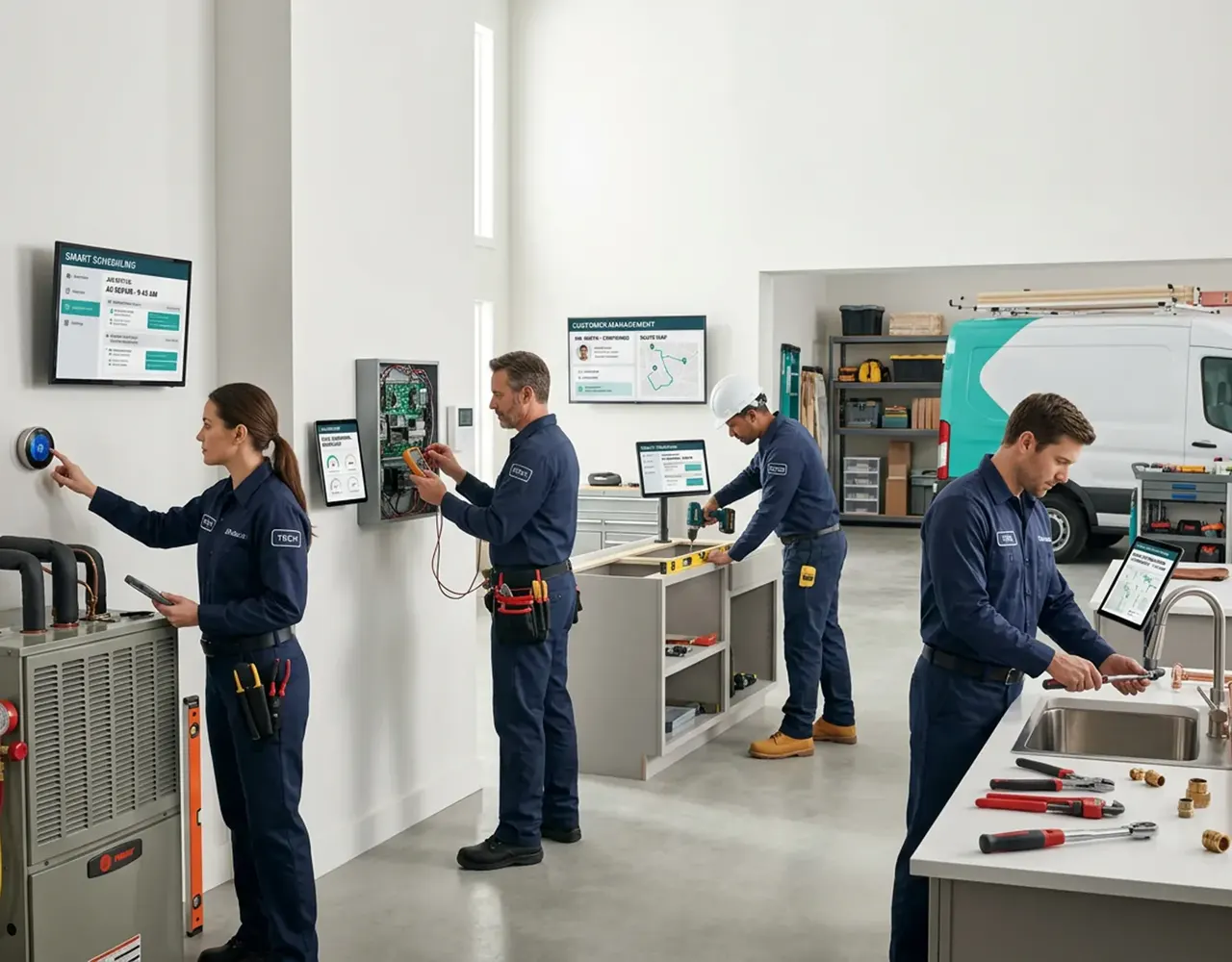 ManufacturingPotential applications: Technical documentation; Maintenance knowledge; Production support; Quality workflows; SOP assistants; Engineering knowledge
 Construction & EngineeringPotential applications: Project documentation; Engineering assistants; Contract knowledge; Technical specifications; Safety documentation; Procurement workflows
- Energy & UtilitiesPotential applications: Technical documentation; Asset management; Maintenance; Field service; Regulatory knowledge; Operations support
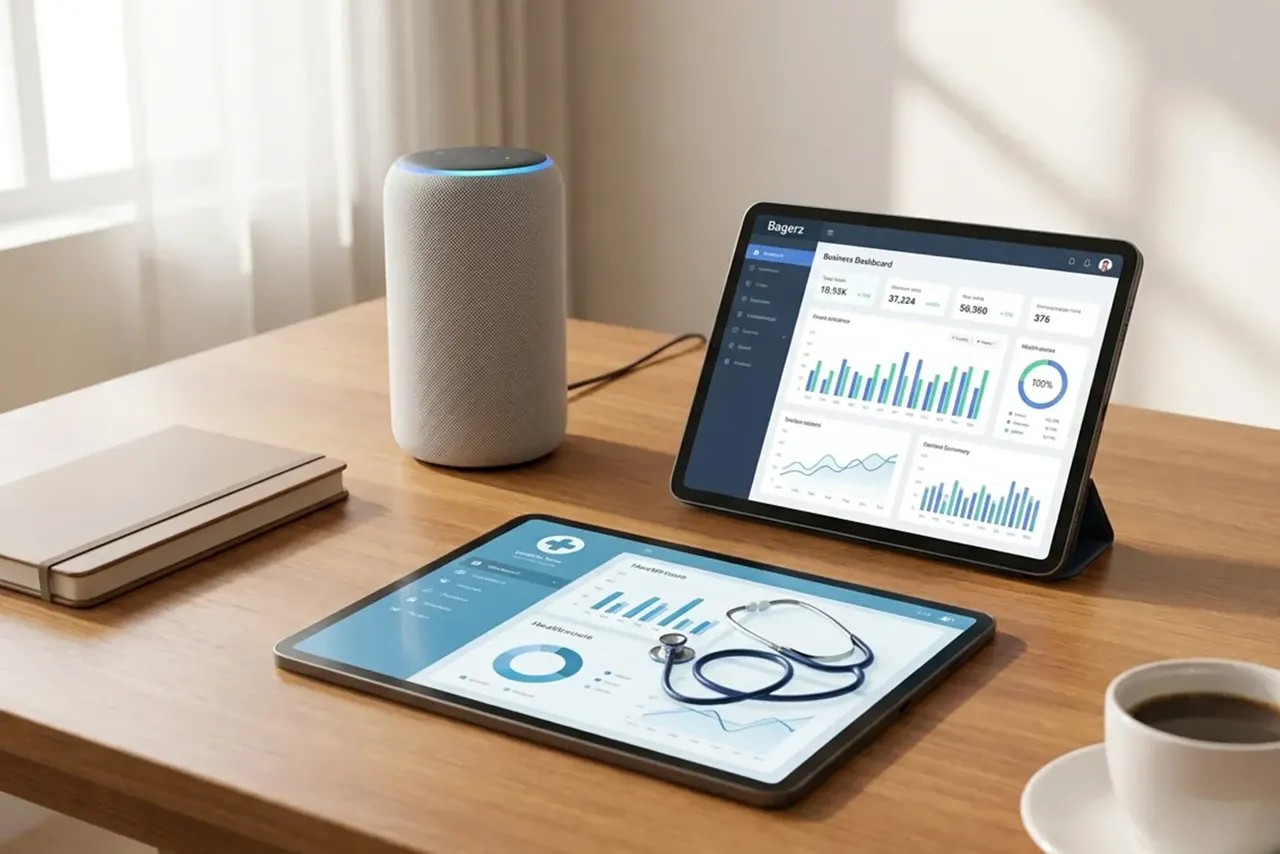 Agriculture & AgTechPotential applications: Agricultural knowledge; Research; Farm operations; Equipment support; Supply chain; Technical assistance
 Real EstatePotential applications: Property management; Leasing assistants; Tenant support; Lease knowledge; Property research; Maintenance coordination
 Transportation & LogisticsPotential applications: Logistics agents; Fleet operations; Shipment support; Dispatch assistance; Documentation; Customer support
 Hospitality & TourismPotential applications: Guest assistants; Concierge agents; Booking support; Hotel knowledge; Employee assistants; Operations support
 Education & EdTechPotential applications: Student assistants; Faculty assistants; Course knowledge; Admissions support; Institutional knowledge; Learning assistants
 Media & EntertainmentPotential applications: Content research; Editorial assistance; Archive search; Production documentation; Audience research; Content operations
 Sports & FitnessPotential applications: Member support; Training knowledge; Coaching assistants; Facility operations; Scheduling; Customer engagement
 Nonprofits & AssociationsPotential applications: Member support; Grant research; Donor support; Volunteer coordination; Organizational knowledge; Administrative workflows
Business Outcomes AI Agents Can Support
When appropriately designed and implemented, AI agents can help organizations:
- Reduce repetitive knowledge-work effort
- Improve access to business information
- Support employees
- Improve customer-service workflows
- Connect systems and data
- Automate selected process steps
- Reduce manual system navigation
- Accelerate research
- Support operational workflows
- Improve workflow consistency
- Provide scalable digital assistance
Actual outcomes depend on the use case, implementation quality, data, workflow design, model capabilities, integration quality, and operational controls.
AI agents do not automatically make business processes better.
Agent quality depends on the underlying models, workflow design, data, tools, permissions, evaluation, and operational controls.
AI Agent Technology Capabilities
ZechionAI can work across a technology landscape that may include:
- Large Language Models
- Foundation Models
- Generative AI
- Natural Language Processing
- Context Engineering
- Prompt Engineering
- Tool Calling
- Function Calling
- API Integration
- Agent Orchestration
- Multi-Agent Systems
- Retrieval-Augmented Generation
- Vector Search
- Semantic Search
- Hybrid Search
- Knowledge Graphs
- Graph RAG
- Memory and State Management
- Workflow Engines
- Structured Outputs
- Model Routing
- Human-in-the-Loop Systems
- Multimodal AI
- Voice AI
- Computer-Use Systems
- Model Evaluation
- Agent Evaluation
- LLMOps
- MLOps
- Model Serving
- Cloud AI
- Hybrid AI
- AI Monitoring
- Observability
Technology selection should be based on the actual requirements of the system.
Relevant considerations include:
- Performance
- Cost
- Security
- Integration
- Scalability
- Maintainability
- Latency
- Data requirements
- Model capabilities
- Operational complexity
AI Agent Security, Governance & Responsible AI
AI agents can access information and, depending on their design, interact with external systems.
That makes security and governance fundamental parts of agent engineering.
Security
Potential controls include:
- Agent identity
- Authentication
- Authorization
- Role-based access
- Tool permissions
- API security
- Data isolation
- Encryption
- Data privacy controls
- Prompt injection protection
- Tool injection protection
- Data leakage prevention
- Secure deployment
- Activity monitoring
Governance
A governance approach may include:
- Agent policies
- Human oversight
- Activity logging
- Auditability
- Decision controls
- Risk management
- Agent lifecycle management
- Permission management
- Change management
Responsible AI
Depending on the application, responsible AI practices may include:
- Appropriate human oversight
- Bias assessment
- Fairness considerations
- Transparency
- Explainability where appropriate
- Safe escalation
- Controlled autonomy
Specific legal, regulatory, contractual, or industry obligations should be evaluated according to the organization’s circumstances.
ZechionAI does not treat an AI implementation as automatically compliant simply because security or governance features are present.
AI Agent Performance & Success Measurement
A production AI agent should be evaluated against measurable objectives.
Agent Quality
Potential metrics include:
- Task completion
- Response quality
- Instruction adherence
- Tool-use accuracy
- Groundedness
- Reliability
Workflow Performance
Measure where relevant:
- Completion time
- Human intervention
- Escalation rate
- Workflow success
- Exception handling
- Process throughput
Technical Performance
Monitor:
- Latency
- Throughput
- Availability
- Token usage
- Compute usage
- API costs
- Infrastructure utilization
Safety & Security
Testing may include:
- Prompt injection resistance
- Unauthorized action testing
- Data leakage testing
- Access-control testing
- Tool permission testing
- Adversarial testing
- Regression testing
Business Performance
Depending on the use case:
- User adoption
- Task completion
- Support efficiency
- Workflow efficiency
- Customer experience
- Operational cost
- Time savings
The right metrics depend on the agent, workflow, risk profile, and business objective.
Why Outsource AI Agent Development to ZechionAI?
Building an AI agent is relatively easy compared with building one that operates reliably inside a real organization.
Organizations may benefit from an external AI agent development company when they:
- Lack agent architecture expertise
- Need experienced AI engineers
- Are unsure whether an agent is appropriate
- Need integration with multiple systems
- Need secure tool access
- Need RAG and knowledge integration
- Need rigorous agent evaluation
- Need production deployment
- Need LLMOps or MLOps
- Need ongoing optimization
- Want to avoid prematurely hiring an entire internal agent engineering team
- 01
Problem-First Agent Architecture
We begin with the business problem and workflow.
Rather than forcing every process into an AI agent, we evaluate whether the appropriate solution is conventional software, automation, RPA, RAG, an assistant, an agent, or a combination.
- 02
Controlled Autonomy
We help define:
- What the agent can access
- What it can recommend
- What it can execute
- What requires approval
- What actions are prohibited
- When it should escalate
- 03
Workflow-Centered Engineering
Our approach considers:
- Process mapping
- Tool integration
- Workflow orchestration
- Exception handling
- Human checkpoints
- Auditability
- 04
Data & Knowledge Integration
Agents may need to work with:
- Documents
- Knowledge bases
- Databases
- APIs
- Enterprise applications
- RAG systems
The data architecture is therefore part of the agent architecture.
- 05
Technology-Neutral Recommendations
Technology selection should reflect:
- Performance
- Cost
- Security
- Integration
- Scalability
- Maintainability
- Latency
- Data requirements
We do not recommend technology simply because it is fashionable.
- 06
Production-Oriented Development
A successful proof of concept is not necessarily a successful production system.
Production development requires attention to:
- Reliability
- Security
- Evaluation
- Monitoring
- Cost
- Deployment
- Version management
- Failure handling
- Maintenance
- 07
Security & Governance Awareness
Agent systems can require:
- Access controls
- Tool permissions
- Data protection
- Prompt injection defenses
- Auditability
- Human oversight
- Monitoring
These considerations should be incorporated into architecture and development.
- 08
Flexible Engagement
Organizations can engage ZechionAI for:
- AI Agent Assessments
- Strategy
- Architecture
- Development
- Integration
- Evaluation
- Security
- Deployment
- LLMOps
- Managed AI Agent Services
- Fractional AI Engineering
- Enterprise AI Programs
- 09
Independent Technical Perspective
ZechionAI can also provide an independent technical perspective on:
- Existing AI agents
- Agent architectures
- AI models
- Agent frameworks
- Tool architectures
- Vendor solutions
- Internal AI initiatives
- Existing automation systems
When Not to Outsource AI Agent Development
Outsourcing is not always necessary.
Organizations with mature internal capabilities may prefer to build and operate their AI agents themselves.
This may include companies with:
- Mature AI engineering teams
- Experienced software engineers
- Strong data engineering
- Established MLOps or LLMOps
- Existing cloud infrastructure
- Internal security teams
- Established AI governance
- Strong automation capabilities
In these situations, ZechionAI can still provide specialized support such as:
- Architecture reviews
- Agent evaluations
- Security assessments
- Retrieval optimization
- Specialized engineering
- Performance optimization
- Additional engineering capacity
- Technical advisory services
The right engagement model depends on the capabilities and objectives of the organization.
AI Agent Use Cases
Enterprise AI Agents
Support employees with specialized business processes, information retrieval, system interaction, and operational workflows.
AI Copilots
Provide contextual assistance while keeping users responsible for important decisions and actions.
Customer Service Agents
Assist customers with information retrieval, support workflows, ticketing, order-related processes, and escalation.

Sales Agents
Support lead research, account intelligence, CRM workflows, and sales operations.
Research Agents
Gather and organize information from approved sources to support analysts, researchers, and business teams.
IT Support Agents
Assist with troubleshooting, knowledge retrieval, ticket workflows, and technical support.
Data Analysis Agents
Provide natural-language interfaces for data exploration, reporting, SQL assistance, and business intelligence.
Document Processing Agents
Interpret documents, extract information, classify content, validate results, and route workflows.
Workflow Automation Agents
Combine AI interpretation with deterministic workflow engines and human approval.
Knowledge Agents
Provide access to organizational information using RAG, search, databases, and knowledge systems.
Voice AI Agents
Support phone-based customer, employee, and operational workflows.
Multimodal Agents
Work with combinations of text, images, documents, audio, and other supported inputs.
Multi-Agent Systems
Coordinate specialized agents when delegation, parallelism, or workflow separation provides meaningful value.
AI Digital Workers
Automate defined knowledge-work processes under controlled permissions, workflow rules, and appropriate human oversight.
AI Agent Engagement Models
AI agent development costs vary substantially by scope and architecture.
Factors that can affect cost include:
- Agent complexity
- Number of workflows
- Number of tools
- API integrations
- Data sources
- RAG requirements
- Model selection
- User volume
- Security requirements
- Human approval requirements
- Deployment environment
- Evaluation requirements
- Monitoring
- Infrastructure
- Maintenance
- Third-party API usage
Available Engagement Models
- AI Agent Assessment: Evaluate an opportunity, workflow, architecture, and expected feasibility.
- Agent Strategy: Develop an AI agent roadmap and implementation strategy.
- Agent Architecture: Design the technical architecture, tools, integrations, data flows, permissions, and autonomy model.
- AI Agent MVP: Build and evaluate a focused production-oriented proof of concept or minimum viable system.
- Custom AI Agent Development: Develop agents around specific business processes.
- Multi-Agent Development: Design and implement specialized agent architectures where justified.
- Voice Agent Development: Build conversational and voice-based agent systems.
- RAG Agent Development: Develop knowledge-driven agents connected to enterprise information.
- Workflow Automation: Combine AI agents with deterministic process automation.
- Agent Integration: Connect agents to APIs, CRM, ERP, databases, SaaS applications, and internal systems.
- Agent Evaluation: Establish benchmarks and test agent quality, safety, reliability, and tool usage.
- Agent Security Assessment: Review agent architecture, permissions, integrations, and security risks.
- Agent Deployment: Deploy systems into cloud, private, hybrid, or other appropriate environments.
- LLMOps / MLOps: Establish operational processes for models, prompts, tools, evaluation, deployment, and monitoring.
- Managed AI Agent Services: Provide ongoing monitoring, maintenance, optimization, and engineering support.
- Fractional AI Engineering: Extend internal teams with specialized AI architecture and engineering capacity.
- Enterprise Agent Programs: Support larger organizations across strategy, architecture, development, integration, governance, deployment, and ongoing optimization.
Request an AI Agent Assessment
More under AI Agents & Autonomous AI
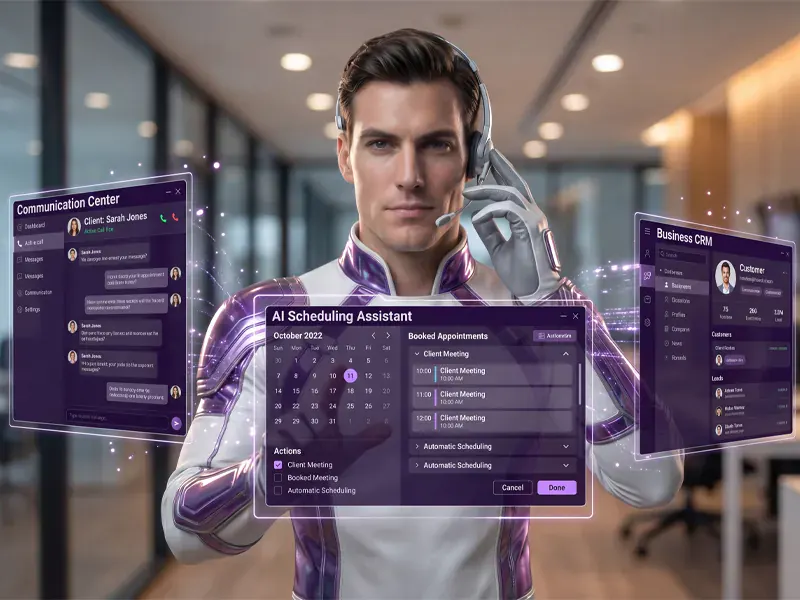
An AI agent is a software system that uses an AI model together with context, tools, data, workflow logic, and controls to perform defined tasks. Depending on its design, an agent can retrieve information, use APIs, execute approved actions, and escalate situations to humans.
A chatbot primarily handles conversation. An AI agent can potentially go beyond conversation by retrieving information, selecting tools, calling APIs, progressing through workflows, and performing approved actions.
Traditional automation generally follows predefined rules and workflows. AI agents can handle more variable inputs and use model-driven interpretation or reasoning. Many business applications benefit from combining both approaches.
No. AI agents are not appropriate for every problem. Conventional software, workflow automation, RPA, RAG, or an AI assistant may be simpler and more effective for certain requirements.
Agents can be useful when workflows involve multiple steps, variable inputs, information retrieval, tool use, system interaction, or context-dependent tasks.
An agent may not be appropriate when a process is highly deterministic, AI uncertainty is unacceptable, data quality is inadequate, or conventional automation can solve the problem more reliably and economically.
Yes, when the necessary applications expose suitable APIs, tools, or controlled interfaces. Access should be governed through authentication, authorization, permissions, validation, and logging.
They can, depending on the available integration methods and your organization’s security requirements. APIs and other controlled integration mechanisms can allow agents to retrieve or update information within defined permissions.
Yes. Agents can be designed to work with approved enterprise data sources. The architecture should address data access, authentication, authorization, privacy, isolation, retrieval, logging, and deployment requirements.
Yes. RAG can provide agents with relevant information from enterprise documents, knowledge bases, databases, and other approved sources before an agent generates a response or performs a task.
A multi-agent system uses multiple specialized agents or agent components to divide responsibilities across a workflow. It can be useful for specialization, delegation, parallelism, or workflow separation, but it also introduces additional complexity.
Agent orchestration manages how agents, tools, workflows, context, and state interact. It can determine which component performs a task, how information moves between steps, and how failures or escalations are handled.
AI agents can support or execute defined decisions depending on their architecture and permissions. High-impact or sensitive decisions may require human review, business rules, validation, and appropriate governance.
Some workflows can be designed for automated execution, but autonomy should be proportional to risk. Sensitive, irreversible, financial, employment, healthcare, legal, or otherwise high-impact actions may require human approval.
Control can be implemented through authentication, authorization, role-based access, tool permissions, API scopes, business rules, validation, workflow restrictions, approval gates, logging, and monitoring.
Security may include identity management, authorization, data isolation, secure APIs, tool restrictions, prompt-injection defenses, data-leakage controls, threat modeling, monitoring, logging, and adversarial testing.
Evaluation can include task completion, response quality, groundedness, tool-use accuracy, reliability, latency, cost, escalation rates, safety tests, adversarial testing, and business-specific benchmarks.
Yes. Tool and function calling can allow agents to interact with approved APIs, databases, business applications, search systems, scheduling systems, and custom tools.
There is no single reliable price because scope varies significantly. Cost depends on workflow complexity, integrations, data, RAG, models, security, user volume, deployment, evaluation, infrastructure, and ongoing operations.
A focused agent can potentially be developed much faster than a complex enterprise agent. Timeline depends on workflow complexity, data readiness, integrations, security requirements, evaluation, deployment environment, and stakeholder approvals.
Yes. Startups can use AI agents for customer support, research, operations, sales, product workflows, internal knowledge, and automation. A focused MVP can help validate the business case before expanding the architecture.
Potentially, depending on the models, infrastructure, software components, security requirements, and operational constraints involved. Cloud deployment is not automatically the right option for every organization.
Yes, where suitable integration mechanisms are available. Integration may involve APIs, databases, enterprise applications, workflow systems, knowledge platforms, or controlled interfaces.
Yes. Engagements can include monitoring, evaluation, maintenance, optimization, security reviews, infrastructure support, LLMOps, MLOps, and ongoing AI engineering.
Potential applications exist across healthcare, financial services, insurance, technology, retail, manufacturing, logistics, hospitality, education, professional services, real estate, government, and many other sectors. Suitability depends on the workflow, data, risk, economics, and technical environment.
Build AI Agents That Work With Your Business
AI agents are most valuable when they are connected to the right data, tools, systems, workflows, and controls.
Talk to Zech, live