Transformative AI Solutions for Government & Public Sector
Better Citizen Services. Smarter Document Processing. Better-functioning Public Services.
Talk to Zech, live
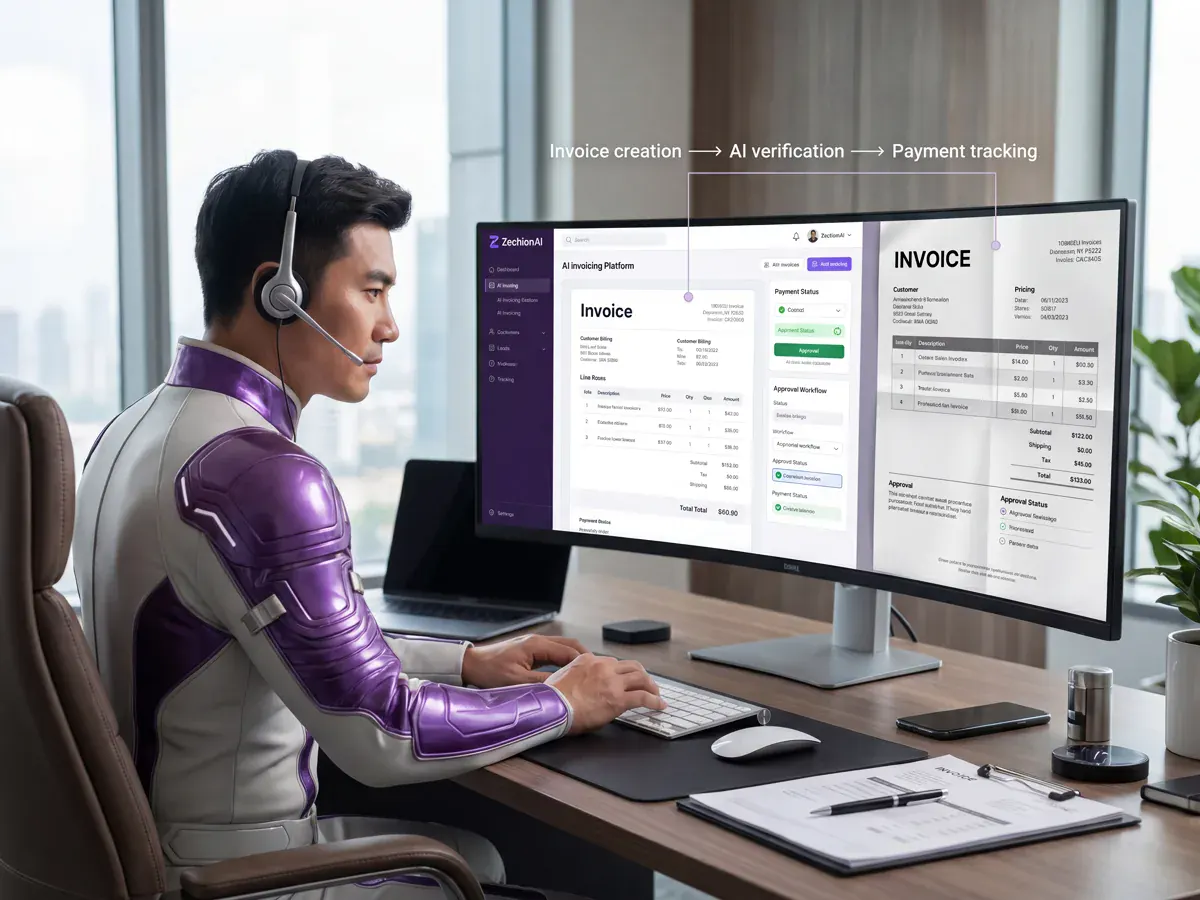
- Government Executives
- CIO & CTO Teams
- Citizen Service Teams
- Administrative Departments
- Program Managers
Government agencies receive thousands of questions, applications, forms, records, reports, policies, and administrative activities every day.

How to Use AI in the Public Sector in Practice
ZechionAI is designed to leverage AI for governments and public sector firms to address real-world operational challenges, such as citizen service chatbots, document processing, internal knowledge assistants, workflow automation, analytics, and governed AI systems.
We are not for government automation, for the government's sake. The task is to determine which areas AI can be of beneficial service, to tie it into approved information and systems, to set up appropriate controls and ensure accountability in human decision making.
AI should ensure that public services are more easily accessible and government operations are more easily managed — maintaining accountability, human judgment, and public trust at the heart of it.
Information is shared and handled by government organisations on a massive scale on a daily basis:
- Citizen questions
- Applications
- Forms
- Policies
- Regulations
- Correspondence
- Case records
- Reports
- Public documents
- Internal procedures
- Program information
- Administrative records
- Procurement documentation
- Programs offering licensing and permitting information.
- Programs providing licensing and permitting data.
Much of this work consists of locating information, reading documents, typing up data, forwarding requests, creating reports, responding to frequently asked questions, and maintaining information.
Many of the activities could be optimized with the help of AI if it is designed to meet the mission, data, security, accessibility, governance, and legal requirements of the organization.
ZechionAI can help agencies and public sector organizations assess these opportunities, create a solution that addresses them, implement approved solutions, and maintain AI engineering and support.
The goal is hands-on:
Leverage AI to support employees and citizens, but not sideline their responsibility in public service.
Who We Serve
Government Executives
AI strategy and opportunity assessment, operational visibility, reporting, governance, and responsible adoption.
With the use of AI, executives can gain insights into areas where administrative tasks are present, tasks that might be automated, and how AI programs can be rolled out in a managed way.
CIO & CTO Teams
Architecture, integrations, data engineering, AI platforms, security-aware implementation, monitoring, and technical governance.
ZechionAI can complement existing internal technologies or not take the place of them.
Citizen Service Teams
Citizen-facing chatbots, knowledge assistants, FAQ automation, classification, routing, escalation, and service navigation.
Administrative Departments
Document processing, extraction, classification, workflow automation, data validation, reporting, and operational support.
Program Managers
Program analytics, reporting, workload visibility, case preparation, forecasting, and analytics and operational insights.
Records & Information Teams
Document classification, search, summarization, metadata extraction, controlled knowledge retrieval, and information organization.
Communications Teams
Drafting of public information, creation of FAQs, communication support, organization of content, and multilingual communication workflows, as applicable.
Finance & Procurement Teams
Document analysis, invoice and administrative document processing, reporting support, workflow support, and knowledge retrieval.
Government & Public-Sector Challenges
Public-sector organizations may often be dealing with environments that have evolved over many years.
Common challenges include:
- A large number of inquiries from citizens.
- Repetitive questions
- Long response cycles
- Complex government websites
- Difficult-to-navigate procedures
- Large document collections
- PDF-heavy workflows
- Manual data entry
- Legacy applications
- Disconnected systems
- Duplicate information
- Manual reporting
- Knowledge silos
- Staff workload
- Slow application processing
- Records management challenges
- Limited technology resources
- Procurement requirements
- Accessibility requirements
- Security requirements
- Privacy concerns
- Public accountability
- Inconsistent information
- Failing to keep published information up to date.
AI cannot resolve all of these issues.
The essential first step in a useful implementation of AI is to grasp the process involved in the problem.
ZechionAI analyzes current workflows, information sources, users, systems, data, risks, controls, and desired outcomes to propose an AI approach.
Citizen Service AI
6 services
Supporting citizens in obtaining information without taking decisions for them.
Citizens frequently require assistance in determining the solution that may be available somewhere within an agency's information.
It's not necessarily a lack of information. It could be locating information, comprehending the process, understanding the form to be completed, or knowing what to do next.
ZechionAI can create citizen service AI to assist citizens in:
- Find agency information
- Understand general procedures
- Locate forms
- Find office information
- Understand published requirements
- Navigate government websites
- Find program information
- Understand application steps
- Ask questions that are often asked in regard to services.
- Find contact information
- Understand published deadlines
- Locate public resources
- Click on top common questions.
- Get status when an authorized integration is available
Both a citizen-facing assistant and approved information sources can be linked to it, with this assistant being able to direct a controlled response as opposed to a freeform answer from an open-ended knowledge base.
Typical Capabilities
- Retrieval-augmented generation (RAG)
- Approved knowledge sources
- Use source references for any sources used, where applicable.
- Content version control
- Knowledge refresh
- Escalation
- Human handoff
- Permission-aware access
- Audit logging
- Restricted information handling
- Response monitoring
- Feedback workflows
The goal is to assist citizens in navigating government information, rather than making an unofficial decision maker.
Citizen Service Chatbots
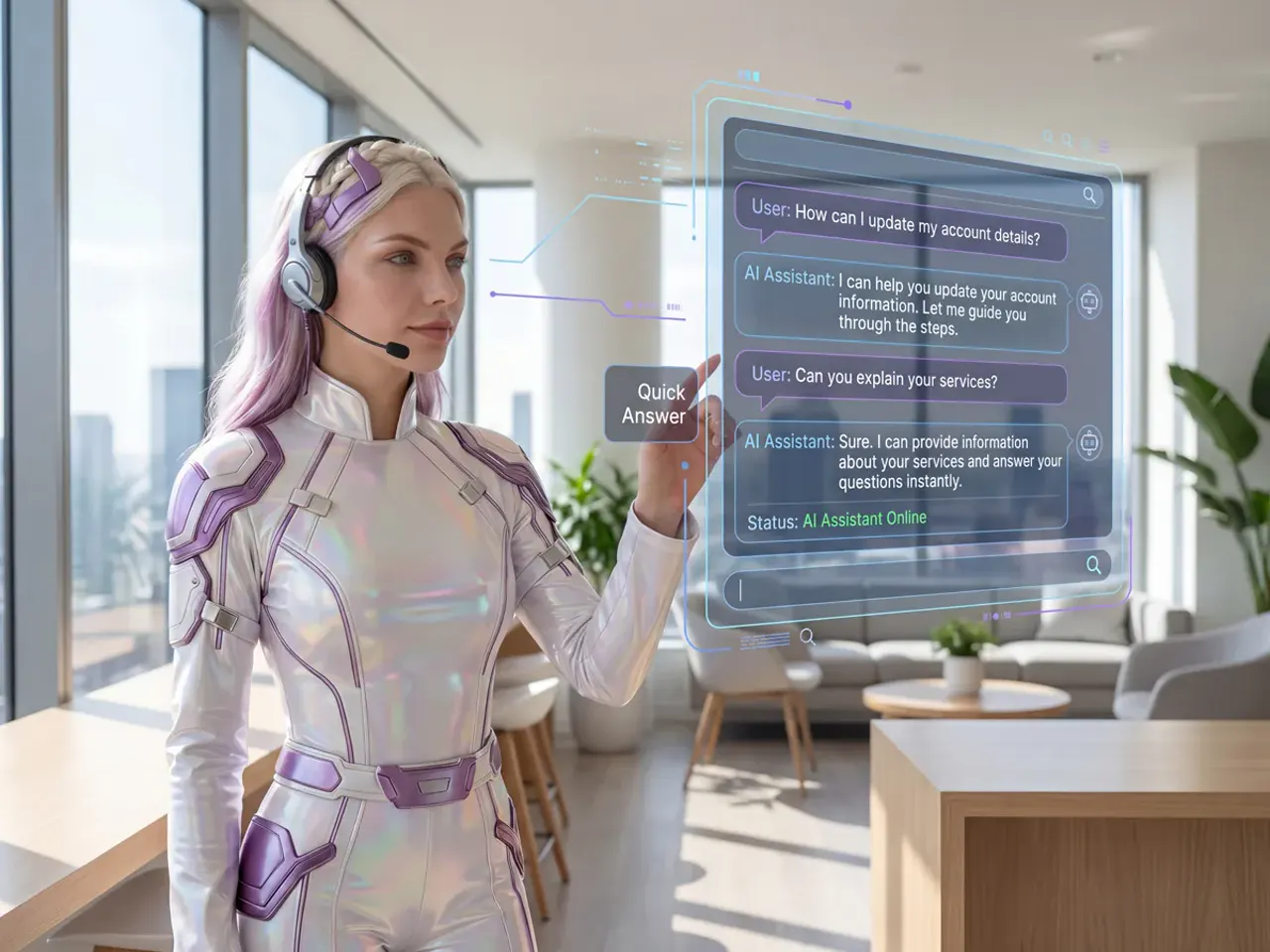
Online navigation that is more direct to public information
- Agency FAQs
- Program information
- Permit information
- Licensing information
- Public benefits information
- Transportation information
- Housing information
- Tax information
- Public records information
- Workforce programs
- Education information
- Community services
- Public-facing administrative procedures
ZechionAI can create website and service assistants for:
A chatbot can provide citizens with answers based on established information and guide them to the next steps.
For example:
- Citizen: "What paperwork is required to apply for this permit?"
- AI assistant: Finds the agency approved requirements and gives applicable information.
- Citizen: "Does this mean that my application will be granted?"
AI assistant: Describes the assistant's ability to detail general published requirements but not to get to the point of determining the outcome of a specific application.
That distinction matters.
General information is not a government decision
The following should not be left to the discretion of AI alone:
- Legal eligibility
- Benefits entitlement
- Enforcement outcomes
- Disciplinary outcomes
- Appeals
- Licensing decisions
- Permit approvals
- Other high-impact outcomes
Unless there is an agency defined appropriate lawful, governed, and reviewed process that exists for the specific use case.
Multilingual Citizen Support

Public information may have to be communicated to those who speak different languages.
AI can assist with:
- Translation
- Multilingual FAQs
- Public information
- Language-specific content retrieval
- Draft communications
- Citizen support
- Multilingual website assistance
Very significant public translations should be checked by people where there is potential for errors that would have legal, safety, financial, eligibility, or similar significant consequences.
AI translation should not be seen as a 'one size fits all' solution, but rather a tool that aids in the translation process.
Utilize AI to Automate Document Processing for Governments
Government Document Processing Made Easy with AI
- Applications
- Forms
- PDFs
- Scanned documents
- Correspondence
- Invoices
- Permits
- Licenses
- Reports
- Contracts
- Grant documents
- Procurement documents
- Case files
- Supporting documentation
- Public records
- Administrative records
There are tons of documents that are processed by the government bodies.
ZechionAI can create workflows for document intelligence for:
Document AI Capabilities
- Document Classification: Identify the type of document and forward to appropriate workflow.
- OCR: Convert suitable scanned documents and images into machine-readable information.
- Data Extraction: Retrieve specific information from applications, forms, invoices, reports, and other documents.
- Entity Extraction: Recognize appropriate names, organizations, dates, reference numbers, addresses, or other specified entities.
- Metadata Extraction: Design and develop structured metadata for better organization and retrieval of documents.
- Summarization: Write brief abstracts of long documents for the authorized user.
- Field Validation: Recognize information that is missing, inconsistent, or does not meet defined validation rules.
- Missing Information Detection: Identify potentially missing fields or supporting documentation.
- Document Routing: Route documents to the correct queues, departments, or workflows.
- Document Comparison: Compare various versions of documents, policies, submissions, contracts, or other approved documents.
- Duplicate Detection: Determine documents or records that may be duplicates and send them to human review.
- Structured Data Creation: Transform appropriate document data into structured data for further systems.
Automated Application Processing
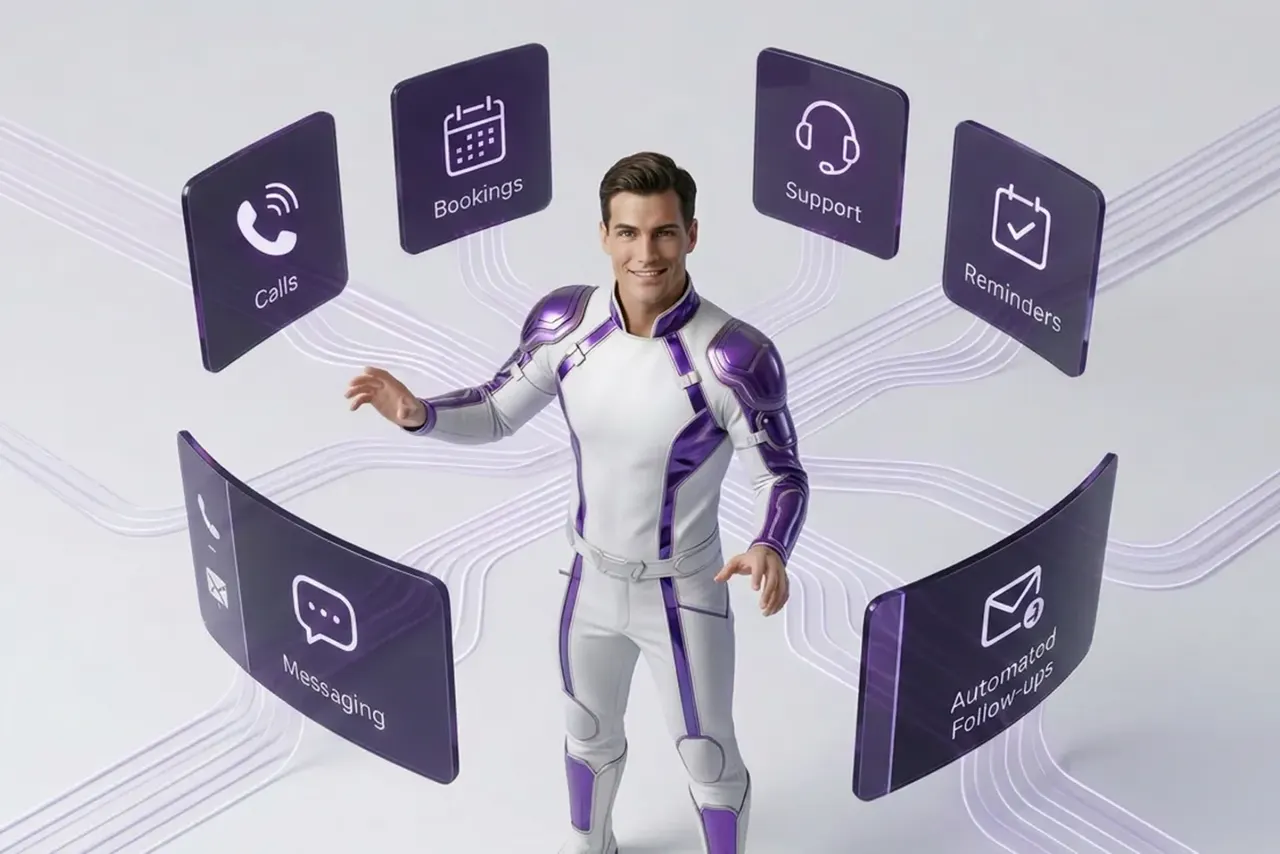
AI can be used to aid app workflows, but not as the final decision-maker.
Typical workflow might be:
- Document Received
- Classification
- Data Extraction
- Validation
- Missing Information Check
- Workflow Routing
- Human Review
- Approved Workflow
- Record Update
Utilize AI for information identification and application preparation.
The agency's authorized personnel retain the responsibility for decisions which necessitate official judgment.
Permit & Licensing AI
Structured forms, supporting documents, renewal requests, status inquiries, and communications are typically handled by permitting and licensing departments.
ZechionAI can support:
- Permit application intake
- Document classification
- Requirement extraction
- Missing-document identification
- Application summaries
- License renewal reminders
- The search for policy and procedure.
- Case preparation
- Workflow routing
- Status communication
- Staff knowledge assistants
- Document comparison
- Application completeness checks
To assist staff in processing information and for applicants to understand procedures.
Not everything created by AI is automatically approved.
The approval, denial, exceptions, enforcement decisions, and other official determinations shall continue to be subject to the applicable agency process and authorized personnel.
Public Records & Knowledge AI

Identify and secure appropriate information from appropriate sources.
The government has policies, procedures, manuals, regulations, public documents, FAQs, guidance, and historical records.
A RAG-based knowledge system will be useful to authorized users to access information from defined sources.
Potential capabilities include:
- Source-controlled retrieval
- Document versioning
- Permission-aware retrieval
- Search
- Summarization
- Cite sources if applicable
- Knowledge refresh
- Audit trails
- Controlled document collections
- Department-specific access
Example:
An employee asks: "So what is the current practice with respect to this type of request?"
Government AI Strategy and Implementation
The assistant can access an approved knowledge base, identify which version is applicable, summarize the procedure, and give the source.
The system should not be a generic one that automatically assumes that all documents have the same authority.
Not all in-house documents need to be available to all staff.
Not all internal documents should be made available to citizens.
The same information architecture and access regulations still apply.
- 01
Utilize Internal Government AI Assistants
ZechionAI can be custom built to create internal assistants for approved individuals and teams.
- 02
Employee Knowledge Assistant
Identify policies, procedures, manuals, and approved internal information.
- 03
Policy Assistant
Assist authorized staff in finding and comprehending policy documents.
- 04
Records Assistant
Facilitate records research, organization, classification, and summarization.
- 05
Procurement Assistant
Assist in retrieval and analysis of approved procurement information.
- 06
Finance Assistant
Help with financial paperwork, reporting processes, and data collection.
- 07
HR Assistant
Facilitate authorized users to locate HR policies and procedures and internal information.
- 08
Program Assistant
Documentation, reporting, and operational knowledge of support programs.
- 09
Case Preparation Assistant
Summarize approved case documentation and compile information for humans.
- 10
Executive Assistant
Help prepare briefs, take notes on documents, prepare for meetings, and retrieve information.
- 11
Reporting Assistant
Assist in creating information and drafting reports.
- 12
Communications Assistant
Provide assistance for writing effective communication and FAQs.
- 13
IT Support Assistant
Facilitate employees to locate IT procedures that are approved and forward support requests.
- 14
Training Assistant
Ensure controlled access to approved training material and internal guidance.
Generative AI in Government Operations
The government is leveraging Generative AI to enhance its operations.
Generative AI can support employees with first drafts and information synthesis.

Potential Uses Include:
- Drafting public communications
- Summarizing meetings
- Drafting reports
- Summarizing regulations
- Creating FAQ drafts
- Creating internal documentation
- Drafting correspondence
- Preparing briefing materials
- Summarizing long documents
- Creating training materials
- Structuring information into summarized texts
Content created should be checked before it is used as a public communication, policy, legal document, decision record, or other official product.
Artificial Intelligence-created content isn't necessarily correct.
Predictive Analytics for Public-Sector Operations
Organizations can benefit from predictive analytics by spotting trends and scheduling resources.
Potential Applications Include:
- Service demand forecasting
- Call-center volume forecasting
- Application volume forecasting
- Program demand analysis
- Resource planning
- Workload forecasting
- Case backlog analysis
- Anomaly detection – where legal and operational – detection of anomalies.
- Maintenance forecasting
- This involves a study of public transportation demand.
- Workforce demand planning
- Estimates of revenue and expenditures.
- Forecasts on revenue and expenditure.
- Capacity planning
An output is a prediction, estimate, indicator, or recommendation.
They should not be represented as certain predictions.
Specific human oversight, validation, governance, and legal review and monitoring are needed for high-impact applications based on the use case.
Government Workflow Automation
Automate repetitive administrative tasks by creating workflows.
AI can be integrated into specific processes and tasks to assist with repetitive administrative duties.
- 01
Citizen Inquiry
- Question
- Knowledge Retrieval
- Response
- Escalation
- Human Support
- 02
Document Processing
- Document, Classification, Extraction, Validation, Routing, Human Review
- 03
Permit Workflow
- Application
- Document Check
- Requirement Extraction
- Staff Review
- Status Communication
- 04
Public Records Workflow
- Classify the request, search, identify the document, review, and prepare the response.
- 05
Reporting Workflow
- The data is validated, analyzed, then a draft report is created and sent for human review and approval before it is distributed.
- 06
Internal Knowledge Workflow
- The sequence of the steps an employee must take when answering a question on a test. An employee's process for answering a question on a test: Employee Question, Permission Check, RAG Retrieval, Source-Based Answer, Escalation.
Automation should be for a well-established action within a clear scope.
Government Workflows AI Agents
With AI agents, you can execute multi-step tasks whose actions you have specified.
Potential Examples Include:
- Document routing
- Report preparation
- Knowledge retrieval
- Data-quality checks
- Workflow initiation
- Citizen inquiry classification
- Internal ticket routing
- Administrative follow-up
- Research support
- Document preparation
Government AI agents must adopt a framework of doing work within:
- Defined permissions
- Approved workflows
- Data boundaries
- Human approval requirements
- Audit logs
- Escalation rules
- Monitoring controls
An AI agent is not a free-roaming autonomous government employee.
Data & System Integrations
ZechionAI can create integrations with supported technology environments such as:

- Government websites
- CRM platforms
- Case management systems
- Document management systems
- Records systems
- ERP platforms
- Finance systems
- HR systems
- GIS platforms
- Data warehouses
- BI platforms
- Email systems
- Microsoft 365
- Google Workspace
- APIs
- Cloud storage
- Data lakes
Can integrate with supported systems and APIs as per platform capabilities, agency requirements, permissions, and implementation.
When planning for integration, it is important to take into account the following:
- Data ownership
- Authentication
- Authorization
- API capabilities
- Data quality
- System limitations
- Logging
- Retention
- Security
- Failure handling
- Vendor dependencies
Conceptual Government AI Architecture
A typical architecture would be:
- Citizen / employee / agency data
- Approved Systems & Data Sources
- Integration & Data Quality
- Secure Data Layer
- AI Models + RAG + Analytics
- Assistants + Document AI + Automation + Agents
- Human Review & Approval
- Approved Action / Communication / Report
- Monitoring + Governance + Audit
Conceptual model:
Current architecture should be tailored to meet the organization's existing technology landscape, data classification, security needs, user communities, procurement considerations, and approved AI use cases.
- Role-based access control
- Least-privilege access
- Encryption
- API security
- Data minimization
- Secure integrations
- Environment separation
- Audit logging
- Monitoring
- Access reviews
- Data retention controls
- Vendor assessment
- Incident-response planning
- AI model security
- Timely and proper handling of the information
- Sensitive-information restrictions
- Data segregation
- Secure document processing
Requirements are dependent on agency, jurisdiction, system, data type, contract, and use case.
The fact that these requirements are applicable to the project does not imply that ZechionAI is an automatic solution implementation for FedRAMP, FISMA, CJIS, HIPAA, IRS 1075, NIST, or any other government programs.
Rather, design implementation with appropriate requirements, depending on the environment and scope of the project.
Responsible AI
In the public sector, AI must be held accountable.
AI in public-sector settings could impact the way information is accessed and services are provided.
Accessibility
When it comes to AI services, it should be accessible by those it serves.
Accessibility should be a key part of citizen-facing technology.
Some factors to take into account are:
- Keyboard accessibility
- Screen-reader compatibility
- Clear language
- Readable interfaces
- Accessible forms
- Alternative interaction methods
- Appropriate contrast
- Captions (or Transcripts) if applicable
- Support in multiple languages as needed
- Accessible error messages
- Simple navigation
Accessibility needs should be factored into the design process, not put on as an afterthought.
ZechionAI does not assert WCAG or ADA compliance until the implementation of the relevant standards has been evaluated and verified to meet the standards.
Designed with the Public's Trust in Mind
But government technology has a responsibility, and it's not just about the technical performance.
A public sector AI solution should offer suitable:
- Transparency
- The public should be aware of the use of AI when and how it is being applied in instances where this is suitable.
- Human Escalation
- When the AI system is not capable of dealing with a situation appropriately, citizens and employees should have a way to get human assistance.
- Source-Controlled Information
- For specific applications, information sources should be used and validated by AI.
- Privacy
- Personal information and sensitive information should be treated as per relevant requirements.
- Accessibility
- Public systems should also take into account the needs of all persons with diverse abilities and communication needs.
- Accountability
- Authorities continue to have the discretion to make decisions that require human judgment.
- Auditability
- Appropriate actions, changes, and interactions should be able to be reviewed based on the purpose of the system and applicable requirements.
AI Governance
AI governance must evolve along with the adoption of AI.
ZechionAI will assist organizations for areas like:
- AI use-case inventory
- Risk classification
- Approved AI models
- Data permissions
- Prompt policies
- Vendor assessment
- Retention policies
- Human oversight
- Evaluation procedures
- Monitoring
- Incident management
- Documentation
- Change management
- Audit trails
- Staff training
- Governance processes
A helpful governance program addresses practical issues:
- What AI are we having?
- What information is it able to retrieve?
- Who can use it?
- What can it do?
- What decisions need to be approved by humans?
- What are some ways to review performance?
- What do you do if the system gives a wrong answer?
- How to deprecate or remove an AI system?
Governance should grow according to the organization's AI portfolio.
Optional Computer Vision
Selected public-sector applications have a clear purpose and governance in place, and can benefit from computer vision.
Potential Applications Include:

- Facility occupancy analysis
- Equipment monitoring
- Infrastructure inspection
- Document image processing
- Asset condition assessment
- Monitoring of public spaces, if legally and operationally feasible
When implementing visual data, it is important to take into account:
- Purpose limitation
- Privacy
- Consent where required
- Data minimization
- Limited retention
- Access controls
- Human review
- Relevant legislation and policies
If the system is not being used for facial recognition and biometric identification, it cannot be assumed to be a standard public sector AI service.
A Single Solution to Build AI Services for Government and Public Sector
AI Strategy & Consulting
- Government AI Strategy
- AI Readiness Assessment
- AI Opportunity Assessment
- Government Use-Case Discovery
- AI Use-Case Prioritization
- AI Roadmap Development
- AI Governance Strategy
- AI Architecture Consulting
- AI Cost-Benefit Analysis
Citizen Service AI
- Citizen Service Chatbots
- Public Information Assistants
- Government FAQ Assistants
- Citizen Knowledge Assistants
- Service Navigation Assistants
- Multilingual Citizen Assistants
- Citizen Inquiry Classification
- Citizen Request Routing
- Human Escalation Workflows
Government Document Processing
- Intelligent Document Classification
- OCR Workflows
- Data Extraction
- Metadata Extraction
- Document Summarization
- Document Comparison
- Missing Information Detection
- Document Validation
- Document Routing
- Records Search
- Document Intelligence
Application & Case Processing
- Application Processing Support
- Permit Processing Support
- Licensing Workflow Automation
- Case Document Summarization
- Case Preparation Support
- Application Completeness Checks
- Workflow Routing
- Status Communication Automation
Public Records & Knowledge
- Public Records Search
- Internal Knowledge Assistants
- Policy Assistants
- Procedure Assistants
- RAG Systems
- Source-Controlled Knowledge Systems
- Document Version Management
- Knowledge Governance
Government Generative AI
- Report Drafting
- Public Communication Drafting
- Meeting Summaries
- Briefing Document Creation
- FAQ Generation
- Internal Documentation
- Training Material Creation
- Correspondence Drafting
- Executive Briefing Support
- Predictive Analytics
- Service Demand Forecasting
- Application Volume Forecasting
- Workload Forecasting
- Case Backlog Analytics
- Resource Planning
- Program Demand Analytics
- Operational Forecasting
- Anomaly Detection
- Capacity Planning
Government Automation
- Citizen Inquiry Automation
- Document Workflow Automation
- Reporting Automation
- Records Workflow Automation
- Permit Workflow Automation
- Licensing Workflow Automation
- Internal Knowledge Automation
- Administrative Workflow Automation
- Communication Automation
AI Assistants
- Citizen Assistant
- Employee Assistant
- Policy Assistant
- Records Assistant
- Procurement Assistant
- Finance Assistant
- HR Assistant
- Program Assistant
- Reporting Assistant
- Executive Assistant
- Communications Assistant
- IT Assistant
AI Agents
- Document Processing Agents
- Reporting Agents
- Workflow Agents
- Knowledge Agents
- Administrative Agents
- Research Agents
Data & Integration
- Government Data Engineering
- Data Cleaning
- Data Normalization
- Data Integration
- API Integration
- CRM Integration
- Case Management Integration
- Document Management Integration
- Data Warehouse Integration
- BI Integration
- Cloud Data Integration
Analytics & Dashboards
- Citizen Service Analytics
- Application Analytics
- Document Processing Analytics
- Program Analytics
- Operational Dashboards
- Executive Dashboards
- Workforce Dashboards
- Government Performance Dashboards
Security & Governance
- AI Security Assessment
- AI Governance
- Responsible AI Frameworks
- AI Access Controls
- Privacy-Aware AI Architecture
- AI Vendor Assessment
- AI Monitoring
- AI Audit Logging
- Ongoing AI Services
- AI Monitoring
- Model Optimization
- RAG Maintenance
- Assistant Maintenance
- Workflow Optimization
- Integration Maintenance
- Data Quality Monitoring
- AI Performance Reviews
- Staff Training
- AI Documentation
- Ongoing AI Engineering
Government AI Use Cases
ZechionAI can perform the following use cases:
- Citizen FAQ chatbot
- Public service navigation
- Permit information assistant
- Licensing assistant
- Application document classification
- Application data extraction
- Missing-document detection
- Public records search
- Employee policy assistant
- Internal knowledge assistant
- Document summarization
- Report drafting
- Executive briefing preparation
- Meeting summarization
- Public communication drafting
- Multilingual information support
- Citizen inquiry routing
- Case document preparation
- Grant document processing
- Procurement document analysis
- Invoice document processing
- Program reporting
- Service demand forecasting
- Workforce planning
- Case backlog analytics
- Resource utilization analysis
- Data quality monitoring
- Anomaly detection
- Records classification
- Document comparison
- Knowledge search: regulatory and policy knowledge.
- Internal training assistant
- Employee IT support
- The public contents of the website are available for assistance.
- Government dashboard automation
- Administrative workflow automation
- Citizen communication support
- Program analytics
- Support to inspect and verify assets and infrastructure.
- Public-sector research assistant
Each use case must be assessed on its own for its appropriateness, data access, legal requirements, security, accessibility, level of human oversight, and operational risk.
Why Outsource AI Development & Implementation?
Government organizations do not have to have all of these AI capabilities built in-house.
An external AI partner can bring in specialized skills, while an internal team ensures the agency mission and appropriate operational decisions are owned by them.
- 01
Specialized AI Expertise
Access AI Architects, Developers, Data Engineers, Automation Specialists, Integration Experts, and Governance without having to create all of these skills in-house.
- 02
Lower Internal Technology Burden
A specialized partner can be dedicated to specific AI projects, while internal teams focus on mission-critical applications.
- 03
Faster Experimentation
A pilot can help an organization test the waters in one practical application before embarking on a larger program with AI.
- 04
Multi-Disciplinary Capability
There are several disciplines that could be involved in government AI initiatives:
- AI engineering
- Data engineering
- RAG
- Automation
- Analytics
- Integrations
- Security
- Governance
- UX
- Accessibility
- 05
Independent Perspective
An external technology partner can offer a different point of view on workflows and understand possible applications of AI that may not be apparent to internal teams.
- 06
Flexible Scaling
The capabilities may be added as approved use cases grow.
- 07
Ongoing Support
AI systems need continuous maintenance.
That may include:
- Knowledge updates
- Integration maintenance
- Evaluation
- Monitoring
- Data-quality checks
- Workflow improvements
- Security reviews
- Documentation
- Staff training
Don't automatically assume that outsourcing is always cheaper and superior to in-house development.
This choice will vary based on the organization's resources, purchasing climate, risk appetite, technology goals, and long-term objectives.
Why Partner With ZechionAI?
- 01
One AI Technology Partner
All of these activities, including strategy, architecture, development, integration, automation, analytics, governance, and continuous engineering, can be coordinated via one technology partner.
- 02
Practical Use-Case Prioritization
Begin by tackling specific operational challenges, not by adopting AI in every aspect.
- 03
Human-in-the-Loop Implementation
Maintain proper human oversight and approval in processes.
- 04
Data-Aware Architecture
Work around the real data sources, permissions, data quality, and systems that exist.
- 05
Security-Conscious Design
Look at authentication, authorization, data handling, integration security, logging, and access boundaries.
- 06
Responsible AI Practices
Weave in build evaluation, oversight, monitoring, documentation, and governance.
- 07
Flexible Integration
Engage supported systems and APIs as appropriate, contractually and technically.
- 08
Modular Implementation
Do one use case at a time and add more if there is a clear need to do so.
- 09
Scalable Architecture
Design solutions that are able to expand as more approved use cases are added.
- 10
Executive Visibility
Create and deliver the necessary reports and dashboards for leadership to be aware of AI projects and operations.
- 11
Reduced Vendor Coordination
A coordinated technology partner can minimize the need for multiple teams to work on similar AI projects.
- 12
Ongoing Optimization
The workflow, information, and organizational needs evolve over time, and AI systems should be reviewed and updated accordingly.
- 13
Staff Training
Workers should be aware of the proper use of AI systems and the need for human input.
- 14
Documentation & Knowledge Transfer
A sustainable implementation should not rely on an outside team completely.
- 15
Governance Support
As the AI initiatives develop, they can be documented, evaluated, monitored, and governed.
The ZechionAI Implementation Lifecycle
- 01
Discover
Understand the agency, users, workflows, systems, information, constraints, and desired outcomes.
- 02
Strategize
Recognize relevant opportunities for AI and rank them accordingly for value, feasibility, risk, and organizational readiness.
- 03
Design
Identify the concepts of architecture, user experience, data flows, permissions, controls, governance, and operational workflows.
- 04
Build
Build the AI app, assistant, automation, analytics system, document workflow, or supporting infrastructure.
- 05
Integrate
Install recognized systems and data sources.
- 06
Deploy
Provide the solution in a phased rollout.
- 07
Automate
Integrate authorized AI functions with specific processes.
- 08
Monitor
Monitor quality, usage, performance, problems, and feedback on operations.
- 09
Secure
Evaluate access, data handling, integrations, AI security, and environment controls.
- 10
Govern
Ensure policies, documentation, supervision, accountability, and proper review.
- 11
Optimize
Enhance workflows, retrieval quality, user experience, data quality, and model performance.
- 12
Scale
Only expand when the technology shows value to the organization in the appropriate use case and the organization has controls for the additional use case.
Start Small. Build With Evidence
Government organizations don't have to deploy all of an AI capability at once.
A step-by-step strategy can minimize unnecessary complexities.
- 01
Citizen Information
Citizen FAQ chatbot that is linked to an approved knowledge base.
- 02
Document Processing
Document classification, extraction, validation, and workflow routing.
- 03
Employee Knowledge
Internal assistant in policies, procedures, manuals, and approved organizational information.
- 04
Reporting & Analytics
Operational reporting, dashboards, document analytics, and workflow visibility.
- 05
Predictive Analytics
Forecasting, workload analysis, capacity planning, and selected operational indicators.
- 06
Governed AI Platform
More integrations, controlled agents, more advanced automation, monitoring, and enterprise AI capabilities.
The goal is not to automate as much as possible.
The goal is suitable automation.
What ZechionAI Does NOT Guarantee
It is important for a responsible AI provider to be transparent about their limitations.
ZechionAI isn't guaranteeing:
- Guaranteed citizen satisfaction
- Guaranteed cost savings
- Guaranteed application approval
- Guaranteed fraud detection
- Perfect AI accuracy
- Perfect predictions
- Zero hallucinations
- Zero security risk
- Automatic regulatory compliance
- The replacement of government employees
- Unrestricted autonomous decision-making
- Guaranteed procurement outcomes
- Guaranteed program outcomes
The performance of AI is influenced by various factors including:
- Data quality
- System design
- Implementation quality
- Governance
- User adoption
- Evaluation
- Integration quality
- Knowledge-base quality
- Ongoing maintenance
The correct goal is creating useful, measurable, controllable, and maintainable systems.
Government AI Project Pricing
The governments are scoping their AI projects on the basis of:
- Use case
- Data volume
- Number of users
- Integrations
- Security requirements
- Deployment environment
- Governance requirements
- AI architecture
- Workflow complexity
- Document volume
- Support requirements
- Implementation scope
Discuss your application with ZechionAI.
AI services for Government & Public Sector
- Document Processing & OCRTurn Documents Into Structured Data, Intelligent Workflows, and Actionable Information
 Predictive AnalyticsTurn Historical and Real-Time Data Into Better Business Decisions
- AI Security, Governance & ComplianceSecure AI. Govern AI. Deploy AI Responsibly.
 Intelligent AutomationAutomate Repetitive Work. Connect Your Systems. Improve How Your Business Operates.
- RAG SystemsYour organisation has knowledge that is valuable. It can appear in documents, databases, policies, contracts, websites, technical manuals, CRM, research files and internal applications.
 AI Strategy & AdvisoryPractical AI Strategy for Scalable Business Transformation
- AI Agents & Autonomous AIAI Agents Built Around Real Business Workflows, Data, Tools, and Outcomes
 Generative AIGenerative AI can give employees quicker access to institutional knowledge and enable tasks that are information-rich to be automated.
The use of AI in the government sector involves tools designed to help public sector organizations recover information, provide citizen services, process documents, analyze information, automate workflows, manage knowledge, report, and do other proper administrative work.
The suitability of AI for the agency will depend on a number of factors including mission, data, legal considerations, security, accessibility, and risk.
AI can assist with repetitive information and administrative tasks, such as answering frequently asked questions, searching for information, processing documents, summarizing records, routing requests, creating reports, analyzing operational information, and helping to access internal information.
AI should be used as a tool for the government’s employees, not a substitute for taking human responsibility.
Permitting, licensing, transportation, housing, workforce, finance, procurement, records, communications, public administration, education administration, public health administration, citizen services, and other departments are among the potential users.
Yes. There is no need to have a large program of AI in place to start a municipality.
A public information assistant, a document workflow, or internal knowledge assistant may serve as a starting point for a focused use case.
AI can be tested by state agencies for citizen services, document processing, analytics, knowledge management, and administrative workflows, as per state mandates, procurement regulations, security protocols, and system contexts.
Federal projects can have procurement, security, privacy, data, accessibility, and governance requirements; and federal agencies can look at AI for certain applications.
Projects should be assessed to the requirements of the agency and use case.
APIs, databases, integration layers, file exchanges, RPA, or other technical aspects are just some of the ways AI can interact with legacy environments.
The available method varies based on the legacy platform, documentation, permissions, security needs, and integration needs.
A citizen service chatbot is an AI application that facilitates users to locate approved public information, navigate procedures, locate forms, understand general requirements, and identify appropriate next steps.
Yes, in the case of defined information domains.
The chatbot can fetch answers from the approved sources and escalate it accordingly if the question is beyond the scope.
When presented with published information, an assistant can configure it properly and guide citizens in completing the correct form to the appropriate government resource.
Yes. an AI assistant can give conversational navigation and explain where relevant information/forms are located.
Absolutely, multilingual support can be included if it is suitable.
Human translations are required for important public information if it may have a material effect on citizens if there are translation errors.
When a question is asked to the AI in a manner it cannot respond to properly or when human input is needed, escalation can be incorporated into the workflow.
If the proper agency system is available and allows for an authorized integration, then it may be possible.
Individual case information needs to be protected before it is made available, through identity verification, authorization, privacy, data access, and security requirements.
A general citizen chatbot should not be used to decide on eligibility for benefits and other high-impact government services.
Legality, policy, governance, validation, and human oversight are important factors to take into account in any high-impact AI decision-making process.
Examples of potential documents are applications, forms, PDFs, scanned documents, correspondence, permits, licenses, invoices, reports, contracts, grant documents, procurement documents, case files, and other approved administrative documents.
AI document workflows can label, extract, summarize, compare, and organize information from appropriate PDF documents.
AI can extract the defined fields from suitable forms and transform the information into structured data to be validated and processed further.
Yes, in the case of suitable OCR and document processing technologies, they are able to identify the content.
The quality of the written document, the structure of the document, handwriting, image quality, language, and others are all factors affecting performance.
The rules and AI models can be integrated to detect potentially missing fields or supporting documents.
The final decision shall be based on the agency's established procedures.
AI can categorize documents based on specified categories and send them to the correct queues.
It can summarize authorized records where certain employees can have access to them.
Summaries must be read in conjunction with the text and should be seen as a supporting document.
Documents can be categorized as per defined rules, based on extracted information and/or workflow.
Retrieval-augmented generation (RAG) is a technique used by AI systems that enables them to access and retrieve pertinent information from a set of defined knowledge sources before generating a response.
This can be useful in providing a point of reference to applicable policies, procedures, manuals, public documents, FAQs, or other official documents when providing responses for government purposes.
In addition to using a general model's knowledge as a base, a RAG system can be designed around specific sources to find information.
References to the source can be added if the underlying system and content structure support them.
This can assist users to check the information that was utilized to come up with an answer.
Permission-aware retrieval can be designed to provide the user with information based on their permissions.
A knowledge system can include versions of documents and document metadata to enable the correct version to be retrieved.
Content ownership, versioning, expiration, review, replacement, and removal processes shall be in place within knowledge systems.
AI should not assume that it can automatically determine a document is the agency's latest official stance.
Security can be built into architecture, authentication, authorization, data handling, integrations, logging, monitoring, environment separation, and access controls.
The specific controls will vary depending on the environment and requirements of the agency.
Access may be managed with authentication, role-based access, least privilege access concepts, application controls, and system-specific authorization controls.
Data can be segregated, permissions and access can be set, workflow boundaries can be established, etc., to limit access to sensitive data.
The appropriate events can be recorded for audit, troubleshooting, security monitoring, review of operation, etc., depending on the system.
The information stored should be relevant to the system's purpose and requirements.
Retention should be determined in relation to the intent of the application, agency policies, legal requirements, contractual requirements, and the applicable requirements for records management.
Wherever possible, architecture can be designed around separate departments, environments, datasets, permissions, knowledge collections, or applications and where the environment allows for such segmentation.
Requirements are agency and jurisdiction dependent, data dependent, system dependent, user dependent, contract dependent, and use case dependent.
An assistant to answer citizen questions and a system that processes sensitive information have very different requirements.
In the applicable environment, project scope, technology stack, and contract requirements, ZechionAI can design the implementations with applicable agency requirements in mind.
Appropriate control knowledge sources, retrieval, validation, response constraints, monitoring, testing, response escalation to humans, and other controls can be used to limit inappropriate answers in systems.
No responsible AI provider would guarantee that they have no hallucinations.
Whilst AI can assist in specific decision-making processes, high-stakes government decisions must take into account relevant legislation, policy and governance, validation, human oversight, transparency, and accountability.
AI can also misinterpret information, give incomplete answers, and draw wrong conclusions.
When the consequences and accuracy of a judgment are needed, human review can be used.
They should be assessed at a higher level, documented, risk assessed, tested, monitored, legally reviewed, and be subject to human oversight as per the use case.
Evaluation may involve representative test datasets, outcome analysis, error analysis, subgroup testing (if appropriate), human review, documentation, and continuous monitoring.
Depending on the application, the right method needs to be used.
Response quality, error patterns, retrieval, usage, escalation rates, system failures, user feedback, changes in data, and other factors can be considered as aspects of monitoring.
Version control, release records, configuration management, model/prompt changes, knowledge-source updates, testing records, and governance documentation can be used to document changes.
AI can be used to assist with parts of the application processing including classification, extraction, validation, completeness checking, routing, and summarization.
Decisions should be made in accordance with the agency's decision process.
AI can help with document intake, requirement extraction, document completeness, case preparation, case routing, and status communication.
AI and automation can aid in data gathering, verifying data, processing specific measurements, drafting reports, and compiling reports.
Official reporting is still suitable with human intervention.
AI can sort incoming requests or documents and pass them on based on predetermined workflows and access.
Use AI to create drafts, FAQs, summaries, and more.
Official communications shall be made pursuant to the approval process of the organization.
AI can transcribe or summarize meetings and draft action items (where allowed).
When implementing meeting intelligence, organizations will want to take factors such as consent, recording policies, privacy, retention, and relevant requirements into account.
If adequate data exists, then historical information can be used to develop demand forecasts.
AI can generate drafts, FAQs, summaries, etc. of communication.
Official communications should be in accordance with the approval process of the organization.
AI can transcribe or summarize meetings and draft action items, where allowed.
Before implementing meeting intelligence, organizations should think about consent and recording policies, privacy, retention, and applicable requirements.
Where available, historical information can be used to develop demand forecasts.
Weather forecasts are predictions, not promises.
It can be able to look at patterns in the past and other relevant variables to make an estimate of the volume of applications in the future.
Analytics systems can detect behavior that is not in line with expectations.
An indicator of anomaly is not necessarily proof of wrongdoing.
AI can review workload, past demands, capacity, staffing history, and other authorized data to inform scheduling.
ZechionAI can create dashboards to support citizen service, applications, document processing, programs, operations, workforce, and executive reporting.
Depending on the API, permissions, security considerations, data formats, contracts, platform capabilities, etc.
APIs can offer a managed way to integrate AI applications with the systems on which they are supported.
Yes, ZechionAI supports Microsoft 365.
If approved, AI and analytics solutions can leverage a warehouse's data for reporting, analysis, forecasting, and other specified purposes.
The information assistant can be very different from an enterprise document-processing system that integrates with various systems.
Before scaling up a program, a focused use case can be a practical approach for assessing AI.
A pilot can consist of:
- Use-case definition
- User requirements
- Data assessment
- Architecture
- Prototype development
- Knowledge configuration
- Testing
- Security review
- User feedback
- Performance evaluation
- Deployment recommendation
Topics for training include: using the system, AI usage guidelines, escalation, limitations, security obligation, and workflow procedures.
Continuous services might involve monitoring, AI engineering, RAG maintenance, integration, data quality monitoring, optimization, documentation, and staff support.
Architectures, workflows, system configurations, AI behavior, integrations, user instructions, governance processes, maintenance resources, and other documentation that suits the project.
Consider the existing process, desired goal, existing data, potential value, risks, legal issues, security, accessibility, human supervision, implementation challenges, and the ability to gauge results.
If there is a reasonable benefit and there is a disproportionate risk, then it may be the wrong solution.