Retrieval-Augmented Generation (RAG) Systems
Your organisation has knowledge that is valuable. It can appear in documents, databases, policies, contracts, websites, technical manuals, CRM, research files and internal applications.
Talk to Zech, live
- Deployment Capabilities
- RAG Infrastructure
- MLOps & LLMOps Capabilities
ZechionAI can create, construct, assess, secure, deploy and optimize a RAG system that can link AI models to this knowledge, allowing AI applications to access relevant information, which can then be used to help generate a response, while providing context.

Integrate AI into the Knowledge Your Business Already Has
Whether it's RAG strategy, knowledge engineering, advanced retrieval, AI knowledge helpers, evaluation, security, MLOps, or managed operations, we can support your organization in implementing a RAG solution that suits your data, workflows, users and operational needs.
Ambiguity is eliminated by combining your AI model with your knowledge, intelligent retrieval, and grounded generation.
RAG is not a requirement for all AI applications. If this isn't the best course of action, we evaluate the problem and suggest RAG, fine-tuning, enterprise search, traditional machine learning, workflow automation, knowledge graphs, or other options.
Not built around a pre-determined technology stack, but based on your data, architecture, security needs, evaluation criteria and business goals.
While general purpose Artificial Intelligence models can be effective, businesses often require AI applications that are able to interact with private, special purpose, operational, proprietary, and ever-changing information.
The information could contain:
- Policies and procedures
- Contracts and agreements
- Technical documentation
- Product catalogs
- Research documents
- Customer information
- Internal knowledge bases
- Employee documentation
- Financial information
- Regulatory materials
- CRM and ERP data
- Knowledge portals and web sites
- Reports and correspondence
- Operational manuals
- Structured databases
- Application-specific information
RAG—Retrieval-Augmented Generation—is an architecture for fetching relevant information from external knowledge bases and passing it to an AI model when it is called on to generate.
A well-designed RAG system can assist an AI application in identifying relevant business information, provide this information as context for a language model, use the provided context to generate a response, and if possible, provide references back to the source information.
However, RAG does not guarantee reliable AI.
RAG does not guarantee accuracy of an AI system. The final outcome is affected by retrieval quality, source quality, document structure, metadata, embeddings, query design and ranking, model behavior, security architecture, evaluation and continuous maintenance.
Hence, ZechionAI's view on RAG is not just about plugging a vector database into a chatbot, but rather about it as an engineering process.
What is Retrieval-Augmented Generation?
Retrieval-Augmented Generation is a fusion of information retrieval and generative AI.
Rather than relying on just the information it was trained on, a RAG application can use an external knowledge source to fetch relevant information when it is used to make inferences, and then use this information to build the knowledge context it provides the language model.
Simplified RAG architecture is something that looks like this:
- Business Data
- Ingestion
- Processing
- Chunking
- Embeddings / Indexing
- Retrieval
- Context Construction
- LLM
- Response
- Evaluation
A production system might have many more components, such as query rewriting, metadata filtering, access-control checks, reranking, generating citations, caching, monitoring, evaluating pipelines, and feedback loops.
The Core Components of a RAG System
- 01
Knowledge Sources
Information can be derived from documents, databases, APIs, websites, applications, knowledge bases or other approved sources.
- 02
Data Ingestion
Data is gathered from relevant systems and transferred to data processing pipelines.
- 03
Document Processing
OCR, parsing, document classification, table extraction, metadata extraction, document normalization, and document validation are all possible tasks for documents.
- 04
Chunking
Documents are broken down into retrievable units. The usefulness of context and retrieval quality can be significantly affected by chunking strategy.
- 05
Embeddings
Content may be represented as numerical vectors to be used for semantic similarity searches.
- 06
Indexing
Information is stored and retrieved through the use of vectors, keywords, hybrid, graph or other retrieval technologies.
- 07
Retrieval
The system recognizes potentially relevant information, given a user's query and relevant filters.
- 08
Reranking
Additional relevance models or ranking strategies can be used to reorder the candidate results.
- 09
Context Construction
The language model is given relevant information, which is selected and put into context.
- 10
Generation
The LLM produces responses based on its instructions, capabilities, and context.
- 11
Evaluation
The system's performance in retrieval relevance, groundedness, answer quality, security, latency, cost, etc. is also assessed according to the specific use case.
Why Businesses Use RAG
When an organization thinks of RAG, they usually are thinking of the knowledge being:
- Proprietary
- Private
- Domain-specific
- Frequently updated
- Operationally important
- Can't control, too big to use prompts
- Dispersed throughout the systems
- Difficult to search for by employees or customers.
For instance, an organization could desire an AI assistant to reply to queries based on the present company policies and procedures.
An AI Technical Assistant for software companies can retrieve information from product documentation, APIs, troubleshooting guides and engineering knowledge.
A manufacturer might want technicians to use a natural-language interface to locate information in equipment manuals, maintenance instructions, service records and safety documentation.
A financial organization might wish to retrieve relevant policies and approved knowledge that is stored internally, and abide by user permissions.
In all cases, the difficulty is not just production of language.
The difficulty lies in getting the right information to the right user, at the right time, and feeding it into the AI system in a way that will allow it to offer an appropriate response.
RAG vs. Fine-Tuning vs. Other AI Approaches
While RAG is helpful, it's not always the best solution.
ZechionAI evaluates the problem before recommending an architecture.

| Approach | Often useful when |
|---|---|
| Prompt Engineering | The model already has the required knowledge and capabilities but needs better instructions, structure, or constraints. |
| RAG | The application needs access to external, private, specialized, or changing information. |
| Fine-Tuning | The model needs specialized behavior, response patterns, formatting, task behavior, or domain adaptation. |
| Traditional Machine Learning | The problem involves prediction, classification, forecasting, scoring, or structured decision support. |
| Workflow Automation | The workflow is deterministic and does not require generative reasoning. |
| Knowledge Graphs | Relationships between entities and structured knowledge are central to the problem. |
| Enterprise Search | Users primarily need highly relevant information retrieval rather than generated responses. |
| Hybrid Architecture | The application benefits from combining retrieval, generation, structured data, agents, automation, or specialized models. |
At the time of inference, RAG is used to provide knowledge. Fine tuning is the process of fine tuning model behavior. However, they may be applied in combination and neither is always better.
The goal is not to create a RAG system just because it's a popular goal.
The goal is to guide AI to generate meaningful and relevant outputs with the best architecture for your knowledge and workflow needs.
How will a business evaluate if RAG should be used?
RAG can be used when AI interacts with:
- Proprietary business information
- Internal documentation
- Frequently changing information
- Technical documentation
- Policies and procedures
- Customer knowledge
- Product catalogs
- Contracts
- Research material
- Regulatory information
- Enterprise knowledge
- Large document collections
RAG may not be the most suitable approach in the following situations:
- The model already has enough knowledge to represent the underlying model.
- The issue isn't really informational, it's behavioral.
- Data available is of poor quality
- Context is useless and cannot be relied upon.
- The problem can be better addressed by traditional ML.
- One can use a deterministic workflow if it is enough.
- The complexity of operations does not match business value.
A RAG assessment is intended to provide answers to one question:
Is retrieval an actual solution to the problem?
Our RAG Architecture & Decision Framework
A successful RAG implementation starts before the first document is indexed.
- 01
Define and document the Business Problem
We examine:
- Users
- Business workflows
- Knowledge requirements
- Desired outputs
- Business objectives
- Success criteria
- Operational constraints
- 02
Identify Knowledge Sources
We assess:
- Documents
- Databases
- APIs
- Websites
- Knowledge platforms
- CRM systems
- ERP systems
- Internal applications
- Structured and unstructured repositories
- 03
Assess Data Quality
We examine:
- Completeness
- Relevance
- Accuracy
- Freshness
- Duplication
- Structure
- Metadata
- Conflicting information
- Access permissions
- Provenance
- 04
Evaluate Retrieval Requirements
The architecture can vary according to the use case and may need:
- Keyword search
- Semantic search
- Hybrid search
- Metadata filtering
- Query rewriting
- Query expansion
- Multi-stage retrieval
- Reranking
- Query routing
- 05
Make AI Architecture Selection
Potential approaches include:
- Basic RAG
- Advanced RAG
- Modular RAG
- Agentic RAG
- Graph RAG
- Multimodal RAG
- Hybrid architectures
- RAG plus fine-tuning
- Non-RAG alternatives
- 06
Evaluate Economics
We consider:
- Data processing
- Storage
- Embeddings
- Vector infrastructure
- LLM inference
- Compute
- Engineering
- Monitoring
- Maintenance
- Integration
- User volume
- 07
Evaluate Risk
We assess:
- Security
- Privacy
- Data access
- Hallucination risks
- Prompt injection
- Data leakage
- Bias
- Human oversight
- Governance
- 08
Make a suitable recommendation for Architecture
The architecture that results should be based on evidence, requirements, testing and economics, not the preferred vendor, model, database or framework.
RAG Systems services
9 services
RAG Strategy & Architecture
Before constructing the design the Right RAG Foundation.
- RAG Strategy & Consulting
- RAG Readiness Assessment
- RAG Use-Case Discovery
- RAG Feasibility Assessment
- RAG vs. Fine-Tuning Assessment
- RAG Architecture Design
- Enterprise RAG Roadmap
- RAG Technology Selection
- RAG Cost Assessment
- RAG Performance Assessment
- RAG Scalability Planning
- RAG Architecture Review
- RAG Modernization Strategy
However, a RAG system can be unnecessarily costly and complicated if the architecture is designed prior to the business problem and data environment.
By addressing the various facets of knowledge management, from business goals and KBA to Retrieval, AI models, Security, Infrastructure, and future operating expenses, ZechionAI assists organizations in developing actionable RAG strategies.
Our capabilities include:
We help determine:
- Whether RAG is suitable
- Which knowledge sources to connect
- What is the appropriate retrieval strategy
- What models might be considered to meet the needs
- What is required in terms of infrastructure?
- How the system should grow and expand.
- What security measures are suitable
- What performance should be measured for.
- What is likely to be important to consider in operation?
All-in-one knowledge base and data engineering

Develop the Knowledge Building Foundation for Better Retrieval.
The quality of the knowledge retrieved by a RAG system plays a crucial role in the quality of the RAG system.
A vector database will not be able to fix incomplete, outdated, duplicated, contradictory, poorly structured, or improperly-permissioned information.
ZechionAI assists in organizing the knowledge of the enterprise, turning it into structured, governed, searchable knowledge from the scattered information.
Capabilities
- Working on Enterprise Knowledge Base Development.
- Knowledge Architecture
- Knowledge Repository Design
- Knowledge Taxonomy
- Knowledge Modeling
- Data Preparation
- Data Cleaning
- Data Normalization
- Data Deduplication
- Metadata Engineering
- Knowledge Graph Integration
- Structured Data Integration
- Unstructured Data Engineering
- Data Provenance
- Data Versioning
- Knowledge Quality Management
- Knowledge Lifecycle Management
We focus on the following aspects:
- Data quality — Is the data accurate?
- Data relevance – does it address users' queries?
- How often are the data changing?
- Does the system have the ability to filter and differentiate content effectively?
- Provenance — Is it clear where information comes from?
- Permissibility — Do all users need access to the same information?
- Versioning — How to deal with previous/outdated and superseded information?
Document Processing & Knowledge Ingestion

Create actionable AI knowledge from Business Documents.
The knowledge in the enterprise is not easily accessible.
A PDF can have more than one section, tables, headers, footers, images, scanned pages, references or inconsistent formatting. There can be structured fields in a Database that call for a totally distinct ingestion strategy.
ZechionAI creates ingestion pipelines according to the source and retrieval needs.
Capabilities
- Document Ingestion
- Document Processing
- Intelligent Document Processing
- OCR
- PDF Processing
- Word & Office Document Processing
- Email Ingestion
- Web Content Ingestion
- Database Integration
- CRM Integration
- ERP Integration
- API-Based Data Ingestion
- Table Extraction
- Structured Data Extraction
- Document Classification
- Document Parsing
- Metadata Extraction
- Document Validation
- Incremental Data Ingestion
- Real-Time Data Synchronization
It is not simply to upload documents.
Its goal is to convert source information into retrievable knowledge, maintaining relevant structure, metadata, permissions, provenance and context.
Embeddings, Vector Search & Hybrid Retrieval
Understand how your users actually search to engineer retrieval to meet their needs.
Hybrid Search
- Data type
- Document structure
- Vocabulary
- Query patterns
- Metadata
- User behavior
- Relevance requirements
- Latency
- Scale
- Cost
One of the key components of a RAG architecture is retrieval.
While the LLM may be great, the system could still yield suboptimal results if the retrieval layer fails to provide relevant, complete, up-to-date, or appropriately ranked information.
ZechionAI operates on various retrieval methods, depending on the nature of the data and user queries.
Capabilities
- Embedding Strategy
- Embedding Model Selection
- Embedding Generation
- Vector Database Architecture
- Vector Indexing
- Vector Search
- Semantic Search
- Keyword Search
- Hybrid Search
- Dense Retrieval
- Sparse Retrieval
- BM25
- Metadata Filtering
- Query Expansion
- Query Rewriting
- Query Routing
- Retrieval Ranking
- Reranking
- Multi-Stage Retrieval
- Search Relevance Optimization
Hybrid Search is a combination of techniques, including keyword and semantic retrieval. When exact terms and/or meaning are important, this can be helpful.
For instance, the technical question might include a specific product identifier, but also need to be read in the context of the surrounding question.
There is no one best retrieval architecture.
The right solution for the problem is given depending on:
Semantic Search
Semantic Search tries to deliver content based on its meaning and not just the exact match of keywords.
Vector Search
Vector Search finds content semantically similar to a query by using embeddings.
Build Advanced RAG & AI Knowledge Assistants
When the Use Case calls for it, move beyond basic Document Q&A to a richer experience.
It is not necessary to design a complex architecture for every RAG system.
However, there are some more sophisticated retrieval and reasoning patterns that could be useful in more complex enterprise applications.
Architecture that can be designed and implemented using ZechionAI include:
- Basic RAG
- Advanced RAG
- Modular RAG
- Agentic RAG
- Graph RAG
- Hybrid RAG
- Multi-Query RAG
- Conversational RAG
- Contextual RAG
- Multimodal RAG
- Hierarchical RAG
- Adaptive RAG
- Corrective RAG
- Self-Reflective RAG
- Multi-Agent RAG
We add additional complexity only in response to a real need.
Enterprise AI Knowledge Assistants

We can develop knowledge assistants for:
- Employees
- Customers
- Technical teams
- HR departments
- Legal teams
- Healthcare organizations
- Financial teams
- Operations teams
- Researchers
- Support teams
- Product organizations
Potential applications include:
- Employee Knowledge Assistants - Guide staff to find policies, procedures, internal documentation, and organizational knowledge.
- Technical Knowledge Assistants - Fetch product manuals, engineering documentation, APIs, troubleshooting information, and technical procedures.
- Customer Support Assistants - Link support experiences to approved product/service knowledge.
- Research Assistants - Guide users through vast amounts of research and reference material.
- Enterprise AI Copilots - Offer context-relevant support in business applications/
processes.
RAG Evaluation, Optimization & Quality Engineering
Evaluate Retrieval Layer—More than just the Chatbot
- RAG Evaluation Strategy
- Retrieval Quality Evaluation
- Context Relevance
- Context Precision
- Context Recall
- Answer Quality
- Groundedness
- Faithfulness
- Hallucination Assessment
- Citation Accuracy
- Human Evaluation
- Automated Evaluation
- Benchmark Dataset Development
- Regression Testing
- Retrieval Optimization
- Query Optimization
- Prompt Optimization
- Context Optimization
- Token Optimization
- Latency Optimization
- Cost Optimization
A RAG system should be considered a whole system.
While general LLM benchmarks are not enough to measure the performance of an enterprise RAG application, they can provide a baseline of understanding.
ZechionAI can create evaluation frameworks for representative questions, realistic workflows, known answers, and source documents, and for business-specific success criteria.
Evaluation Capabilities
A practical evaluation cycle could include comparing:
- Existing Search
- Baseline RAG
- Optimized RAG
What changes can be measured and the value of the extra engineering complexity can be determined.
RAG Security, Governance & Responsible AI

Take care of the Knowledge Layer as much as the Model Layer.
Enterprise RAG includes another important security factor:
The AI system might present information that users shouldn't necessarily be able to see.
Thus, secure architecture should take the relationships of identity, authorization, retrieval, knowledge sources, model context, generated responses, and auditability into account.
Security and Governance Capabilities
- Secure RAG Architecture
- Data Privacy
- Data Protection
- Access Controls
- Role-Based Retrieval
- Permission-Aware Search
- Document-Level Security
- Data Isolation
- Sensitive Data Protection
- Prompt Injection Protection
- Data Leakage Prevention
- RAG Threat Assessment
- Knowledge Source Governance
- Data Provenance
- Source Attribution
- Citation Management
- AI Auditability
- Human Oversight
- Bias Assessment
- Fairness Assessment
- RAG Risk Management
- Responsible AI
- Model Governance
- Knowledge Lifecycle Governance
RAG Deployment and Capabilities

Take RAG From Prototype to Production
Deployment Capabilities
- RAG Deployment
- Cloud RAG Deployment
- Private RAG Deployment
- Hybrid RAG Deployment
- On-Premises RAG
A successful proof of concept does not equal a production of a RAG platform.
Production environments have other requirements for infrastructure, reliability, security, observability, versioning, deployment, cost management, and continuous knowledge updates.
RAG Infrastructure
- Vector Database Deployment
- Model Serving
- API Deployment
- Containerized RAG
- Scalable RAG Architecture
MLOps & LLMOps Capabilities
- RAG MLOps
- LLMOps
- Dataset Versioning
- Knowledge Base Versioning
- Prompt Versioning
- Embedding Versioning
- Model Versioning
- Experiment Tracking
- CI/CD for RAG
- Automated RAG Testing
- RAG Monitoring
- RAG Observability
- Cost Monitoring
- Latency Monitoring
- Knowledge Freshness Monitoring
- Model Drift Monitoring
- Continuous Optimization
- Managed RAG Operations
We consider:
- Compute
- Storage
- Scalability
- Availability
- Latency
- Security
- Observability
- Disaster recovery requirements
- Operational cost
Some organizations might want to deploy in the cloud while others might prefer private, hybrid, or on-premises architecture.
What Can ZechionAI Help You Create?
RAG can be used as a component of a larger enterprise AI tool.
Potential solutions include:
- Enterprise Knowledge Assistants
- AI Copilots
- Customer Support Assistants
- Employee Knowledge Assistants
- Technical Support Assistants
- Document Question Answering
- Enterprise Search
- Semantic Search
- Intelligent Document Search
- Research Assistants
- Legal Knowledge Assistants
- Healthcare Knowledge Assistants
- Financial Knowledge Assistants
- Policy Assistants
- Product Knowledge Assistants
- Technical Documentation Assistants
- AI-Powered Customer Service
- Internal Knowledge Systems
- Multimodal Knowledge Assistants
- Agentic RAG Systems
- RAG-Powered AI Applications
Industries We Serve
All industriesZechionAI caters to diverse professional sectors such as document management, knowledge management, compliance, technical, and customer-facing sectors.
 Healthcare & Life SciencesWe support: Healthcare providers; Health systems; Medical organizations; Healthcare technology companies; Pharmaceutical companies; Biotechnology companies; Medical device organizations; Clinical research organizations Potential applications include: Clinical knowledge assistants; Medical documentation support; Healthcare policy retrieval; Research knowledge systems; Coding knowledge; Healthcare operations; Document intelligence
 Financial Services & BankingIncluding: Banking; FinTech; Lending; Payments; Wealth management; Financial technology Potential applications: Financial research; Policy assistants; Compliance knowledge; Customer support; Underwriting documentation; Internal knowledge assistants
- InsurancePotential applications: Claims knowledge; Policy search; Underwriting support; Claims documentation; Regulatory research; Customer support
 Pharmaceutical & BiotechnologyPotential applications: Scientific research; Research knowledge systems; Biomedical information; Clinical documentation; Regulatory documentation
- Government & Public SectorSupporting: Federal organizations; State organizations; Local governments; Municipal organizations; Public agencies; Government contractors Potential applications: Policy retrieval; Case-worker assistance; Government knowledge systems; Document search; Citizen-service assistants
 Retail & E-CommercePotential applications: Product knowledge; Product search; Customer support; Catalog intelligence; Internal knowledge
- Consumer Packaged GoodsPotential applications: Product intelligence; Sales knowledge; Product documentation; Customer support; Market knowledge
 Food & BeveragePotential applications: Operations knowledge; Product information; Customer support; Employee assistants; Food safety documentation
 Beauty & WellnessPotential applications: Product knowledge; Customer support; Employee training; Product information; Internal knowledge systems
 AutomotivePotential applications: Vehicle knowledge; Technical support; Product documentation; Customer support; Service information
 Technology & SaaSPotential applications: Product documentation; Developer assistants; Technical support; Customer support; API knowledge; Internal engineering knowledge
 TelecommunicationsPotential applications: Network documentation; Technical support; Customer service; Troubleshooting; Product knowledge
 Legal & Professional ServicesPotential applications: Contract research; Document search; Legal research support; Policy retrieval; Knowledge management AI should be used to augment, not replace, experienced professionals.
 Accounting & ConsultingPotential applications: Research assistants; Client knowledge systems; Policy search; Document analysis; Internal knowledge
- HR & StaffingPotential applications: HR policy assistants; Employee knowledge; Recruiting knowledge; Benefits information; Workforce documentation When using AI in employment, privacy and fairness are also important considerations, as is appropriate human oversight and the implications of AI-driven recommendations.
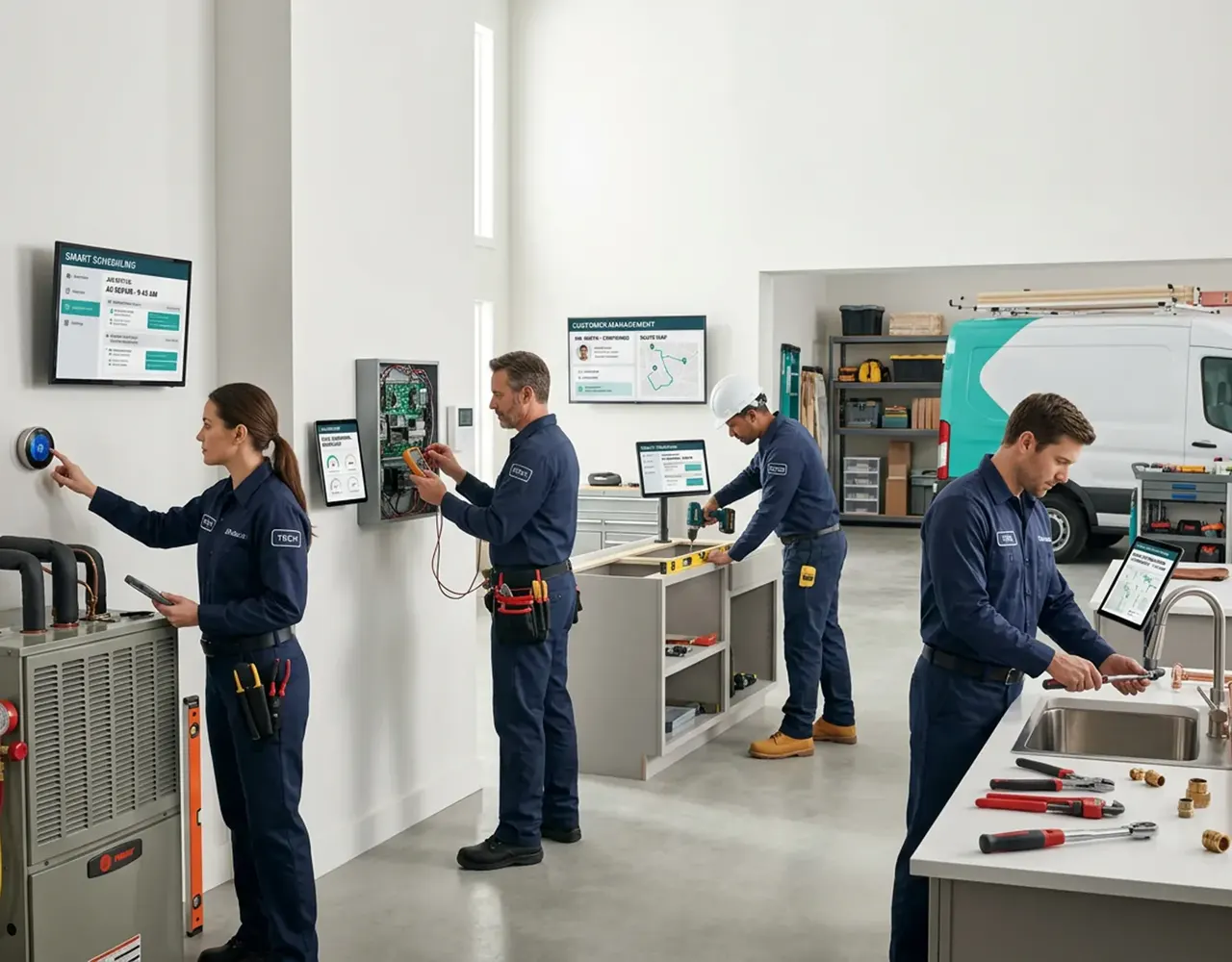 ManufacturingPotential applications: Technical documentation; Equipment manuals; SOP retrieval; Maintenance knowledge; Quality documentation
 Construction & EngineeringPotential applications: Project documentation; Engineering specifications; Safety procedures; Contracts; Technical knowledge
- Energy & UtilitiesPotential applications: Technical manuals; Asset documentation; Maintenance procedures; Operational knowledge; Regulatory information
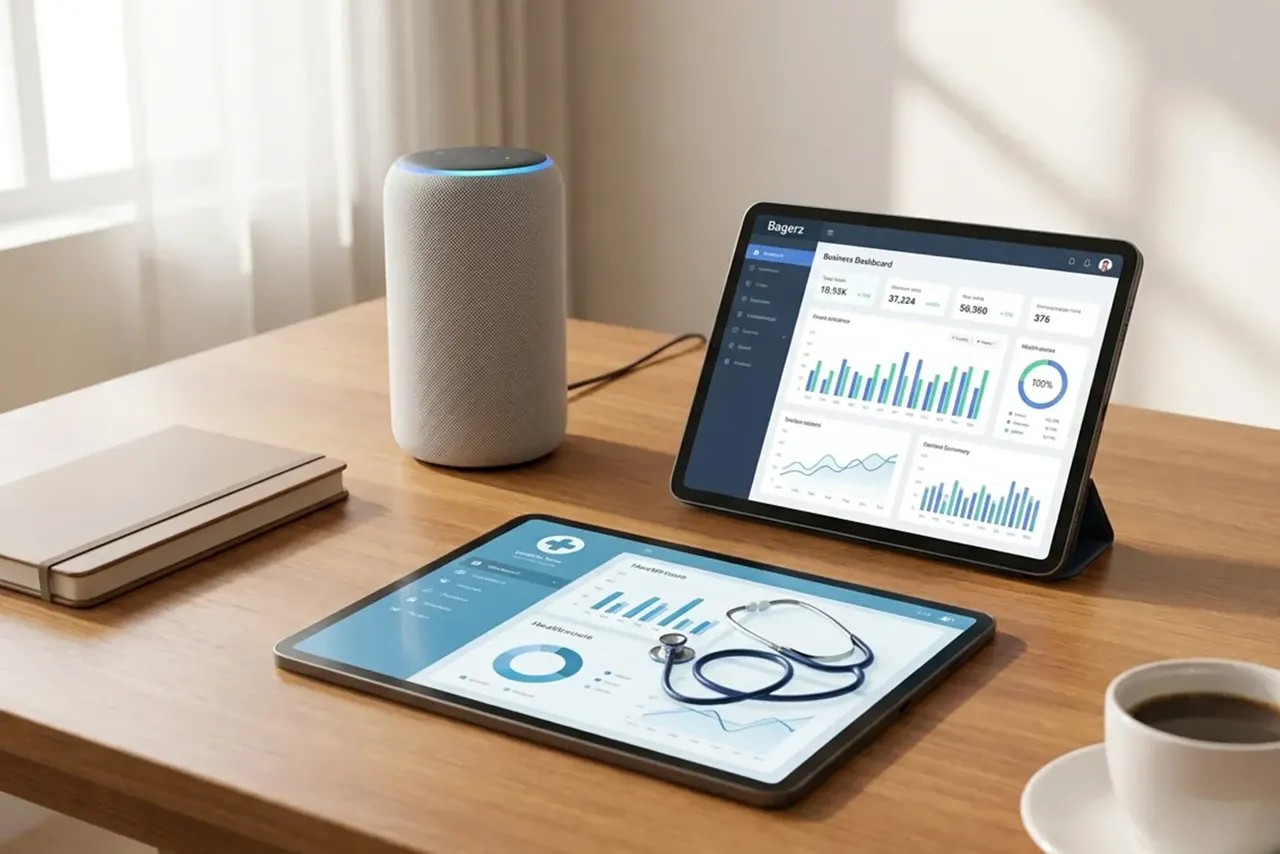 Agriculture & AgTechPotential applications: Agricultural knowledge; Research; Technical documentation; Crop information; Operational procedures
 Real EstatePotential applications: Lease knowledge; Property documentation; Tenant support; Market research; Property management
 Transportation & LogisticsPotential applications: Shipment knowledge; Logistics documentation; Fleet information; SOP retrieval; Customer support
- Automotive & MobilityPotential applications: Vehicle information; Fleet knowledge; Technical documentation; Service support; Customer assistance
 Hospitality & TourismPotential applications: Guest assistants; Hotel knowledge; Employee assistants; Property information; SOP retrieval
 Sports & FitnessPotential applications: Training knowledge; Member support; Coaching resources; Operational documentation
 Media & EntertainmentPotential applications: Content search; Editorial research; Archive retrieval; Content knowledge; Production documentation
 Education & EdTechPotential applications: Student assistants; Course knowledge; Institutional policies; Faculty support; Learning resources
 Nonprofits & AssociationsPotential applications: Organizational knowledge; Member support; Grant documentation; Donor knowledge; Policy retrieval
- Document-Intensive OrganizationsRAG can help these organizations with large quantities of: Contracts; Policies; Claims; Applications; Records; Reports; Invoices; Correspondence; Technical documentation; Research documents; Compliance documentation Potential applications include: Enterprise document search; Knowledge assistants; Document question answering; Policy assistants; Contract knowledge systems; Research assistants; Internal AI copilots; Intelligent document retrieval
Business Outcomes
Appropriately designed RAG systems can help organizations:
- Increase the accessibility and ease of internal knowledge
- Minimize information search time
- Provide staff with appropriate information
- Improve customer-service workflows
- Integrate AI solutions into their own information systems
- Improve information retrieval
- Support document-heavy workflows
- Improve knowledge accessibility
- Provide more consistent answers from AI.
- Ensure that AI applications remain up-to-date with evolving information.
The real impact in the business comes with the quality of the implementation, the knowledge behind it, user adoption, workflow design, and the use case itself.
ZechionAI is thus more concerned with measurable outcomes instead of universal performance boosts.
RAG Technology Capabilities
Our RAG engineering expertise covers the knowledge layer, retrieval layer, model layer, application layer, and operational layer.
AI & Generative AI
- Artificial Intelligence
- Machine Learning
- Generative AI
- Large Language Models
- Foundation Models
- Natural Language Processing
- AI Agents
- Multimodal AI
Knowledge & Retrieval
- Retrieval-Augmented Generation
- Knowledge Bases
- Knowledge Graphs
- Embeddings
- Vector Databases
- Vector Search
- Semantic Search
- Hybrid Search
- BM25
- Reranking
- Query Rewriting
- Query Expansion
- Graph RAG
- Agentic RAG
- Multimodal RAG
AI Engineering
- Prompt Engineering
- Model Integration
- Model Evaluation
- RAG Evaluation
- Context Engineering
- AI Application Development
- API Integration
Operations
- LLMOps
- MLOps
- Model Serving
- Cloud AI
- Hybrid AI
- AI Infrastructure
- AI Monitoring
- Observability
- Continuous Optimization
The requirements of the system should dictate the technology, not a particular vendor or architecture.
Security, Governance & Responsible AI
A production RAG app can be in the middle between users and vital organizational expertise.
This makes governance an integral part of the architecture.
Measuring RAG Performance
Before a production dependency, a RAG system should have an evaluation strategy.
Retrieval Quality
Potential measures include:
- Retrieval relevance
- Context precision
- Context recall
- Search accuracy
- Ranking quality
Generation Quality
Potential measures include:
- Answer quality
- Groundedness
- Faithfulness
- Instruction adherence
- Citation accuracy
- Human evaluation
Risk & Safety
Potential tests include:
- Hallucination assessment
- Prompt injection testing
- Data leakage testing
- Access-control testing
- Bias assessment
Technical Performance
Potential measures include:
- Latency
- Throughput
- Availability
- Token usage
- Compute utilization
- Inference cost
Operational Performance
Depending on the application:
- Search time
- Workflow completion
- Human review requirements
- User adoption
- Task completion
- Support efficiency
The appropriate metrics will vary based on the RAG application's intended purpose.
Our RAG Delivery Process
- Assess
- Architect
- Prepare
- Ingest
- Retrieve
- Generate
- Evaluate
- Secure
- Deploy
- Monitor
- Optimize
Retrieval-Augmented Generation, or RAG, is a new AI architecture that leverages the ability to retrieve information that is pertinent to what an AI wants to generate and then pass that information on as a context to the AI's generative system. It can enable AI applications to interact with private, specialized, or often changing data without depending on information they have learned during the model training process.
The typical approach to a system involves ingesting information, processing it and chunking it, generating a representation that can be searched (embeddings), indexing it, searching for relevant information when a query is received, building a context, and feeding it into an LLM to have it respond. Other production systems can utilize filtering, reranking, query rewriting, access control, evaluation, and monitoring.
RAG is often employed where businesses need AI tools to interact with internal documents, proprietary knowledge, product information, policies, technical content, research, or other information that isn't accessible or up-to-date within a standard AI model.
Not all architectural solutions are RAG! Depending on the problem, prompt engineering, fine-tuning, traditional machine learning, enterprise search, workflow automation, knowledge graph, or other architectures can be more suitable.
The external knowledge that is given to a model during inference is called RAG. It refines model behavior or adapts by adding more training. RAG might be helpful for altering the knowledge, or fine-tuning might be helpful for a specific behavior or task pattern. In some applications, they may even be used together.
RAG can assist in offering the pertinent information from the source that may enhance the grounding; however, it cannot stop hallucinations. Even if the retrieval and source are poor, or the question is vague, or the models are not followed, or the evaluation is weak, the wrong answers may be given. But testing retrieval and generation quality is key to effective RAG.
RAG can process documents, PDFs, websites, databases, APIs, CRM, ERP, knowledge base, technical documentation, research material, structured data, and other authorized sources of information depending on the architecture.
Yes. RAG architectures can be created to deliver authorized private enterprise data. Security, identity, permissions, data isolation, encryption, and deployment architecture should be designed to meet the needs of the organization.
Potentially, yes. Databases can be integrated via data pipelines, APIs, connectors, or application interfaces. The integration strategy will be determined by the data, the data structure, the security model, the need for refresh, and the retrieval scenario.
Yes. But, documents may need to be processed to be effectively retrieved. Based on the quality of the documents and their structure, PDF parsing, OCR, extracting tables, document classification, metadata extraction, chunking, and validation might be required.
Yes. Enterprise knowledge engineering can include information architecture, taxonomy, metadata, data preparation, document ingestion, provenance, versioning, access controls, structured data integration, and retrieval design.
A vector database or vector-capable search system stores and searches numerical representation of information, known as embeddings. It can be used to retrieve content that is semantically similar to a query. The architecture of RAG is one part – the vector search – and not the whole architecture.
Embeddings are vectors representing content that capture some aspects of its semantic properties. They can be used to calculate the similarity of queries to the stored information. The incorporation of model selection should be judged based on the language, domain, content, and retrieval needs of the application.
Hybrid search is the combination of multiple search ways, which is usually keyword search and semantic search. It's helpful when semantic meaning, technical vocabulary, product names, or identifier features are also important.
Graph RAG leverages graph representations of entities and relationships in the retrieval process. It might be appropriate in knowledge environments that focus on relationships between people, organizations, products, events, or other entities as the question is being addressed.
Agentic RAG is an agentic approach to more dynamic retrieval and decision-making of tools. An agent can decide which information to retrieve, which tools to use, or if further searches are necessary, depending on the architecture. Agentic systems are more complex and might be worth the added complexity if it has meaningful value.
Yes. Retrieval-based architectures offer the potential for updating knowledge by ingesting new data and indexing it without the need for retraining the knowledge language model every time the knowledge is updated. The frequency of the update will vary based on business needs and source systems.
Evaluation may include the following: retrieval relevance; context precision; context recall; quality of the answer; groundedness; faithfulness; citation accuracy; latency; cost; security; human evaluation. For the evaluation dataset, as far as possible, the data should be used to reflect actual questions and workflows in business.
Security may include authentication, authorization, permissions, document-level controls, encryption, data isolation, secure infrastructure, prompt injection protection, data leakage protection, logging, monitoring, and proper governance. The specifics of the controls will vary depending on the organization's architecture and needs.
It can be configured to honor authorization requirements. For instance, retrieving can include user identity, user roles, access permissions on documents, access to metadata filters, or other access restrictions. Permission-aware retrieval must be trialed with care as it can be very risky when data is retrieved without permission.
Potentially. APIs can be exposed on RAG systems that can be integrated into enterprise applications, portals, customer service applications, internal applications, CRM applications, knowledge systems, and other software environments.
No single price without understanding the project is responsible. The cost varies based on data volume, data quality, ingest needs, retrieval complexity, model usage, integrations, security, deployment, evaluation, user volume, and continued use. Before recommending an Engagement Model, ZechionAI can evaluate the requirements.
The time needed varies depending on the scope. A targeted proof of concept can be much smaller than a multi-source, multi-permission, production-integrated, evaluated infrastructure, secured, and monitored deployment. Having a Discovery and Architecture Assessment will allow for a more realistic implementation plan.
Yes. RAG can be employed by startups to link an AI product to a specific product documentation, customers' knowledge, support information, research, or domain-specific information. Architecture should be suitable in size but not over-engineered for an early-stage product.
Managed services can include monitoring, retrieval optimization, knowledge freshness, evaluation, cost optimization, infrastructure support, model and embedding updates, security reviews, and ongoing engineering.
Make AI Your Partner to Run Your Business with Knowledge
Your organization's knowledge is important. The challenge is getting that knowledge into AI without adding unwanted complexity, exposure, and/or operating costs.
Talk to Zech, live