
AI Solutions for SaaS & Technology Startups
AI for onboarding, in-app support, product analytics, and customer operations.


- B2B SaaS
- B2C SaaS
- Enterprise SaaS
- FinTech SaaS
- HealthTech SaaS
SaaS businesses collect lots of data from product interactions, customer dialogue, documentation, customer tickets, CRM records, and operational systems. The challenge is to convert that information into action without adding to the workload of already-stretched out product, engineering, support, and customer-success teams.

AI that fits your SaaS Product
Whether for introducing AI to new customers or enabling a product to offer context-specific assistance, or understanding how a product is used, ZechionAI can help SaaS companies and technology startups get AI into the workflow that matters.
We utilize Artificial Intelligence engineering, product analytics, workflow automation, data integration, knowledge systems, and human oversight.
The key to the utility of AI is its integration with the actual product, data, documentation and workflows that teams are already using.
ZechionAI can assist with the development and implementation of systems for:
- Customer onboarding
- In-app product assistance
- Documentation search
- RAG-based knowledge systems
- Support automation
- Product usage analytics
- Customer-success intelligence
- Voice-of-customer analysis
- Feature adoption analysis
- AI agents
- Workflow automation
- Data engineering
- The integration of CRM and help-desk.
- Product analytics integration
- AI governance and monitoring
It's not about creating AI just for AI's sake. The goal is to determine the areas where software can appropriately decrease repetitive tasks, enhance information availability, or assist teams in making wise decisions.
SaaS & Tech Startups services
8 services
SaaS Teams Often End Up Clashing

As a SaaS company grows, they may encounter similar problems.
Users can register but do not finish up their accounts. It may be difficult to find the correct documentation. Support teams might be answering the same product questions over and over. A customer-success manager can take hours to prepare for a customer conversation by collating all of the information needed about that account.
Meanwhile, product teams can have extensive behavioral data, and not enough time to analyze it.
Common challenges include:
- Users that are not utilized for the activation process
- Complex product configuration
- Repetitive support questions
- Records in various places
- Outdated knowledge articles
- Data about how products are being used is spread over systems.
- Lack of visibility about the adoption of features.
- Manual account reviews
- Large support-ticket volumes
- Recurring support issues where Engineering is involved.
- Feedback from customers across the board
- Inability to link the behavior of their product with the support activity
- While a few data points show that engagement is dropping, they are not numerous enough to provide much visibility.
- Manual customer-success preparation
- Lack of knowledge of documentation shortcomings
- The rise in self-service support demand.
ZechionAI is a solution that seamlessly links these aspects, ensuring that vital decisions remain in the right hands while leveraging AI and data workflows.
AI-Powered Customer Onboarding
The first time users experience a service, it can be the deciding moment to help them understand the value of a SaaS product.
Personalized onboarding guidance
- Know where to start.
- Help get important product features right.
- Find relevant documentation
- Complete setup steps
- Understand product terminology
- Locate tutorials
- Identify incomplete configuration
- Find relevant integration instructions
- Learn how to configure accounts and workspaces
- Get answers without leaving the product
ZechionAI can create onboarding assistants and workflows that offer context-specific suggestions during the process of setting up customers.
An AI onboarding assistant can assist the users:
The assistant can quote approved product information, and not provide generic answers that don't necessarily apply to the job.
Onboarding assistants
A product-specific onboarding assistant can pull in pertinent details from authorized resources and provide the next proper course of action.
For instance, an integration user might ask:
Which settings do I need to make prior to connecting this application?
The assistant could be able to pick up the appropriate setup documentation and describe the prerequisites for the setup.
In addition, in the case where the workflow allows, the assistant can also steer the user to the correct configuration screen or workflow.
Setup workflow automation
Potential workflows include:
- Account setup guidance
- Workspace configuration
- User-role guidance
- Integration instructions
- Data-import guidance
- API setup guidance
- Security configuration guidance
- Billing setup information
- Configuration checklists
- Training recommendations
Any action that alters customer data or system configuration should be done inside of specific permissions and approval rules.
Onboarding analytics
ZechionAI can help analyze product events around:
- Signup
- Setup completion
- Activation
- Feature adoption
- Documentation usage
- Support interactions
- Workflow completion
- Onboarding milestones
- Drop-off points
- Time from milestones of onboarding
The exact metrics should be determined based on the company's existing product events and business definition and should not be assumed by an AI system.
In-App AI Support Bots
It is not a good sign of customer service to require a customer to exit an application to get an answer.
Human escalation
- New Ticket is created on the Support ticket screen.
- Send to a support person
- Request additional information
- Using flags to indicate technical problems.
- Elevate a matter relating to an account
- Send referrals to relevant team
ZechionAI can be integrated into SaaS products, if technically appropriate, to create a contextual assistant.
An in-app assistant is available to assist you with:
- Product questions
- Feature explanations
- Documentation search
- Troubleshooting
- Configuration guidance
- Integration instructions
- FAQs
- Knowledge-base retrieval
- Account workflow guidance
- Ticket creation
- Human escalation
- Conversation summaries
- Support categorization
- Suggested support responses
- Product-specific answers
The support assistant should be aware of the actual product information.
The system does not only give you standard tips but can fetch information from trusted sources like:
- Product documentation
- Help-center articles
- API documentation
- Release notes
- Troubleshooting guides
- Configuration documentation
- Product policies
- Approved support content
- Structured product information
This helps to minimize chance of the assistant creating features, workflows, or policies that aren't available.
Not all questions can be automated.
The assistant can be able to recognise scenarios that need human intervention and help to provide pathways of escalation like:
AI should be used to aid the support organization, rather than replace it with professional judgment.
RAG Knowledge Systems for SaaS

SaaS knowledge sources
- Product documentation
- Help-center content
- Knowledge bases
- API documentation
- Developer documentation
- Release notes
- Troubleshooting guides
- Internal SOPs
- Product policies
- Support articles
- Training materials
A RAG system can be used with the potential of:
What is RAG?
RAG (Retrieval-Augmented Generation) is a method that enables an AI system to look into a company's approved knowledge sources and retrieve relevant information before generating a response.
For a Saas company, it could be an assistant that's reading through the product documentation before responding to a customer inquiry.
Common RAG workflow could include:
- User question
- Be retrieved by AI system
- AI system be given relevant sources to consider
- Be put in context by AI system
- AI system give a response
- Add a reference to the sources if needed (optional)
- Human escalation if necessary
RAG implementation
ZechionAI can help with:
- Source indexing
- Document processing
- Chunking strategy
- Metadata design
- Permission-aware retrieval
- Relevance ranking
- Retrieval evaluation
- Knowledge refresh
- Source references
- Response evaluation
- Monitoring
- Access controls
The quality of RAG is largely dependent on the underlying information, which should be of good quality, well-structured, permissioned, and up to date.
An AI system can't accurately fix an issue if the documentation is missing or inaccurate. In most cases, improving the knowledge base is an integral part of the AI project.
Product Usage Analytics
Behavioral data is generated in high volumes in SaaS products.
Product usage analysis
- Login activity
- Session activity
- Feature usage
- Workflow completion
- Account activity
- API usage
- Workspace activity
- User engagement
- Feature adoption
- Usage frequency
- Usage depth
- Changes in use over time
The challenge is not just data collection, but also gathering more relevant data. It's awareness of what signs are effective.
Companies can use ZechionAI to create product analytics workflows that convert product events into actionable product, customer-success, support, and operations information.
Analysis may include, depending on the data available:
Customer segmentation
AI segmentation can be used to better understand segments, including:
- New users
- Activated users
- Highly engaged users
- Low-engagement users
- Power users
- Administrators
- Trial users
- Paid customers
- Enterprise accounts
- Dormant accounts
Segments should be meaningful product behavior and business definitions and not be arbitrary.
Behavioral patterns
AI-driven analysis can aid in identifying:
- Frequently used features
- Underused functionality
- Common workflow paths
- Repeated support needs
- Product friction
- Adoption gaps
- Changes in engagement
- Customer segment use patterns
AI can detect patterns linked to low engagement or a customer's likelihood of churning, but none of these signals can be seen as a definite prediction of customer actions.
Customer Success Intelligence
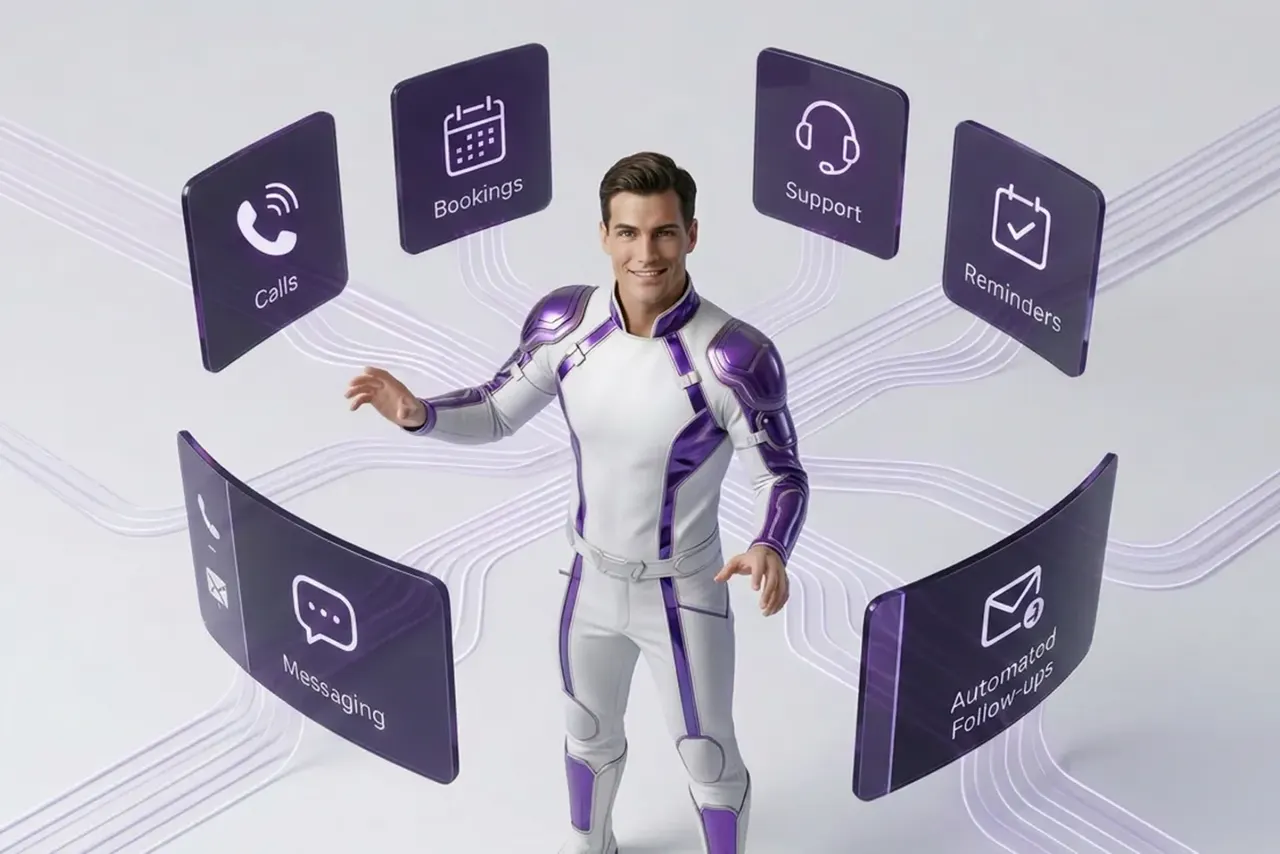
For customer-success teams, it might take multiple systems to put together information to determine what's worth paying attention to.
ZechionAI can help create account intelligence workflows that bring relevant information together.
Potential capabilities include:
- Account summaries
- Product usage summaries
- Customer health indicators
- Recent support activity
- Product adoption summaries
- Open issues
- Documentation engagement
- Customer conversation summaries
- Renewal preparation
- Follow-up recommendations
- Account prioritization
The customer success professional, for instance, might get a summarized account of recent changes in usage, any active support tickets they have, frequent usage of account features, and customer interactions.
The system helps the professional to prepare and make decisions. Does not independently influence customer results.
Support Operations Automation

AI can be used in the day-to-day functions of customer service as well as the customer engagement.
ZechionAI can help automate or assist with:
- Ticket classification
- Ticket routing
- Priority suggestions
- Duplicate-ticket detection
- Conversation summaries
- Knowledge article recommendations
- Draft responses
- Uses relevant context and sentiment to support meaning
- Escalation workflows
- Resolution categorization
- Support trend analysis
- FAQ discovery
- Knowledge-gap detection
When a workflow calls for it, customer-facing responses can be set up for human review.
The goal is to enable support teams to use less time sorting, searching and summarising data and more time working on problems that demand human judgment.
Product feedback & voice of Customer

Customer input can be found in numerous locations.
Feedback intelligence
- Theme identification
- Topic clustering
- Feature-request grouping
- Complaint categorization
- Repeated issue detection
- Feedback trend analysis
- Customer-segment comparisons
- Product feedback summaries
ZechionAI has the ability to analyze and categorize information from:
- Support tickets
- Product reviews
- Surveys
- Customer interviews
- Sales notes
- Customer-success notes
- Chat conversations
- Feature requests
- Email feedback
Potential analysis includes:
This can be useful to product teams to notice trends without having to read all the conversations.
AI doesn't determine the company to be built. Product leads are still responsible for prioritization, feasibility, strategy, and impact on customers.
Complete AI Agents for SaaS
AI agents are helpful when there are several steps, tools or information sources involved in a workflow.
ZechionAI thinks of agents as software systems that are controlled instead of free-spirited decision makers.
- 01
Onboarding Agent
Clears user-oriented setup questions, follows approved onboarding workflows and determines when human support is required.
- 02
Support Agent
Answers approved product questions, retrieves knowledge, helps with troubleshooting and escalates issues based on defined rules
- 03
Knowledge Agent
Searches to approve product and internal documents and provides information when appropriate.
- 04
Customer Success Agent
Creates account summaries, usage information, support context and follow-up information for Customer Success Professionals
- 05
Product Analytics Agent
Interprets product usage information in structured datasets, and generates structured summaries or reports.
- 06
Support Operations Agent
Routes, summarizes and categorizes enquiries.
- 07
Documentation Agent
Identifies obsolete, incomplete, duplicated or commonly misinterpreted documentation
- 08
Feedback Analysis Agent
Gets feedback from customers and breaks it down into themes, segments and reoccurring product issues.
- 09
QA Agent
Supports periodic quality checks for specified product or support processes.
Agents should run under specific permission, tool, data, escalation and monitoring boundaries.
SaaS Data Integration
AI is more useful when it can share information with other systems that are relevant to it.
With the technical support and permission of ZechionAI, it can be connected to AI workflow with:
- CRM platforms
- Customer-success platforms
- Help desks
- Ticketing systems
- Product analytics platforms
- Data warehouses
- Databases
- SaaS applications
- Communication platforms
- Billing platforms
- Identity systems
- APIs
- Webhooks
- Cloud storage
Any of the following can be part of an integration architecture: APIs, webhooks, scheduled data pipelines, event streams, or other supported methods.
The type of architecture varies with the product environment, security demands, data size, latency requirements and available interfaces.
All-in-One ZechionAI AI Services for SaaS
AI Strategy & Advisory
- AI opportunity assessment
- Use-case prioritization
- AI roadmap development
- Architecture planning
- Data-readiness review
- AI governance planning
- Measurement framework
- Pilot planning
Customer Onboarding AI
- Onboarding assistants
- Setup guidance
- Contextual product help
- Activation workflow support
- Onboarding analytics
- Guided configuration
In-App Support AI
- Product support assistants
- RAG knowledge assistants
- FAQ automation
- Troubleshooting assistants
- Knowledge retrieval
- Human escalation workflows
Product Analytics AI
- Usage analysis
- Feature adoption analysis
- Customer segmentation
- Behavioral analysis
- Engagement monitoring
- Usage trend analysis
- Product friction analysis
Customer Success AI
- Account summaries
- Customer health signals
- Follow-up recommendations
- Renewal preparation
- Customer activity summaries
- Support-context summaries
AI Agents
- Support agents
- Onboarding agents
- Analytics agents
- Knowledge agents
- Documentation agents
- Workflow agents
- Feedback agents
Data Engineering
- Data pipelines
- Data transformation
- Data normalization
- Event processing
- Data-quality checks
- Data warehouse integration
- Data modeling
AI Integration
- API integration
- CRM integration
- Help-desk integration
- Product analytics integration
- Data-platform integration
- Workflow integration
- Webhook integration
AI Governance & Security
- Access controls
- Role-based permissions
- Data-handling policies
- Audit logging
- Human review
- Model evaluation
- Prompt controls
- Monitoring
- AI usage policies
Managed AI Services
- System monitoring
- Knowledge updates
- Model evaluation
- Workflow optimization
- Performance reviews
- Technical support
- Continuous improvement
50 Practical SaaS AI Use Cases
| # | Use Case | Practical Application |
|---|---|---|
| 1 | AI onboarding assistant | Assists users to set up products |
| 2 | In-app product assistant | Answers product questions within the application. |
| 3 | Documentation assistant | Assists customers to locate pertinent documentation |
| 4 | Support chatbot | Responds to authorised repetitive queries |
| 5 | Knowledge-base assistant | Accesses and accesses approved knowledge |
| 6 | API documentation assistant | Assists the developers to find API information |
| 7 | Developer support assistant | Supports approved Technical documentation |
| 8 | Troubleshooting assistant | Provides instructions on documented troubleshooting |
| 9 | Ticket classification | Classifies incoming support requests |
| 10 | Ticket routing | Sends tickets to appropriate queues |
| # | Use Case | Practical Application |
|---|---|---|
| 11 | Ticket summarization | Condenses lengthy conversations |
| 12 | Response drafting | Develops ideas for support teams |
| 13 | Escalation support | Recognizes situations where humans are needed |
| 14 | Feature adoption analysis | Indicates the features that are being utilized |
| 15 | Product usage analytics | Analyzes customer behavior |
| 16 | Customer segmentation | Labels users into groups that are defined by behavior. |
| 17 | Engagement analysis | Examines customer activity |
| 18 | Usage trend detection | Recognizes trends in usage |
| 19 | Low-engagement signals | Recognizes activity related to decreased participation |
| 20 | Customer health summaries | Gathers pertinent information from accounts |
| 21 | Customer-success summaries | Ensures that CSMs have context for their preparation |
| 22 | Renewal preparation | Co-ordinates relevant customer information |
| 23 | Customer feedback analysis | Recognizes patterns of feedback |
| 24 | Feature-request clustering | Groups together similar feature requests. |
| 25 | Voice-of-customer analysis | Produces a summary of customer opinions and ideas |
| 26 | Documentation gap analysis | Identifies missing knowledge |
| 27 | Documentation update assistance | Helps maintain knowledge content |
| 28 | Product FAQ generation | Assists in developing FAQs for approved information |
| 29 | Release-note assistant | Organizes product changes |
| 30 | Product change summaries | Describes relevant changes to users or teams |
| 31 | Internal support assistant | Relies on others to access internal information |
| 32 | Sales engineering assistant | Extracts product and technical information |
| 33 | Product analytics assistant | Supports teams to ask predefined analytics |
| 34 | Data-quality monitoring | Identifies Data Quality issues that have been identified |
| 35 | Usage anomaly detection | Marks unusual activity for review |
| 36 | API usage analysis | Analyzes the use of APIs. |
| 37 | Account activity summaries | Consolidates account-level activity |
| 38 | Workflow automation | Delegated repetitive processes to automation. |
| 39 | Customer communication assistance | Supports groups in the preparation of customer messages |
| 40 | Knowledge management | Organizes and maintains organizational knowledge |
| 41 | Support trend reporting | Recognizes common themes in support |
| 42 | Product friction analysis | Recognizes recurring bottlenecks in processes |
| 43 | User journey analysis | Analyzes typical product routes |
| 44 | Onboarding reporting | Tracks onboarding milestones |
| 45 | AI governance monitoring | AI-system controls are tracked in tracks. |
| 46 | Internal operations assistant | Supports teams in internal processes |
| 47 | Customer-success prioritization | Assists in structuring accounts for review |
| 48 | Product research support | Organizes research information |
| 49 | Support knowledge maintenance | Reports to class teacher on information to be covered |
| 50 | Cross-system customer intelligence | Gathers appropriate customer data |
Different SaaS & Technology Segments Solutions
ZechionAI can customize and tailor AI workflows for various product models and use cases.
B2B SaaS
Account intelligence, onboarding, support automation, product adoption and customer-success workflows.
B2C SaaS
Self-service assistance, onboarding, product education, engagement analysis and customer support.
Enterprise SaaS
Permission-aware knowledge systems, account intelligence, workflow automation, analytics, and controlled AI deployment.
To provide assistance with workflow, retrieve documentation, run support operations, and analyze data as per applicable requirements and organizational controls.
HealthTech SaaS
Product support, document management, support processes and analytics that are built on the company's data governance and applicable requirements.
Student support, new user orientation, knowledge retrieval, engagement analysis, and workflow support.
LegalTech
Product support, knowledge retrieval, documentation assistance, workflow analysis, and customer-success intelligence.
HRTech
Product onboarding, employee or administrator support, documentation retrieval, support operations and usage analysis.
MarTech & SalesTech
Product support, integration instructions, usage analysis, customer segmentation, and workflow automation.
InsurTech
Product support, Knowledge systems, Workflow support, Analytics based on applicable data and regulations.
Customer onboarding, property management workflow support, support automation and product analytics.
RetailTech
Product support, customer support, usage analytics, and workflow automation.
LogisticsTech
Workflow guidance and support automation, operational analytics, documentation support and integration support.
Cybersecurity SaaS
Technical documentation and support workflows, product education, knowledge retrieval and operational analytics with suitable access control.
Developer Tools
API documentation assistants, developer support, troubleshooting, onboarding, usage analytics and technical knowledge systems.
API Companies
API documentation retrieval, onboarding of developers, API integration support, API usage analysis, and support automation.
Data Platforms
Documentation assistants, developer support, usage analytics, knowledge retrieval and customer-success intelligence.
AI Software Companies
Product onboarding, technical support, knowledge management, usage analytics, model documentation support, and AI process control.
Vertical SaaS
Industry specific Onboarding, Support, Analytics, Documentation and Customer Success workflows.
Marketplace Platforms
User onboarding, seller/ provider support, buyer support, behavioral analysis and workflow automation.
Collaboration Software
Onboarding and feature education, support assistance, user analytics, and engagement analysis.
Implementation should be industry-specific and take into consideration the company's data, users, workflows, contracts, security requirements, and obligations.
AI Support for Technology Startups
Rapid product iteration and limited engineering resources are common challenges faced by startups.
Common pressures include:
- Limited development resources
- Fast product changes
- Growing support volume
- Documentation gaps
- Technical debt
- Fragmented data
- Customer expectations
- Product-market learning
- Infrastructure decisions
- Cost control
There's no need for a big AI platform project in a startup.
ZechionAI can be used to integrate AI gradually.
For example:
One workflow → validate it, measure it, integrate it and extend it only when it is necessary!
A startup might start with an onboarding assistant, followed by support automation, and then product analytics and intelligence about customers' success.
This method enables the technology investment to be implemented in accordance with actual needs of the business.
Security & Privacy
AI systems need to be built with the same consideration as for other vital software systems.
ZechionAI can incorporate controls such as:
Responsible AI
Responsible AI is not just a tick the box, it's part of the implementation.
ZechionAI emphasizes:
- 01
Human-in-the-loop
Simply keep people in, when the decisions need to be made with professional judgment or business accountability.
- 02
Controlled permissions
Limit the use of AI systems by only providing them with the necessary access for their specific functions.
- 03
Defined use cases
Define the boundaries of permissible and impermissible actions of an AI system.
- 04
Output evaluation
Test answers and processes to meet specific quality standards.
- 05
Source grounding
Apply accepted information sources to knowledge intensive applications.
- 06
Escalation
Provide clear paths to human teams when system is at its limit.
- 07
Auditability
Keep proper records of system activities as necessary.
- 08
Monitoring
Keep track of performance, usage, errors, costs, and unexpected activity.
- 09
Documentation
Record data sources, workflows, permissions, dependencies and operating procedures.
- 10
Appropriate model selection
Think about the specific use case and choose models accordingly, not the biggest and most expensive.
Depending on the workflow and risk level, AI outputs can be wrong and need to be reviewed by humans.
The ZechionAI Delivery Lifecycle
- 01
Discover
Know SaaS product, users, workflows, data, environment of support, and business goal.
- 02
Strategize
Determine the business value, feasibility, data availability, risk, and the requirements for implementing the AI opportunities.
- 03
Design
Architecture, user experience, data flows, permissions, AI behaviour, integrations, and evaluation approach.
- 04
Build
Develop the AI workflow, application parts, retrieval systems, integrations, analytics or agents.
- 05
Integrate
Integrate compliant systems, APIs, data sources, products events, knowledge bases, and operational tools.
- 06
Deploy
Roll out the validated workflow into controlled production.
- 07
Automate
Automate suitable repetitive tasks with clear permissions and escalation procedures.
- 08
Monitor
Track performance, quality, cost, usage, errors and operational behaviour.
- 09
Secure
Discuss access control, data handling, authentication, secrets, API and deployment environments.
- 10
Govern
Continue policies, documentation, evaluation procedures, human oversight and appropriate controls.
- 11
Optimize
Enhance retrieval, prompt, workflow, data quality, user experience and operational efficiency.
- 12
Scale
Implement in other workflows as the evidence and business need dictates.
The question remains, why is outsourcing AI development a worthwhile strategy?
It isn't always feasible to develop all of the capabilities of an AI within the walls of a SaaS engineering team.
Working with an external AI engineering partner can provide:
- 01
Additional specialized capacity
Incorporate AI engineering and automation skills, but not in all internal capabilities right away.
- 02
Faster proof-of-concept development
Test a small use case before investing substantial in-house resources.
- 03
Reduced engineering pressure
Enable in-house personnel to concentrate on developing the core product, while specialized projects are outsourced to other teams.
- 04
Architecture support
Seek guidance on reviewing data pipelines, retrieval, models, integrations, permissions and deployment.
- 05
Integration expertise
Integrate AI processes with current systems, when technical and authorized.
- 06
Governance support
Develop realistic documentation, evaluation, permission and operating protocols.
- 07
Flexible scaling
Scale up or down implementation as per business needs.
Outsourcing doesn't always lower expenses. The value will vary based on the scope of the project, internal abilities, implementation, and the operating structure of the project going forward.
Why Partner With ZechionAI?
- 01
Practical implementation
ZechionAI is not just about AI demos but real workflows.
- 02
Product-aware engineering
The principles of AI systems are rooted in product behaviour, users, support needs, analytics and practical realities.
- 03
Human oversight
Qualified people are important; decisions are still in their hands.
- 04
Flexible engagement
Assessment, focused pilot, production implementation, integration or continuous optimization can be the beginning of engagement.
- 05
Controlled deployment
Begin with a clearly stated use case and grow as results, technical preparedness and operating requirements dictate.
- 06
Integration-first approach
Cooperate with existing environment of technology, technically supported and authorized.
- 07
Clear documentation
Record workflows, data sources, permissions, dependencies and operating procedures.
- 08
Long-term support
Keep monitoring, maintaining, optimizing and add implementation as necessary.
Measuring Business Value
Useful operational and product metrics should be used to evaluate AI projects.
Potential measurements include:
- Onboarding completion
- Time to activation
- Support response time
- Support resolution time
- Ticket deflection, where appropriately measured
- Support workload
- Feature adoption
- Product engagement
- Documentation usage
- Customer-success workload
- Knowledge-retrieval quality
- Workflow completion
- AI response quality
- Escalation rate
- User satisfaction
- System operating cost
If possible, definitions for measurements should be determined prior to implementation.
It would be up to the user to choose the appropriate metric for the workflow.
An onboarding assistant's job could be more about the activation and onboarding completion than the number of tickets. Quality of response, rate of escalation, resolution time, and customer experience can be more useful for a support assistant.
Start Small. Scale Responsibly
You don't have to start with a handful of workflows for a successful AI program.
- 01
Assess
Determine the most valuable workflow and the data, systems, users, risks, and dependencies.
- 02
Pilot
Construct a relevant, production-style proof of concept.
- 03
Validate
Evaluate:
- Accuracy
- Usefulness
- Security
- Cost
- User experience
- Reliability
- Escalation behavior
- 04
Deploy
Roll out the validated workflow for production.
- 05
Integrate
Connect other systems and data sources.
- 06
Expand
Incorporate new AI features encompassing evidence, product priorities, and operational readiness.
Engagement Options
- 01
AI Assessment
For companies looking for an AI use case that needs help.
The best use cases for this include startups and SaaS companies trying to figure out where AI should be added.
- 02
Focused Pilot
For one single defined onboarding, support, analytics or knowledge workflow.
Appropriate for: Companies who are interested in testing a specific use case.
- 03
Production Implementation
For organizations that are prepared to implement an AI workflow that has been tested.
Ideal for: organizations with a clear business need and application environment.
- 04
AI Platform Expansion
For companies that are linking several AI workflows within product development, support, customer success, and analytics.
Ideal for: SaaS and enterprise software companies.
- 05
Managed AI Services
For ongoing monitoring, optimization, maintenance, evaluation, and technical support.
Best suited for: companies who require ongoing technical support following deployment.
ZechionAI does not guarantee the accuracy of the information it provides
It is important to have realistic expectations for AI.
ZechionAI is not guaranteed to:
- Guaranteed revenue growth
- Guaranteed customer retention
- Guaranteed churn reduction
- 100% accurate AI responses
- Removal of human assistance
- The elimination of engineering work.
- Guaranteed ROI
- Automatic product-market fit
- Guaranteed regulatory compliance
- Perfect predictions
- Completely autonomous decision-making
Factors affecting the performance of AI include:
- Data quality
- Product architecture
- Knowledge quality
- Integration quality
- User behavior
- Workflow design
- Model selection
- Evaluation
- Governance
- Ongoing maintenance
An AI system can be beneficial without claiming infallibleness.
AI services for SaaS & Tech Startups
- RAG SystemsYour organisation has knowledge that is valuable. It can appear in documents, databases, policies, contracts, websites, technical manuals, CRM, research files and internal applications.
- AI Agents & Autonomous AIAI Agents Built Around Real Business Workflows, Data, Tools, and Outcomes
 Intelligent AutomationAutomate Repetitive Work. Connect Your Systems. Improve How Your Business Operates.
 AI Security, Governance & ComplianceSecure AI. Govern AI. Deploy AI Responsibly.
 Managed AI ServicesKeep your AI running at peak performance — 24/7.
 AI Strategy & AdvisoryPractical AI Strategy for Scalable Business Transformation
 AI Integration & APIsConnect Your Systems, APIs, Data & AI Into One Intelligent Business Ecosystem
- Document Processing & OCRTurn Documents Into Structured Data, Intelligent Workflows, and Actionable Information
ZechionAI offers AI strategy, AI onboarding assistants, in-app support, RAG knowledge systems, product analytics, customer-success intelligence, AI agents, workflow automation, data engineering, integrations, governance and security architecture, monitoring, and managed AI services.
Yes. An onboarding assistant can guide users through the steps of setting up, assist with locating documentation, guide through product functionality, explain terms, and perform specific tasks. The specific functions will vary based on the product architecture and data.
Yes, if the application architecture can support the required integration. The assistant may be integrated into the product and linked to the approved product documentation, knowledge, APIs, and/or workflows.
Yes. Documentation can be a key source of knowledge for a RAG system, assuming that it exists. Documentation should be assessed for quality, structure, access, freshness and duplication before the deployment.
RAG is an acronym for Retrieval-Augmented Generation. It enables an AI system to extract the relevant information from trusted sources before providing a response. This is especially helpful for SaaS products as many can use product-specific information instead of just general model knowledge.
Yes, if the system has access to appropriate product information. Documentation, retrieval, product data, model behavior, evaluation, system design are all factors that determine the quality of answers.
It can help answer repetitive questions, sort, summarise, retrieve from documents, create draft answers, and route. The appropriate level of automation is based on the support workflow and risk.
If the integration and permissions allow, a system can be configured to create tickets. Organizations must determine what information is gathered, and when tickets are to be created.
Yes. When integrated with a supported ticketing environment with proper permissions, AI can classify tickets and can propose or even automate routing.
Yes. AI can provide summaries of conversations, identify issues, capture relevant context, and organize information for support teams.
Yes. AI can produce a draft answer based on material that has been approved for use. Customer facing responses may require human review prior to being sent.
Yes. Quality control may be integrated into the process, especially for more complicated, sensitive, customer-specific, and/or higher risk interactions.
Yes. The defined product-event and usage data can be analyzed by AI to find patterns, segments, trends, and areas that need review.
Analysis can be performed based on logins, sessions, feature usage, workflows, API activity, account activity, workspace activity, and changes in engagement, depending on available data.
Yes. AI can analyze patterns and identify features that are used, unused, popular with specific users and segments, or linked to specific workflows.
Yes. Systems are able to detect the patterns that come with lowered activity or engagement. These are indications for review not conclusions.
While AI can uncover trends linked with the risk of churn, churn predictions are not the same as a sure thing. It is important to consider the right historical data and business definitions to evaluate models.
These should be regarded as guidance signals for decision making. The customer's relationship, product context, contracts, history of support and more should be taken into account by customer-success professionals.
Yes. AI can create account summaries, usage data, support context, customer activity summaries and follow-up recommendations.
Yes. Approved information from the network can be combined into a system and produce structured account summaries for review.
Yes. AI can categorize and summarize feedback from tickets, surveys, interviews, conversations, reviews, and more approved sources.
Yes. Feature requests can be clustered into themes to be able to detect recurring feature requests in product teams.
Yes. Grouped ticket information can show recurring problems, often not well understood features, missing documentation, and common customer problems.
Yes. AI can review frequently asked questions and problems in the support system and correlate them with the documentation to uncover any missing information.
Yes. It can detect duplicate or outdated content, highlight changes in products, recommend changes and assist in writing documentation. Human review is still relevant.
In theory, if the CRM offers appropriate integration options, and the organization grants access. The exact implementation will vary depending on the CRM and workflow.
Potentially. Help-desk integrations may help retrieve, classify, route, summarize, recommend knowledge, and other approved workflows.
Yes, if technologically feasible and permitted. The architecture is dependent on the warehouse, data structures, access pattern, and desired analytics workflows.
Yes. As long as the API offers the required functionalities, the right authentication and authorization have been set up, and the API has been designed to integrate with other workflows, APIs can be an important way to incorporate AI into workflows.
Yes. Agents are designed to be onboarded, supported, for knowledge retrieval, analytics, documentation, customer success and other defined workflows.
AI agent: It is a software system that can understand a specific task, access information, leverage authorized tools and execute one or more steps of a workflow based on pre-established rules.
Restrictions on permissions may be achieved via authentication, authorization, roles, restrictions on tools, restrictions on the environment, and rules applied to workflows.
They may when the application and integration architecture allows and the organization specifically allows them to do so. Actions should be confined to specified permissions.
Yes. Escalation is integrated when the system is uncertain, has an unsupported request, a defined risk condition or a task that needs human judgement.
Absolutely. It can be a good idea to begin with a single clear workflow. This workflow can then be assessed and more functionality added as required.
The timeframe is very different depending on scope, integrations, data quality, product complexity, security requirements, testing and deployment requirements. The timeline for a focused pilot will differ from a multi-system production implementation.
The information that is useful is the business objective, target users, current workflow, relevant systems, current data, documentation, integration requirements, security considerations and desired measurements.
Ensuring that data is of good quality is crucial to the reliability of AI, but where to start depends on the use case. A data-readiness assessment will help to uncover gaps that need to be resolved prior to and/or during implementation.
The quality of AI responses can be lower due to outdated documents. Documentation review, Knowledge-gap analysis, Source prioritization and process for maintaining information up-to-date can therefore be part of a project.
Depending on the application, evaluation may encompass accuracy, relevance, grounding in the source, completeness, refusal behavior, escalation behavior, consistency, latency, cost and user feedback.
Protection will be based on the architecture for implementation and may involve access control, authentication, authorization, encryption (if supported), data minimisation, separation of the environment, audit logging and controlled data retention.
Yes. Application-level permission restrictions, retrieval restrictions, data segmentation, identity systems, role-permission restrictions, and other architecture level restrictions can be used to limit access.
Yes. By limiting access to and actions on specific information to certain users, services, or agents, role-based access can help minimize risks.
Yes, if there is an application or architecture that supports logging. Logs may serve as a means of troubleshooting, monitoring, auditing and operational review.
Yes. Deployment can be created based on specific authorizations, approvals, monitoring and integrations within specific environments.
Yes. Managed services may consist of monitoring, knowledge updates, evaluation, workflow optimization, maintenance, technical support and expansion.
Yes. ZechionAI can be used in conjunction with existing product, engineering, data, support, and customer-success teams. Shared implementation responsibilities can be adopted in the engagement.
Outsourcing services can deliver special capacity and experience in architecture, pilot-development support, integration expertise, and more implementation resources. Does not necessarily lower cost, and should be compared to the company's internal resources and goals.
Starting with a specific use case and slowly building up is an approach that can be used. This enables the start-up to test technical, user, operational and cost feasibility of the concept prior to wider application.
Yes. Enterprise implementations may require more complex integrations, permissions, governance, data environments, workflows, monitoring, and organizational needs.
The use case dictates the type of measurement. Indicators may be onboarding completion, activation, workload of the support team, quality of responses, resolution time, feature adoption, workflow completion, user satisfaction, escalation rate, operating cost etc.
Cost varies according to scope and integrations, amount of data, architecture, model requirements, user volume, security requirements, testing, deployment, monitoring, and ongoing maintenance.
Yes. The deployment can be a phased process starting with one workflow, and progressing as technical readiness and business evidence grow.
Yes. The response quality, latency, cost, context requirements, privacy concerns, tool use, deployment requirements, and the actual workflow can all be taken into account when choosing a model.
The system can be shifted into the mode of monitoring and evaluation, maintenance, knowledge updates, optimization, and further integration. The next step should be dependent on the specific level of use and business needs.
AI does not have to take the place of how your SaaS company operates
It can make certain aspects of that work easier to deal with.
Talk to Zech, live