
Scalability On-Demand
Increase Capacity Without Increasing Headcount at the Same Rate
Talk to Zech, live- AI-Powered Customer Support Scaling
- AI Agent Scaling
- Intelligent Workflow Scaling
- Conversational AI Scaling
- Voice AI Scaling
10 customers or 10,000. Your operating model should be ready for both.

10 Customers or 10,000 — Design Durable Storage For The Customer, Not Just Today's Customer Volume
Growth is a positive challenge, but if not managed it becomes a negative challenge.
When customers demand more the companies tend to hire more employees, more manual processes and more layers of customer operational support. That's a tactic that can hold for a time. But ultimately, staffing expenses, response time, repetitive workloads and operational complexity start growing nearly in lockstep with the demand.
ZechionAI empowers businesses to create scalable operating models, leveraging AI, automation, intelligent workflows, integrations and human oversight.
The goal is simple: do more in a single organisation without adding more people.
Dive into the world of Scalable AI Solutions.
10 customers might be a reasonable number for your business to be able to support today.
So what about the price when demand reaches 100, 1,000 or 10,000?
ZechionAI creates AI based operating systems that are able to process much higher volume of customer interactions, transactions, requests and repetitive tasks, while maintaining focus on tasks that require judgment and expertise.
Scalable capacity can be provided by:
- AI agents
- Intelligent workflow automation
- Conversational AI
- Voice AI
- AI-powered customer support
- Automated document processing
- Data processing pipelines
- API integrations
- Cloud-based infrastructure
- Workflow orchestration
- Automated monitoring
- Human-in-the-loop processes
It is not the case that the objective is to automate everything.
The idea is to bring your organization to a point where it can do more work with less resources and with more people where it actually generates value.
Growth Shouldn't Require Operational Overload
The more customers, the more work!
As the number of employees increases, so does the amount of work.

The more employees you have, the more operating expenses you'll have, more management, longer onboarding and more complexity in the operation.
If demand fluctuates rapidly that model can become problematic.
Common signs include:
- There is a demand for more employees than there are available.
- Support teams are being swamped.
- The reaction time is increasing.
- Too much time spent on repetitive tasks.
- Manual processes are causing delays.
As customers increase, so do the number of transactions processed in the back-office.
The cost and/or availability of hiring is rising.
Business hours apply.
There are multiple systems that need to be accessed to move information multiple times.
If your workload fluctuates in terms of the seasons, it causes sudden changes.
This would need a lot of extra employees if they wanted to expand their markets.
Operational costs are rising almost in lockstep with revenues.
It's not just about the number of customers.
It's whether your operating model is able to take in more demand efficiently.
Scalability On-Demand is simply a term for the ability to scale on demand
Scalability On-Demand is the design, deployment and continuous management of AI-powered systems to enable an organization to scale its operations when necessary.
Unlike other automation solutions which see automation as a set of disjointed tools, ZechionAI sees the big picture of the workflow.
- Where does work come in to the organization?
- What type of plant is it?
- What are repetitive tasks?
- What systems do you need to communicate?
- Where is the time being spent by employees?
- What decisions do humans make?
- Where to stop when it comes to automation?
- In the case of a sudden surge in demand, what should happen?
In doing so, the result is an operating model that's built around varying workloads.
The operating model
Demand comes in, AI capability grows, workflows keep going, exceptions and decisions handled by humans, consistent service offered to customers.
Scalability can be used with customer conversations, internal requests, transactions, documents, scheduling, sales operations, data processing, support, administrative work and other high-volume processes.
The science of scaling is made possible by ZechionAI
AI-Powered Capacity
AI systems can manage a number of repetitive interactions and requests at once, which decreases the quantity of manual work needed for standard tasks.
This may be anything from answering common questions, to finding information, categorizing requests or summarizing information and starting approved workflows.
Intelligent Workflow Automation
Automation eliminates redundant manual procedures in business processes.
Workflows can be programmed to move tasks from one stage to the next without any employee having to start, check or pass the task.
AI Agents
AI agents can execute specific business functions and tasks within a set of boundaries.
An agent can pull in data, qualify a request, create an output, update a system, start a workflow, or escalate a case to an employee, based on the use case.
Agents are not given free reign, they are organized around certain responsibilities.
Multi-Channel Automation
There are several channels which can be used for supporting customer/employee interactions:
- Website chat
- Messaging
- Voice
- Customer portals
- Internal applications
- CRM environments
This will provide extra capacity without mandating that all interactions go through the human workforce first.
System Integration
Scalability can be related to the systems behind the customer experience.
ZechionAI can integrate AI workflows via APIs and suitable integration methods with CRM, ERP, help desk, billing, scheduling, databases, communication platforms and other business applications.
Human Escalation
Not all requests can be automated.
Sensitive, complex, unusual and high-risk situations can be referred to the appropriate employee.
This is a real division of responsibilities:
AI handles volume. People handle judgment.
Monitoring & Optimization
To have a scalable system, it must be visible.
As users increase, the workflow activity that can be tracked by ZechionAI can be used to assess and enhance performance in response times, errors, escalation levels, processing volumes and other metrics.
A Practical Scalability Model
The numbers listed below show how an operating system might change as a workload grows. There is no guarantee of any capacity limits.
10 Customers
Human-led operations are likely to mostly take care of a relatively small workload.
Simple repetitive tasks can be the first steps towards automation.
100 Customers
Routine requests, communications, and administrative tasks can start to be automated and take up employee time.
1,000 Customers
A rise in repetitive interactions, data processing and operational activities can be automated by AI-driven workflows, leaving employees to deal with exceptions and higher value-added activities.
10,000 Customers
Increasing operating volumes can be achieved by leveraging AI systems, automation, integrations, infrastructure and the human element.
The degree of actual scalability may be affected by the complexity of the workload, architecture, integrations, data volume, service requirements, AI model behavior, and design.
The goal is to develop capacity which can be expanded as the business grows, instead of needing to re-engineer the operating model when demand rises.
We have a set of On-Demand Services that are scalable
AI-Powered Customer Support Scaling
Process more enquiries, requests and routine customer interactions without having to hire more support staff.
AI can take care of frequently asked questions, pull approved content, help with troubleshooting and transfer more complex cases to staff.
AI Agent Scaling
Create and launch tailored customer service, operations, research, sales support, administration and other approved workflow AI agents.
Agents work in their own permissions and escalation rules.
Intelligent Workflow Scaling
Recognize repetitive tasks that get harder to deal with as the number of transactions grows.
ZechionAI can automate the initiation, classification, routing, processing, notifications and system updates of workflows.
Conversational AI Scaling
Extend the ability for customers to communicate on websites, chat and other digital channels.
Conversely, automated interactions can help support customers at the same time as they can be elevated to human interactions if necessary.
Voice AI Scaling
Implement inbound and outbound voice bots using AI technology to handle customer requests, appointment scheduling, reminders, confirmations and other pre-approved calls.
Automated Ticket & Request Management
Automatically classify, prioritize, route and respond to customer or internal requests.
This can help to minimise manual triage for the support and operations teams.
Document Processing at Scale
Automate the process of extracting, sorting and routing large volumes of documents such as invoices, forms, applications, claims, contracts, and more.
Where accuracy, sensitivity or regulatory requirements require it, a human review may be included in the process.
Data Processing Automation
Scale up structured and unstructured data processing using pipelines.
This can include extraction, classification, transformation, validation, enrichment and routing.
The ability to scale CRM & Business Systems
Seamlessly integrate existing CRMs, ERPs, helpdesk, billing, scheduling and operational systems with workflows powered by AI.
The goal is to add capacity to the system and not waste resources on replacing existing technology.
API & Integration Scaling
Construct and sustain integrations between AI systems and business applications.
As transaction volumes grow, well-designed APIs and integration layers can enable workflows to interact with multiple systems.
AI-Powered Scheduling
Automate appointment booking, rescheduling, confirmations, reminders, availability checks and related communications.
This can decrease the administration overhead of scheduling at a higher volume.
Achieving Lead & Sales Operations Scaling
Set up workflows to qualify, route, follow-up, collect information and support sales efforts for leads.
Sales teams can devote more time to opportunities that are qualified and not waste time on every lead.
Back-Office Automation
Minimize repetitive administrative tasks throughout the finance, operations, HR, procurement, customer administration and other business processes.
As the number of transactions increases, automation can be scaled up.
Human-in-the-Loop Operations
Provide straight-forward escalation routes to keep staff engaged when human judgment, approval or expert skills are needed.
Automation and human work are part of the same design – not competing with each other.
Monitoring & Performance Management for AI systems
Monitor activities and system performance using suitable metrics, dashboards, alerts and review procedures.
This helps to pinpoint areas of constraint before they turn into bigger issues.
Capacity Planning & AI Readiness
Examine existing workloads, systems, staffing needs and constraints.
ZechionAI can prioritize processes for automation and create an automation roadmap that will be implemented over time.
Scalable AI Infrastructure
Plan the technical design for scaling AI workloads.
Application needs, integrations, data needs, reliability, security, monitoring and future growth are all factors that can be taken into account when making infrastructure decisions.
Managed AI Scalability
Scaling doesn't stop after deployment.
ZechionAI can be used to monitor, maintain, optimize, and expand AI systems as their usage and needs evolve.
Scalability in Practice
- 01
Customer Service
During a typical week, a business can get hundreds of questions from customers and thousands of questions during a product launch or during a seasonal campaign.
AI can process simple queries, fetch data and categorise and escalate exceptions, allowing staff to devote their time to complex situations.
- 02
E-Commerce
Customer demand can change dramatically during promotions, holidays and product launches.
AI can help with product queries, order status, returns, regular and other frequent customer inquiries.
- 03
Healthcare
AI can augment allowed administration processes like arranging, correspondence, archive and data work.
While automation has revolutionized healthcare workflows, human oversight, security measures, and regulatory compliance are still crucial for sensitive healthcare operations.
- 04
Real Estate
AI can provide answers to property inquiries, qualify leads, gather initial information, and arrange appointments and follow-up workflows.
Agents and sales people can then spend more time with valuable prospects and relationships.
- 05
Transportation & Mobility
The booking requests, customer communication, dispatch-related workflow, operational information handling can be supported by AI.
Increased request volumes don't always equate to more manual processing.
- 06
Financial & Professional Services
AI can assist with document processing, customer inquiries, information retrieval, workflow routing, approved administrative tasks.
Sensitive processes will run within limits of permissions, controls and applicable regulatory requirements.
- 07
Hospitality
AI can help you with reservations, guest inquiries, routine communications, and service requests and confirmations.
This enables staff to concentrate their attention on guest experiences/
situations that require individual attention. - 08
Education
AI can be used to assist students with their queries, appointments, administrative correspondence, data retrieval, and other repetitive tasks.
The employee is still accountable for any matters that demand professional or institutional judgment.
Scale the Work. Maintain Human Judgement
The best scalable operating models don't try to make all of the decisions automated.
When situations fall outside of defined automation rules.
This isn't the business without the people.
It's a business that asks less from people for their work and more for their volume.
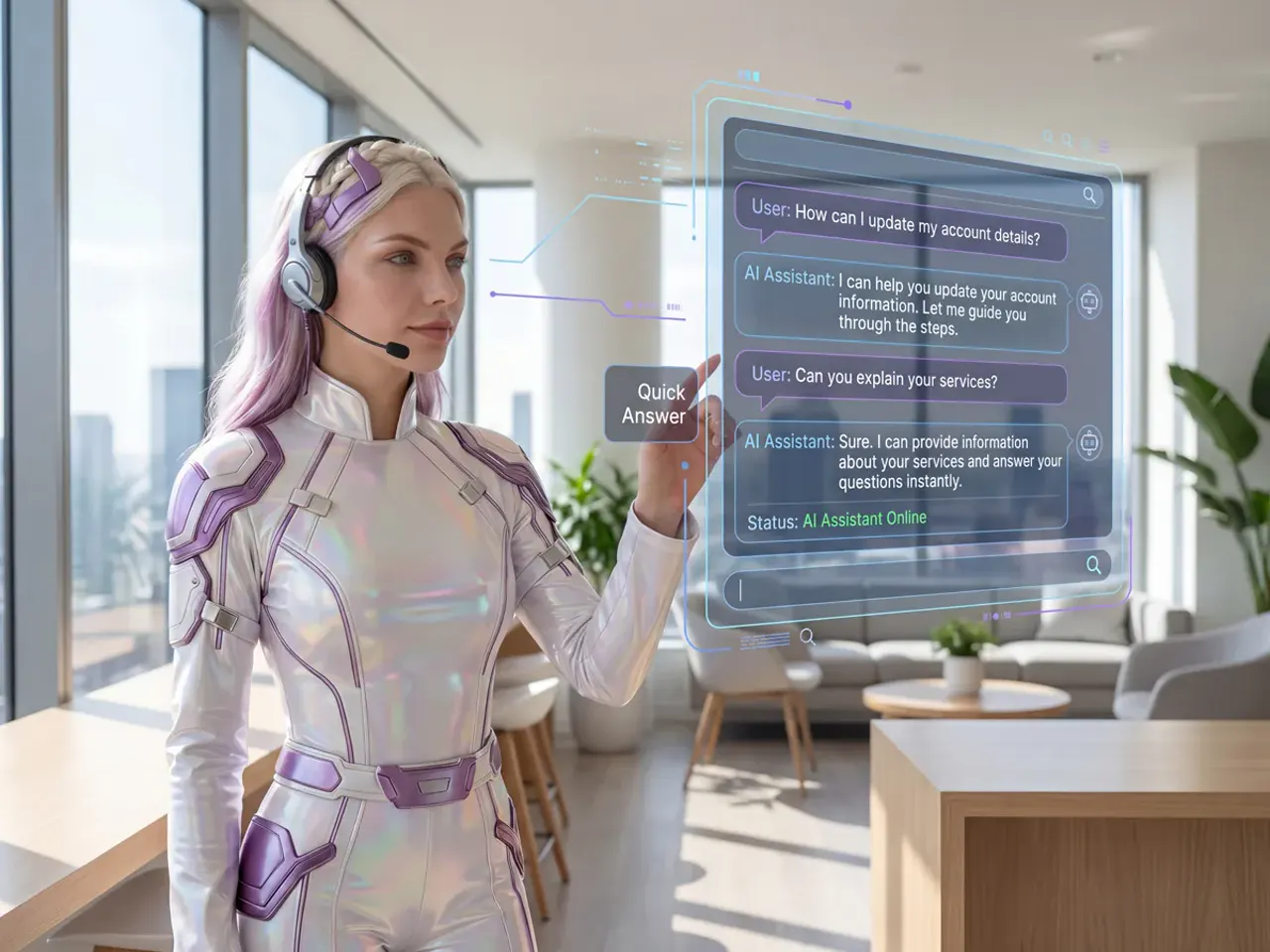
- They make a clear separation between system work and human work.
- AI handles
- Repetitive requests
- Classification
- Data retrieval
- Routine communication
- Workflow execution
- Document processing
- Scheduling
- First-level support
- Information processing
- Routine follow-up
- People handle
- Exceptions
- Complex decisions
- Sensitive interactions
- Strategic work
- Relationship management
- Approvals
- Escalations
The Business Benefits

Higher Operational Capacity
Process more requests and flows without making each new request a new manual process.
Faster Customer Response
Automated systems can be responsive to the basic requests without the need for having to wait for an employee to be available.
Reduced Repetitive Work
Employees will spend less time on data entry, classification and routine communications and other repetitive activities.
Better Employee Productivity
The human potential can be channeled into customer interactions, decisions, problem solving and strategic duties.
More Consistent Service
Having a standardized workflow can aid in providing uniform answers and procedures for high volumes.
24/7 Operational Availability
AI systems can be properly configured to manage specific workloads beyond the office hours.
Faster Processing
Automated processes can minimise needless handoffs and manual processes.
Reduce MCPi (or MCPI)
After an appropriate workflow is automated properly, more volume might not need as much additional human effort as a fully manual workflow.
Real economics will be dependent on the workload, technology architecture, usage and operating model.
Fewer Operational Bottlenecks
As demand grows, repetitive steps can be eliminated by automation, which reduces the time it takes teams to work.
Better Workload Distribution
Requests can be automatically sorted and forwarded to the correct workflow and/or employee.
Improved response speed during peak demand periods.
Extra capacity can be added to a scalable system when demand comes in unexpectedly.
Easier Market Expansion
Previously, organizations had to wait until they had established their physical presence before entering new markets, channels or customer segments, but with automated operating capacity, this is no longer required.
Greater Operational Resilience
It's possible for businesses to cut down on relying on specific employees for repetitive tasks by documenting and automating specific workflows.
Why Outsource Scalability to ZechionAI?
Creating scalable AI can be more than just choosing an AI model.
It can involve architecture, workflow design, integrations, infrastructure, security, testing, monitoring, governance, operations and continuous improvement.
It's neither practical nor necessary for many organizations to build all of those capabilities internally.
Limit the complexity of the internal AI.
ZechionAI can be used to create and integrate the AI and automation needed to expand operational capacity without having to start from scratch with the in-house team.
- 01
Access Specialized Expertise
Collaborate with AI architects, automation experts, integration experts, and AI operations capabilities as necessary.
The article discusses how to use a small internal AI team to scale.
ZechionAI can be seamlessly integrated into your technology and operations, enabling the internal team to stay focused on core business.
- 02
Faster Implementation
There are structural methodologies and technical patterns that can be used on the reusable side to minimize unnecessary development and implementation.
- 03
Continuous Optimization
It's essential to consider AI systems not like software programs that are only installed once.
Workflows and models evolve, integrations change, and business needs evolve.
Ongoing monitoring and optimization maintains the support of the operating model for the system.
- 04
Flexible Capacity
The use of AI can be phased in and scaled up over time as demand for its services grows.
- 05
Lower Operational Burden
Internal teams can focus on customers, products, employees, and business growth, while ZechionAI takes care of the technical aspects.
- 06
Enterprise Integration
You don't need to replace all the current systems to be scalable.
ZechionAI can integrate AI functions with existing technology infrastructure as and when appropriate.
Why Partner With ZechionAI?
In addition to helping to deploy AI, ZechionAI is also created to assist throughout the entire lifecycle of AI.
The framework consists of seven stages. It has seven stages: Discover, Strategize, Design, Build, Integrate, Deploy, Automate, Monitor, Secure, Govern, Optimize, Scale.
This way, the relationship can go on as your company evolves.
- 01
Strategy
Determine operational capacity where it can be created effectively by AI.
- 02
Architecture
Create systems, integrations and infrastructure to enable the target operating model.
- 03
Development
Create AI applications, AI agents, automation process and tech.
- 04
Integration
Integrate AI functionalities into current business processes.
- 05
Deployment
Implement solutions in a controlled fashion for production purposes.
- 06
Monitoring
Monitor performance, usage, error and operational results.
- 07
Security & Governance
Implement proper access, data, AI behaviour and business process controls.
- 08
Optimization
Apply real time information to enhance workflows and performance.
- 09
Scaling
Increase automation and AI capabilities as workload and business needs increase.
Partnership Benefits
Technology Expertise
Utilize a range of AI, automation, integration and operational features without building them all from scratch.
Flexible Engagement
Choose a targeted implementation, a continuous managed service or a comprehensive AI programme with ZechionAI.
Operational Scalability
Scale automated capacity up according to load.
Continuous Improvement
Assess and enhance systems not only to deploy systems at the end of the project.
Business-Aligned AI
The business requirements, workload limitations, measurable operational goals should come first when making technology choices.
One AI Partner
You can coordinate strategy, development, integration, deployment, monitoring and optimization using a single technology partner.
Industries We Serve
All industries HealthcarePatient Communication, Scheduling, Administrative workflow, Documentation and Operational automation. Quality security, human monitoring and relevant regulatory measures are needed for sensitive healthcare applications.
 Hospitality & TourismGuest communications, service requests, and service and operations support.
 Beauty, Wellness & SpaScheduling management, Customer messaging, Lead management, Reminders and follow-up processes.
 Transportation & MobilityReservations, scheduling, customer correspondence, dispatch and fleet workflows.
 Real EstateLead Qualification, property inquiries, scheduling, follow up and document workflow.
 Retail & E-CommerceService, order inquiries, product information, returns and workflows.
 Food & BeverageCustomer enquiries, reservations, ordering support and order admin automation.
 EducationStudent queries, scheduling, administrative support and information flow.
 Corporate & Professional ServicesClient communication, document automation, workflows in CRM, research and administrative automation.
 Construction & Facility ManagementWork-order processing, scheduling, communication, documentation and operational workflows.
 Financial ServicesCustomer Service, Document flows, Information processing & Approved Administrative automation, subject to applicable controls and regulators requirements.
 Technology & SaaSCustomer support, onboarding, product help, internal operations and workflow automation. The use cases and integrations and automation depth are tailored to industry needs, business processes, risk level, data needs, and relevant regulatory mandates.
Security, Governance & Control
Never scale operations without scaling risk.
At the heart of ZechionAI's strategies is the adoption of suitable technical and operational measures that guarantee the scalability of the AI systems while maintaining robust security measures.
How do we measure scalability?
Scalability should be quantifiable.
ZechionAI can be used to help set KPIs that are suitable for your operating model, including:

- Requests processed
- Average response time
- Automation rate
- Human escalation rate
- Resolution rate
- Workflow completion rate
- Processing time
- Cost per transaction
- Customer satisfaction
- AI utilization
- System availability
- Error rate
- Exception volume
- Employee productivity
- Peak workload capacity
The appropriate measurement system depends on the purpose of the AI system.
The automation project for customer support can be related to response time, resolution and escalation.
The key areas of a document-processing workflow could be volume, accuracy, exception rate and processing time.
A larger enterprise initiative might consider operational capacity, employee productivity/cost per transaction.
Our Implementation Approach
- 01
Assess
Know the state of the current workload, systems, staffing, processes and operational bottlenecks.
- 02
Identify
Find repetitive, high-volume and rules-based processes that are suitable for automation or AI assistance.
- 03
Design
Design the operating requirements' AI, automation, integration and infrastructure.
- 04
Build
Create AI agents, AI workflows, integrations and supporting applications.
- 05
Test
Test functionality, accuracy, security, permissions, escalation and operational performance.
- 06
Deploy
Release solution in a controlled manner.
- 07
Monitor
Monitor workload, performance, errors, usage and customer results.
- 08
Optimize
Optimize processes from real-world use and measurable outcomes.
- 09
Scale
Scale AI capacity and automation footprint to meet growing demand.
- For whom is Scalability on-demand?
- Scalability On-Demand is ideal for organizations that can scale their workloads up, but not the underlying business process.
It is especially beneficial to:
- Growing companies
- High-volume businesses
- Seasonal businesses
- Customer-service-heavy organizations
- E-commerce companies
- SaaS businesses
- Firms that are expanding into new markets.
- Businesses that have repetitive administrative tasks.
- Companies upgrading legacy processes.
- Businesses that need around-the-clock assistance
- Companies that wish to scale up the capacity without having to hire or add more members to their operational teams repeatedly.
- What makes it worth considering Scalability On-Demand?
- A scalability problem may be present even if you don't know it.
If you consider using an AI scalability assessment, then you should consider:
- There are more support tickets than staff.
- Staff are burdened with repetitive activities.
- Time for response is increasing.
- The supply of jobs is unable to meet demand.
- Bottlenecks occur at the peak times of the season.
- Customer service is restricted by business hours.
- Manual work is hindering growth.
- Information is entered into various systems multiple times.
- If expansion was to occur, it would need a lot more staffing.
- Teams waste the time in low-value administrative tasks.
- Customer orders change in volume quite a bit.
- Your business is at a major product, marketing or expansion in your market.
Related services
 AI Agents & Autonomous AIAI Agents Built Around Real Business Workflows, Data, Tools, and Outcomes
 Document Processing & OCRTurn Documents Into Structured Data, Intelligent Workflows, and Actionable Information
 Intelligent AutomationAutomate Repetitive Work. Connect Your Systems. Improve How Your Business Operates.
 Managed AI ServicesKeep your AI running at peak performance — 24/7.
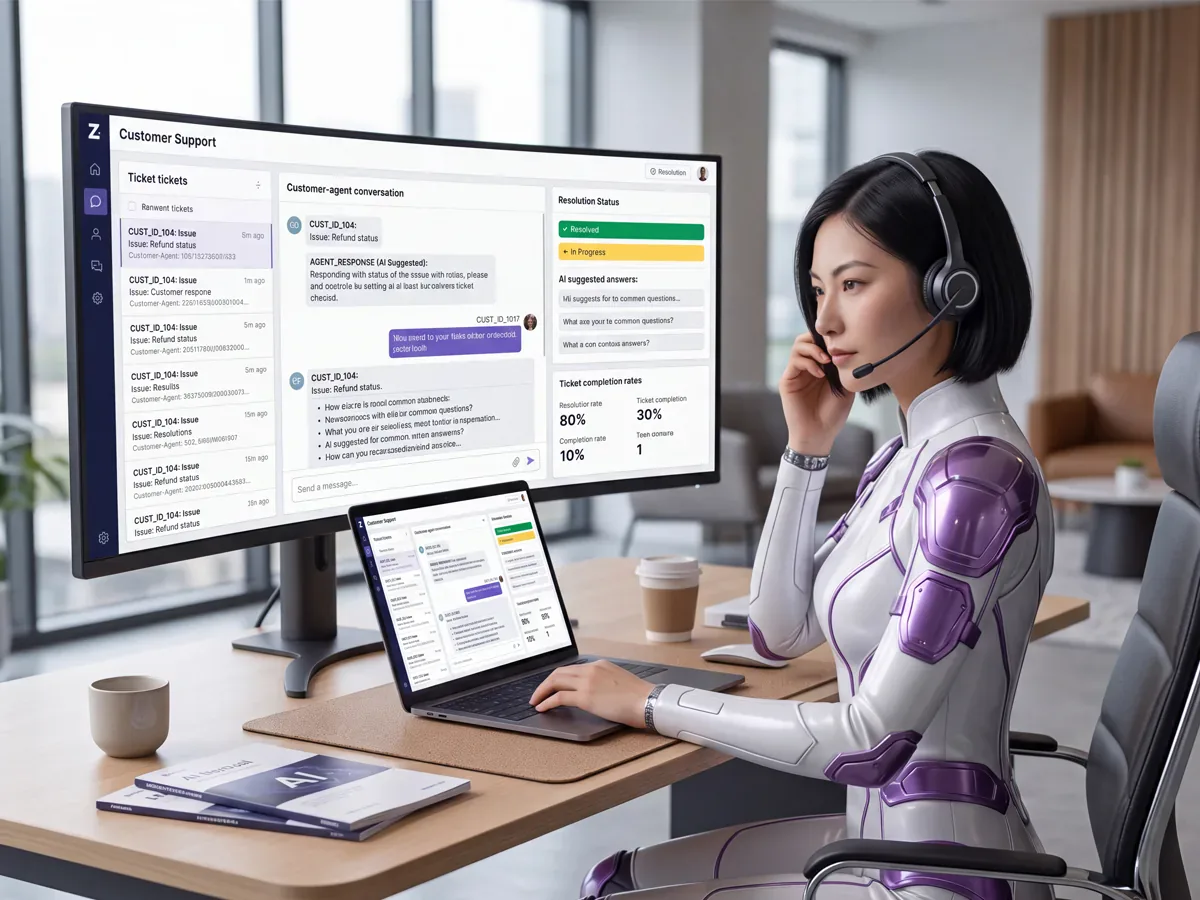 Conversational & Voice AIConversational and voice AI can provide a more natural interface to business services, employee workflows, and customer-support processes.
 Voice AI & Speech RecognitionCreate more intelligent Voice Experiences that capitalize on people, data, and business processes.
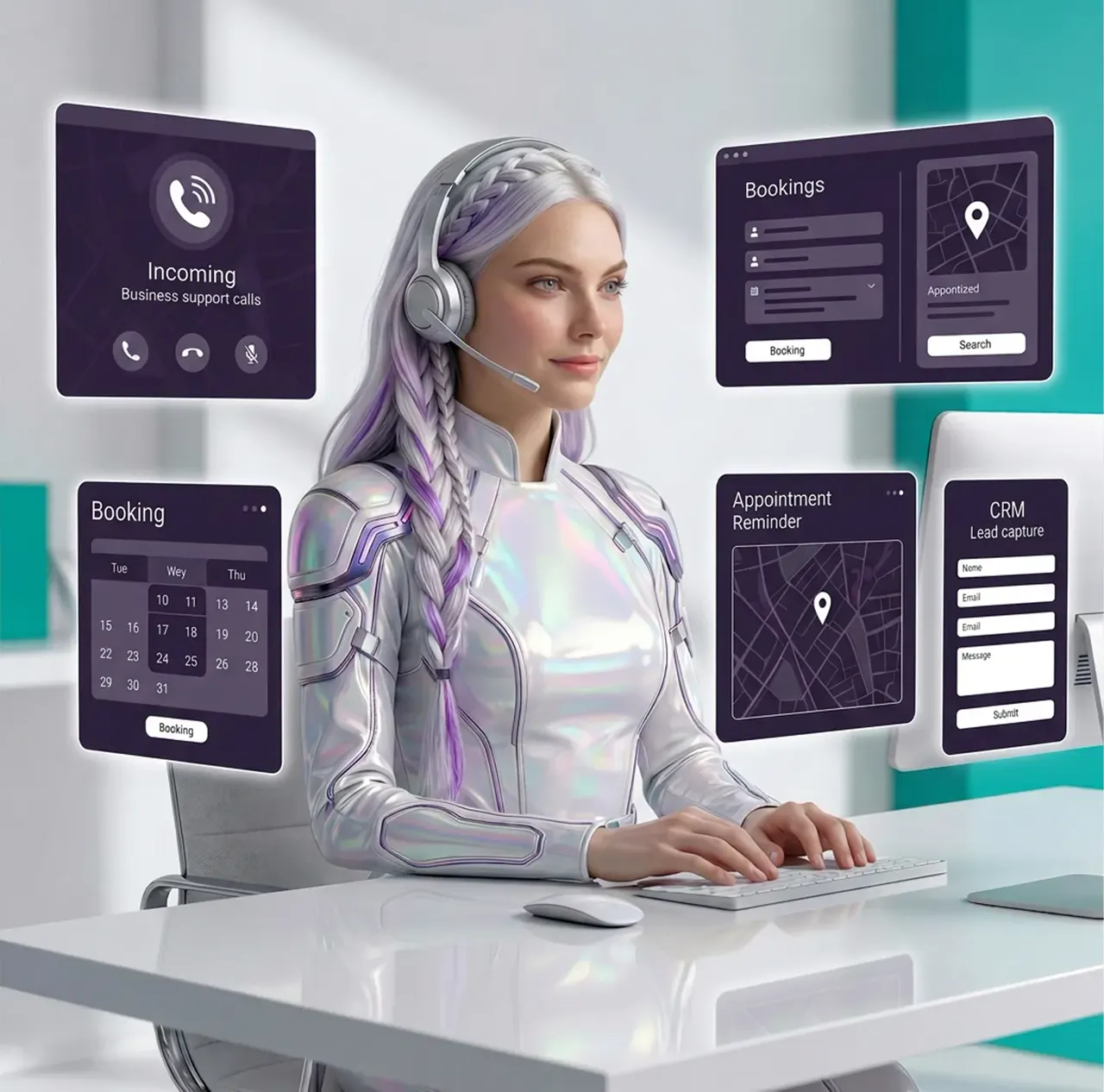 AI Integration & APIsConnect Your Systems, APIs, Data & AI Into One Intelligent Business Ecosystem
 Smart SchedulingMake scheduling easier and optimize workflow using artificial intelligence tools. All powered by one intelligent dashboard, ZechionAI simplifies business scheduling, appointment management, conflict prevention, and ensuring teams and customers are aligned.
Scalability On-Demand means designing AI-powered systems and automated workflows that can increase operational capacity as workload increases.
Instead of requiring a new employee for every increase in repetitive workload, businesses can use AI and automation to absorb a larger portion of that work while employees remain responsible for exceptions, judgment and higher-value activities.
Potentially, depending on the workload and system architecture.
The number of customers alone does not determine scalability. Factors such as interaction complexity, transaction volume, integrations, data requirements, AI model behavior, infrastructure and human escalation requirements all affect capacity.
ZechionAI evaluates those factors before recommending an architecture.
No.
The objective is to reduce the amount of additional human capacity required for repetitive work as demand increases.
AI can handle defined routine tasks while employees continue handling complex decisions, sensitive situations, relationships, approvals and exceptions.
Yes.
A phased approach is often the most practical way to begin.
ZechionAI can identify a focused set of high-volume or repetitive workflows, implement automation, measure the results and expand into additional processes once the operating model has been validated.
A properly designed scalable architecture can be built to accommodate changing workload levels and demand spikes.
However, capacity is never unlimited.
The appropriate infrastructure, AI architecture, integrations, usage requirements and workload characteristics must be evaluated to determine the appropriate scaling strategy.
The workflow can be designed to escalate the interaction.
Depending on the use case, the system may collect relevant information, classify the issue, provide context to the employee and route the case to the appropriate person or team.
The objective is to prevent the customer from getting stuck in an automated process.
Yes, where technically and operationally appropriate.
ZechionAI can work with existing CRM, ERP, help desk, databases, billing, scheduling, communication platforms and other systems through APIs, integrations and appropriate middleware.
The goal is generally to extend existing infrastructure rather than replace systems unnecessarily.
In many cases, yes.
ZechionAI can evaluate your current AI platforms, models, automation tools and infrastructure and determine where they can be retained, integrated, improved or replaced.
The recommendation should be based on business requirements rather than adopting a new technology simply for the sake of it.
Yes.
Smaller organizations can begin with focused workflows where increasing automation capacity can have a meaningful operational impact.
The solution does not need to begin as a large enterprise AI program.
Yes.
Enterprise environments may require broader architecture, system integration, governance, security controls, monitoring and operational management.
ZechionAI can structure scalability initiatives around those requirements.
Appropriately designed AI systems can operate continuously without traditional employee working-hour limitations.
However, continuous availability depends on the underlying infrastructure, application architecture, integrations, service dependencies, monitoring and operational requirements.
Success depends on the business objective.
Relevant measurements can include automation rate, response time, processing volume, resolution rate, escalation rate, processing time, cost per transaction, customer satisfaction, system availability and employee productivity.
ZechionAI can help define the appropriate KPIs before implementation.
Implementation time varies significantly.
A focused workflow with straightforward integrations may be implemented faster than an enterprise-wide program involving multiple systems, sensitive data, complex governance and extensive testing.
ZechionAI can establish a practical implementation roadmap after assessing the scope.
Yes.
Depending on the engagement, ZechionAI can provide monitoring, maintenance, optimization, AI operations, security support and additional development after the initial implementation.
This allows the system to evolve as workload and business requirements change.
Security depends on the architecture, data, systems, integrations and use case.
Appropriate implementations can incorporate access controls, authentication, secure integrations, monitoring, auditability, data protection, governance and human approval mechanisms.
Industry-specific security and regulatory requirements should be assessed as part of the implementation.
Not necessarily.
AI can reduce manual effort and improve operational capacity, but the financial outcome depends on the workflow, implementation cost, usage volume, infrastructure, staffing model and how the organization uses the additional capacity.
ZechionAI focuses on building a measurable business case rather than promising a predetermined return.
Your next stage of growth should not require rebuilding your entire operating model.
ZechionAI can evaluate your current workloads, identify processes suitable for AI and automation, assess your existing technology environment and design a scalable operating model aligned with your growth objectives.
Start with the workload you have today. Build for the workload you expect tomorrow.