Energy & Utilities AI Solutions
Demand Forecasting. Predictive Maintenance. Usage Intelligence.
Talk to Zech, live

- Electric Utilities
- Natural Gas Utilities
- Water & Wastewater Utilities
- Renewable Energy Operators
- Energy Retailers
A wide variety of data, including operational, asset, customer and consumption data is created by energy and utility companies. The challenge is getting that information to create useful forecasts, earlier signals, better maintenance decisions, and more efficient workflows.
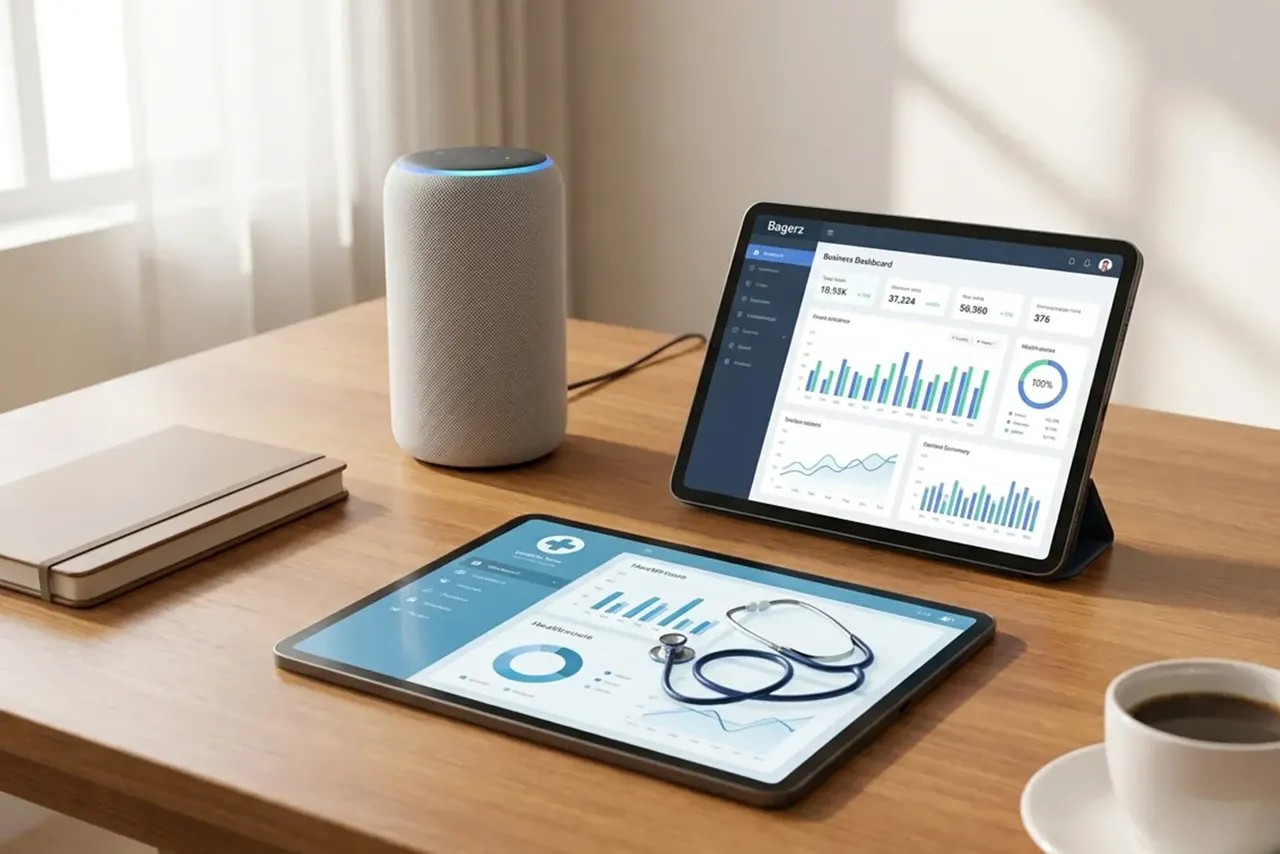
Your Utility Already Has the Data. We Make it Useful Intelligence
ZechionAI is designed to empower energy and utility companies with AI solutions for demand forecasting, predictive maintenance, usage anomaly detection, asset analytics, renewable energy forecasting, customer service, document processing and operational automation.
The solution is applied and hands-on: Understand the problem; Use the problem's data and systems; Design an effective AI solution; Maintain oversight of competent personnel when the decisions have operational, financial, safety or regulatory implications.
Energy and utility companies might have information spread out over a number of systems:
- Smart meters
- AMI platforms
- SCADA environments
- GIS
- IoT sensors
- EAM systems
- CMMS platforms
- Customer information systems
- Billing systems
- Weather data
- Renewable-generation systems
- ERP platforms
- Data warehouses
- Data lakes
- Field-service systems
- Outage-management systems
- CRM platforms
AI is only as valuable as the data it's built from, and it’s important that this data is of high quality, accessible, accurate, and well managed.
ZechionAI can help coordinate the right data sources, identify patterns in history and the present, create predictive models, and provide valuable output to those tasked with operations, engineering, maintenance, customer support, planning, IT, and management.
Energy & Utilities services
7 services
How ZechionAI Helps Energy & Utility Organizations

1. Energy Demand Forecasting
Forecasting applications
- Short-term load forecasting
- Day-ahead forecasting
- Intraday forecasting
- Peak-demand prediction
- Seasonal forecasting
- Customer-segment forecasting
- Geographic demand forecasting
- Residential demand forecasting
- Commercial demand forecasting
- Industrial demand forecasting
- Weather-sensitive demand forecasting
- Energy-consumption forecasting
- Renewable-generation forecasting
- Analyze battery and storage demand.
- Forecasting EV charging demand
Weather, seasonality, customer behavior, holidays, geographic conditions, economic activity, generation availability, and other factors are all factors that cause energy demand to change.
ZechionAI can build forecasting solutions that assist teams to understand what they anticipate consuming and prepare for the changing trend of consumption.
Potential data inputs
Use of appropriate combinations of:
- Historical consumption
- Temperature
- Weather conditions
- Calendar information
- Holidays
- Customer behavior
- Geographic patterns
- Historical peaks
- Generation information
- Renewable production
If there were a price signal available, it was priced.
The goal is not to automate planners and operators with an algorithm. It is to be used to provide better information for planning, scheduling, resource management and operational decision making.
Predictive Maintenance for Energy Infrastructure
There are many hundreds or thousands of assets to prioritise and work with inspection data, sensor data, work orders, maintenance records and equipment documentation for maintenance teams.
The items that can be analyzed using AI
- Transformers
- Substations
- Generators
- Turbines
- Pumps
- Compressors
- Motors
- Switchgear
- Transmission equipment
- Distribution equipment
- Solar equipment
- Wind turbines
- Battery systems
- Water pumps
- Treatment equipment
- Equipment for HVAC and facilities
AI can assist in detecting patterns related to varying asset conditions and surface potentially important information for review.
Predictive-maintenance capabilities
ZechionAI can create solutions for:
- Condition monitoring
- Failure-risk scoring
- Asset health scoring
- Maintenance prioritization
- Sensor-data analysis
- Historical failure analysis
- Maintenance-pattern analysis
- Work-order analysis
- If applicable, remaining useful life estimation.
- Maintenance scheduling support
- Alert prioritization
- Recurring fault identification
AI can assist maintenance teams in prioritizing their inspection efforts.
It shall not make the determination of whether critical infrastructure should be repaired, isolated, shut down, energized or returned to service without some other person's input.
AI suggestions should be backed by proficient maintenance and engineering staff.
Usage Anomaly Detection

Your unusual use patterns aren't all problems. However, if an animal is acting out, it's worth observing.
Electricity
- Unusual consumption
- Sudden usage increases
- Sudden usage decreases
- Meter behavior anomalies
- Load-pattern changes
- Account-level anomalies
- Premise-level anomalies
- Commercial usage changes
ZechionAI can create anomaly-detection systems that will contrast the observed behavior with the expected behavior and point out any big differences that need to be examined.
Potential applications include:
Water
AI can be used to detect indicators like:
- Unusual consumption
- Potential leak indicators
- Continuous usage patterns
- Unexpected overnight consumption
- Pressure-related anomalies
- Infrastructure consumption anomalies
Natural Gas
Potential applications include:
- Unusual consumption
- Seasonal pattern deviations
- Customer usage changes
- Meter anomalies
- Operational pattern deviations
An anomaly is a call for review, not a statement of conclusion.
If an AI system detects an unusual pattern, that does not necessarily equate to theft, fraud, tampering, leakage, equipment failure or other specific cause.
Proper investigation and final determination is left to authorized personnel and procedures.
Grid & Infrastructure Intelligence
AI can enable businesses to process complex operational data without taking critical decisions off guard.
Potential applications include:
- Grid monitoring analytics
- Asset performance analysis
- Load-balancing analysis
- Fault-pattern analysis
- Outage intelligence
- Equipment condition monitoring
- Renewable-integration analysis
- Distributed-energy-resource analytics
- Battery-storage analytics
- EV charging analysis
- Infrastructure planning
- Capacity planning
- Operational reporting
ZechionAI is able to design analytics and decision-support systems that fit within the context of the organization's current operational environment.
All critical grid controls, switching operations, safety systems and emergency decisions continue to be under the organization's engineering, cyber security, safety and operational controls.
Renewable Energy AI

The forecasting and asset management challenges are further complicated by solar, wind and energy storage operations, where production is dependent on weather, equipment condition and operating conditions.
Renewable-energy applications
- Solar generation forecasting
- Wind generation forecasting
- Weather-based production modeling
- Production anomaly detection
- Turbine performance analysis
- Assessment of solar asset performance.
- Inverter monitoring
- Battery-storage analytics
- Renewable production forecasting
- Curtailment analysis
- Asset maintenance prioritization
ZechionAI provides assistance for renewable-energy companies in analysing production and asset data.
Accurate production forecasts can aid the team in planning for variable generation and make better operational decisions.
The accuracy of forecasts is dependent on data availability, operating environment, model design and changes. No predictions should ever be taken as gospel.
Customer & Consumer AI
Customers of utilities are looking for transparency in their accounts and bills, service requests, outages, and energy consumption.
Customer AI applications
- Utility customer chatbots
- Billing assistants
- Account-information assistants
- Service-request assistants
- Outage-information assistants
- Energy-use assistants
- Conservation guidance
- Payment-related FAQs
- Assist in moving in and moving out.
- Service-area information
- Document and form assistance.
- Multilingual customer support
- Contact-center assistance
- Customer-inquiry classification
- Agent-assist tools
ZechionAI can create controlled AI helpers, which improve the ability of customers and Contact Center teams to get access to the right information.
AI assistants should be used from the approved information and defined workflows.
Specific questions can be directed to a specific employee or team, where sensitive decisions, human judgment, and escalation is required.
Energy Document AI
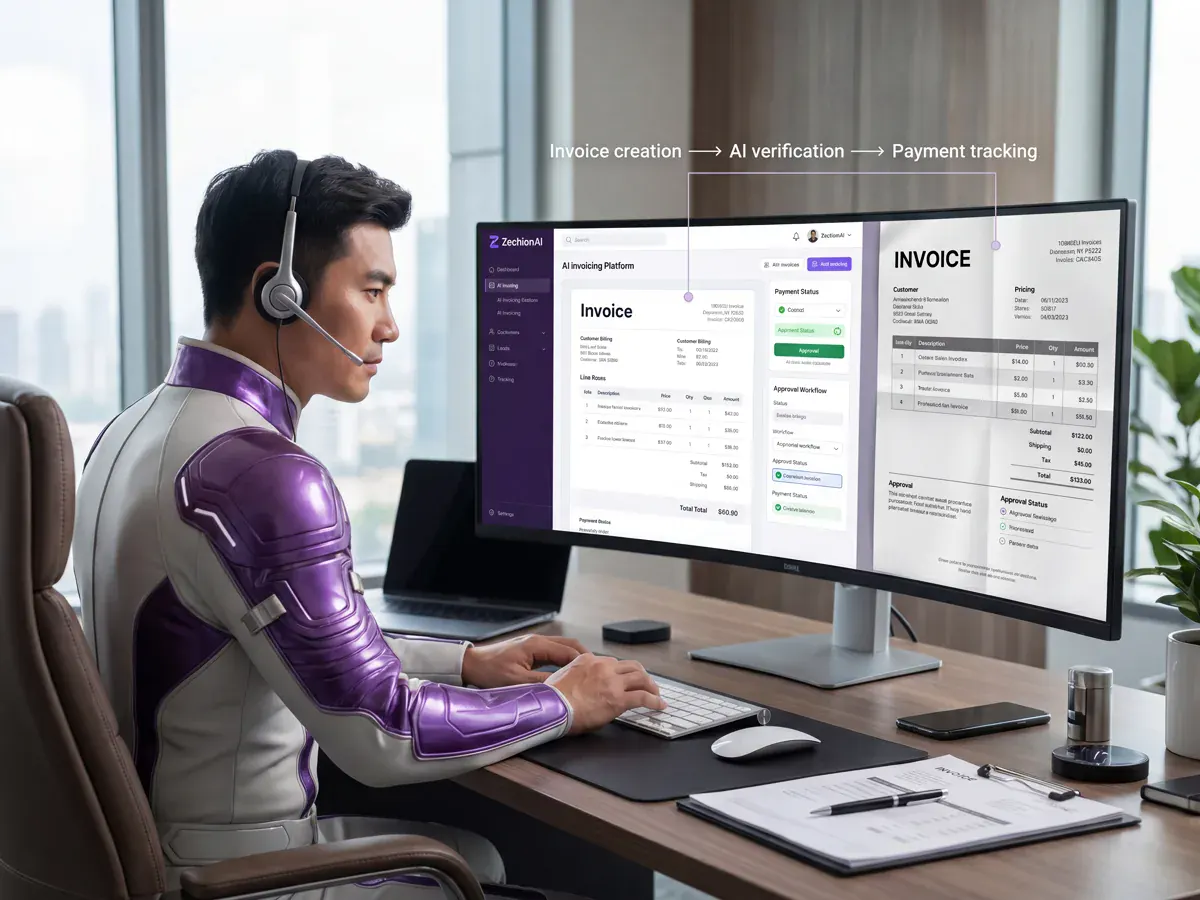
Utility companies deal with a vast amount of operational and administrative documents.
Document AI capabilities
- OCR
- Document classification
- Data extraction
- Validation
- Metadata creation
- Document comparison
- Duplicate detection
- Information retrieval
- Summarization
- Routing
- Structured-data creation
- Human-review workflows
ZechionAI can help to structure unstructured documents into information and route them through defined workflows.
Documents may include
- Work orders
- Inspection reports
- Maintenance records
- Equipment documentation
- Vendor documents
- Invoices
- Purchase orders
- Regulatory documents
- Customer forms
- Service applications
- Engineering reports
- Field reports
- Incident documentation
- Compliance documentation
- Asset records
The objective is to minimize repetitive document handling and maintain an appropriate review and validation.
AI Agents for Energy Operations
- An AI agent is a software element programmed to execute a specific task in predefined permission, data scope, and workflow.
- ZechionAI is able to create "controlled agents" for particular utility applications.
- 01
Operations Assistant Agent
- Accesses accepted operational data and collates these into summaries for review.
- 02
Maintenance Agent
- Analyzes maintenance log to determine assets or work orders that may need to be addressed.
- 03
Customer Service Agent
- Answers authorized customer inquiries, and forwards more complicated inquiries.
- 04
Document Processing Agent
- Organizes, sorts, filters and transfers documents.
- 05
Reporting Agent
- Produces routine reports and summary documents.
- 06
Forecasting Agent
- Produces demand/generation forecasts for qualified persons to review.
- 07
Data Quality Agent
- Notices missing, inconsistent, duplicated or unusual data.
- 08
Compliance Documentation Agent
- Produces documentation and looks for missing documentation.
- 09
Controlled by design
Utility AI agents should have:
- Defined scope
- Defined permissions
- Human escalation
- Logging
- Monitoring
- 10
Access controls
- Clear failure handling
- Appropriate approval workflows
- ZechionAI doesn't make general-purpose AI agents responsible for operating critical infrastructure independently.
The next step in the development of RAGs is to enhance their capabilities to provide energy knowledge
- Energy companies have knowledge in their technical manuals, procedures, maintenance records, engineering records, policies, and internal knowledge bases.
- AI assistants can access information from approved organizational sources before producing a response, thanks to retrieval-augmented generation (RAG).
Potential knowledge sources
- Operating procedures
- Maintenance manuals
- Asset documentation
- Engineering standards
- Safety procedures
- Customer-service policies
- Internal knowledge bases
- Training documents
- Regulatory documentation
- Vendor documentation
- Technical manuals
- Emergency procedures
Knowledge-assistant capabilities
- Source-controlled retrieval
- Document-version management
- Permission-aware access
- Refer to the visibility setting for the reference.
- Knowledge refresh
- Department-level access
- Document lifecycle management
- Human escalation
While RAG can enhance access to organizational knowledge, not every answer will be correct. The factors of source quality, retrieval configuration, document currency, permissions and human review still matter.
AI & Data Analytics
- The role of AI can vary based on the organization's goals.
Descriptive analytics
- What happened?
- Capture consumption, maintenance, outages, customer activity, workloads and operational trends.
Diagnostic analytics
- What could have helped?
- Discuss patterns and relationships that can be used to explore changes in operations.
Predictive analytics
- What could the next step be?
- Speculate on the need, risks of assets, production, workloads, or any other measurable results.
Prescriptive decision support
- What other possibilities are there?
- Provide relevant patterns, forecasts, risks and potential course of action for qualified personnel to consider.
Applications
- Demand forecasting
- Asset health
- Usage analytics
- Maintenance planning
- Customer behavior
- Work-order trends
- Outage patterns
- Service demand
- Operational workloads
- Renewable production
- Data quality
- Revenue and billing pattern
AI Services for Energy & Utilities all in one
- ZechionAI can assist organizations from the initial moment of identifying an opportunity with AI, to development, integration, deployment, governance, and management of the AI.
AI Strategy & Advisory
- AI readiness assessment
- AI opportunity assessment
- Use-case prioritization
- Data-readiness assessment
- AI roadmap development
- AI operating-model planning
- AI governance planning
- AI investment planning
- Pilot planning
AI Development
- Predictive models
- Forecasting systems
- Anomaly detection
- Machine-learning applications
- Generative-AI applications
- AI assistants
- AI agents
- Recommendation systems
- Classification systems
Data & Integration
- Data integration
- API integration
- Data pipelines
- Data warehouses
- Data lakes
- Cloud data environments
- IoT data integration
- Data integration in the context of SCADA are managed technically.
- AMI and meter-data integration (where supported)
- GIS integration
- EAM/CMMS integration
- CRM/CIS integration
- ERP integration
- BI integration
AI Automation
- Workflow automation
- Document processing
- Case routing
- Maintenance workflow support
- Customer inquiry routing
- Reporting automation
- Alert management
- Notification workflows
- Approval workflows
AI Knowledge Systems
- RAG solutions
- Enterprise knowledge assistants
- Technical-document assistants
- Maintenance assistants
- Operations assistants
- Customer-service knowledge systems
Analytics
- Operational dashboards
- Forecasting dashboards
- Asset dashboards
- Usage analytics
- Anomaly dashboards
Predictive analytics
- Executive reporting
- Data-quality monitoring
Governance & Responsible AI
Managed AI Services
- AI monitoring
- Model maintenance
- Knowledge-base updates
- Workflow maintenance
- Integration support
- Performance reviews
- Optimization
- Technical support
- Governance support
45 Energy & Utilities AI Use Cases in a single place
- Electricity demand forecasting
- Peak-load forecasting
- Renewable-generation forecasting
- Solar-production forecasting
- Wind-generation forecasting
- Battery-storage analytics
- EV-charging demand forecasting
- Transformer health monitoring
- Equipment predictive maintenance
- Asset health scoring
- Failure-risk prediction
- Maintenance prioritization
- Work-order analysis
- Usage anomaly detection
- Potential leak-detection signals
- Meter anomaly detection
- Load-pattern analysis
- Outage intelligence
- Fault-pattern analysis
- Grid operational analytics
- Capacity planning
- Distributed-energy-resource analytics
- Customer-service chatbots
- Billing assistants
- Outage-information assistants
- Customer-usage assistants
- Energy-conservation assistants
- Contact-center agent assistance
- Document processing
- Work-order document extraction
- Inspection-report processing
- The identification of invoices and documents.
- Engineering-document search
- Maintenance knowledge assistants
- Regulatory-document organization
- Automated operational reporting
- Data-quality monitoring
- Operational anomaly alerts
- Customer-inquiry classification
- Workforce workload forecasting
- Field-service routing support
- Asset-documentation management
- Compliance-documentation support
- Energy-consumption forecasting
- Infrastructure-planning analytics
Solutions by Energy & Utility Segment
Electric Utilities
AI solutions for:
- Demand forecasting
- Grid analytics
- Asset monitoring
- Smart-meter analytics
- Outage intelligence
- Customer service
- Maintenance planning
Natural Gas Utilities
AI can support:
- Consumption forecasting
- Infrastructure monitoring
- Maintenance analytics
- Usage anomaly detection
- Customer service
- Operational documentation
Water & Wastewater Utilities
Potential applications include:
- Demand forecasting
- Consumption anomaly detection
- Potential leak indicators
- Pump maintenance
- Treatment analytics
- Work-order analysis
- Customer service
Renewable Energy Operators
Solutions can support:
- Solar forecasting
- Wind forecasting
- Storage analytics
- Production monitoring
- Asset performance
- Maintenance prioritization
- Curtailment analysis
Energy Retailers
Potential applications include:
- Customer analytics
- Usage forecasting
- Billing assistance
- Customer-service automation
- Inquiry classification
- Churn analysis
- Energy-use assistants
Public & Municipal Utilities
ZechionAI can support:
- Citizen and customer service.
- Infrastructure analytics
- Operational reporting
- Document processing
- Maintenance workflows
- Consumption analysis
The implementation is guided by planning and decision support.
Security & Data Privacy
Energy companies have multi-layered security, privacy, contractual, and operational requirements.
ZechionAI solutions can be designed around appropriate controls such as:
- Role-based access
- Least-privilege principles
- Data segmentation
- Encryption where applicable
- Secure APIs
- Authentication
- Audit logging
- Environment separation
- Data-retention controls
- Monitoring
- Vendor-risk considerations
- Human-access controls
- Secure deployment practices
- Data classification
- Sensitive-data handling
- Monitoring of models and applications
Security needs differ depending on the organization's systems and data categorizations, deployment model, contractual needs, and relevant laws and rules.
ZechionAI does not represent that it is certified, authorized or compliant to any particular standards, unless compliance has been specifically confirmed for the relevant service and deployment.
Responsible AI for Energy & Utilities
The more the outputs of AI affect operations, the more relevant it is.
ZechionAI takes responsible-AI aspects into its solution design, such as:
- 01
Human oversight
- Explainability where practical
- Model evaluation
- Standards for bias and fairness
- Data-quality monitoring
- 02
Access controls
- Auditability
- Appropriate-use policies
- Output validation
- Escalation
- Error handling
- Monitoring
- 03
Change management
Documentation
For safety, service eligibility, financial, legal, infrastructure operational, and other impactful decisions, follow-up with qualified staff for AI recommendations.
AI and Critical Infrastructure Safety
Energy and utility environments can be an infrastructure where the wrong decision can have a far-reaching impact.
ZechionAI solutions can be used to assist:
- Analysis
- Forecasting
- Monitoring
- Documentation
- Information retrieval
- Workflow assistance
- Decision support
Operational controls that are critical continue to be covered by the organization's standard engineering, cybersecurity, safety and operational protocols.
ZechionAI does not claim to allow general purpose AI to be used as a controller:
- Grid switching
- Emergency shutdowns
- Safety systems
- Critical infrastructure
- Pressure-control systems
- Nuclear safety systems
- Emergency-response decisions
The Engineering, validation, authorization, cybersecurity controls, testing and contractual scope are all important for any system that interfaces with critical operational environments.
The ZechionAI Implementation Lifecycle
Identify the area of discovery, then strategize, design, build, integrate, deploy, automate, monitor, secure, govern, optimize, and scale.
- 01
Discover
Know the business goal, data, systems, workflows, users and constraints.
- 02
Strategize
Look at AI opportunities with a framework that is supported by data, feasible, low risk, and has value.
- 03
Design
Develop the design of the AI architecture, workflow, security strategy, user experience, and integration needs.
- 04
Build
Create the models, assistants, agents, analytics, automation, or applications required.
- 05
Integrate
Integrate and link approved systems and data sources as appropriate, both technically and contractually.
- 06
Deploy
Dispose of solution in an appropriate controlled environment.
- 07
Automate
Use automation to handle repetitive workflows with appropriate approval and escalation controls.
- 08
Monitor
Track performance, data quality, usage, system behavior and operational feedback.
- 09
Secure
Implement security and access controls suitable for the deployment.
- 10
Govern
Keep documentation, access controls, evaluations and oversight, and lifecycle processes.
- 11
Optimize
Refine the solution, based on measured performance and feedback from users.
- 12
Scale
Scale up the successful solutions to other teams, facilities, assets or use cases.
Start Small. Scale Responsibly
A utility doesn't have to roll out AI in all departments and to all assets; it can start small.
- 01
Assess
Define a single solvable problem.
- 02
Pilot
Develop a small solution with approved data & defined workflows.
- 03
Validate
assess usefulness, data quality, model performance, workflow impact and user acceptance.
- 04
Deploy
Push the validated solution into production, incorporating controls.
- 05
Expand
Expand existing capabilities to other departments, assets, facilities or data sources.
- 06
Govern
Increase the governance of the lifecycle of the AI for growing adoption.
This allows companies to benefit from learning the lessons from a smaller-scale implementation before committing to larger scale.
What is the reason to outsourcing your energy AI program?
Creating an in-house AI can make sense for an organization with the necessary data, engineering capabilities, infrastructure, and ongoing operating capacity.
For others, having an external partner brings in the expertise that does not need to be developed in-house.
When the following situations are met, they may want to think about using an AI partner:
- A lack of internal AI engineering capacity limits internal efforts.
- Lack of expertise in hiring specialized AI professionals.
- The need for more rapid pilot development
- Relations between data and AI needs.
- IT teams with critical systems being managed.
If the purpose of the forecast is to detect deviations from normal, it is called a special forecasting or anomaly-detection requirement.
- How to develop with RAG and generative-AI.
- AI governance requirements
- Ongoing model-monitoring needs
- An aspiration to minimize internal development pressure
- The need to test AI before investing in larger sums;
The right solution is a combination of internal and outsourced and/or hybrid. Where external AI and engineering expertise can be of practical value to an organization, ZechionAI can help.
Why Partner With ZechionAI?
This is the sole case where the AI Partner is applied across multiple use cases.
Integrate forecasting, predictive maintenance, anomaly detection, automation, analytics, assistants and agents into a unified AI program.
- 01
Start With a Focused Use Case
Start with a well-defined problem, rather than outrightly jumping into a wide enterprise deployment.
Make use of existing systems.
Plan integrations to match the organization's existing technology landscape and data.
- 02
Human-in-the-Loop by Design
Ensure that suitable operational, engineering, safety, financial and customer decisions are kept with qualified people.
- 03
Practical AI Engineering
Concentrate on functional systems that are useful in the real workflow, not demonstrations of technology.
- 04
Flexible Deployment
Create solutions based on infrastructure, data, security, integration and operational needs.
- 05
Ongoing Support
As systems and data evolve, AI applications need to be monitored, updated, maintained, evaluated, and adjusted.
Governance Support
Support documentation, access control, evaluation, monitoring, responsible use and lifecycle management.
- 06
Cross-Functional Expertise
Link business and operation requirements, data requirements, IT requirements and AI requirements in one implementation program.
What ZechionAI Does Not Guarantee
Let's begin with the ground rules for credible AI.
ZechionAI is not guaranteed:
- Guaranteed forecast accuracy
- Zero equipment failures
- Zero outages
- Guaranteed energy savings
- Guaranteed fraud detection
- Guaranteed leak detection
- A fully autonomous critical-infrastructure management.
- The removal of human judgment operations.
- Automatic regulatory compliance
- Unless specifically verified, government certification.
- Perfect AI outputs
- Instant ROI
- Complete compatibility with all utilities platform.
- Replacement of engineering or safety team
We design AI systems to solve measurable goals, use suitable data, have clear processes, and have responsible human oversight.
The measurement of AI performance and ROI
In AI projects, it is important to have a clear goal and indicators.
Organizations can consider the following based on the use case:
- Forecast error
- Forecast stability
- Alert precision
- Alert review time
- Maintenance planning time
- Work-order processing time
- Document-processing time
- Customer response time
- Contact-center workload
- Manual-processing volume
- Workflow completion time
- Data-quality improvement
- Anomaly-investigation time
- Knowledge-search time
- Reporting-preparation time
- User adoption
- System utilization
It is important to realize that the right KPI will vary depending on the problem being solved.
In contrast to guaranteeing a certain amount of saving, ZechionAI suggests setting a baseline, outlining the target, and evaluating based on the baseline.
AI services for Energy & Utilities
- Predictive AnalyticsTurn Historical and Real-Time Data Into Better Business Decisions
- Document Processing & OCRTurn Documents Into Structured Data, Intelligent Workflows, and Actionable Information
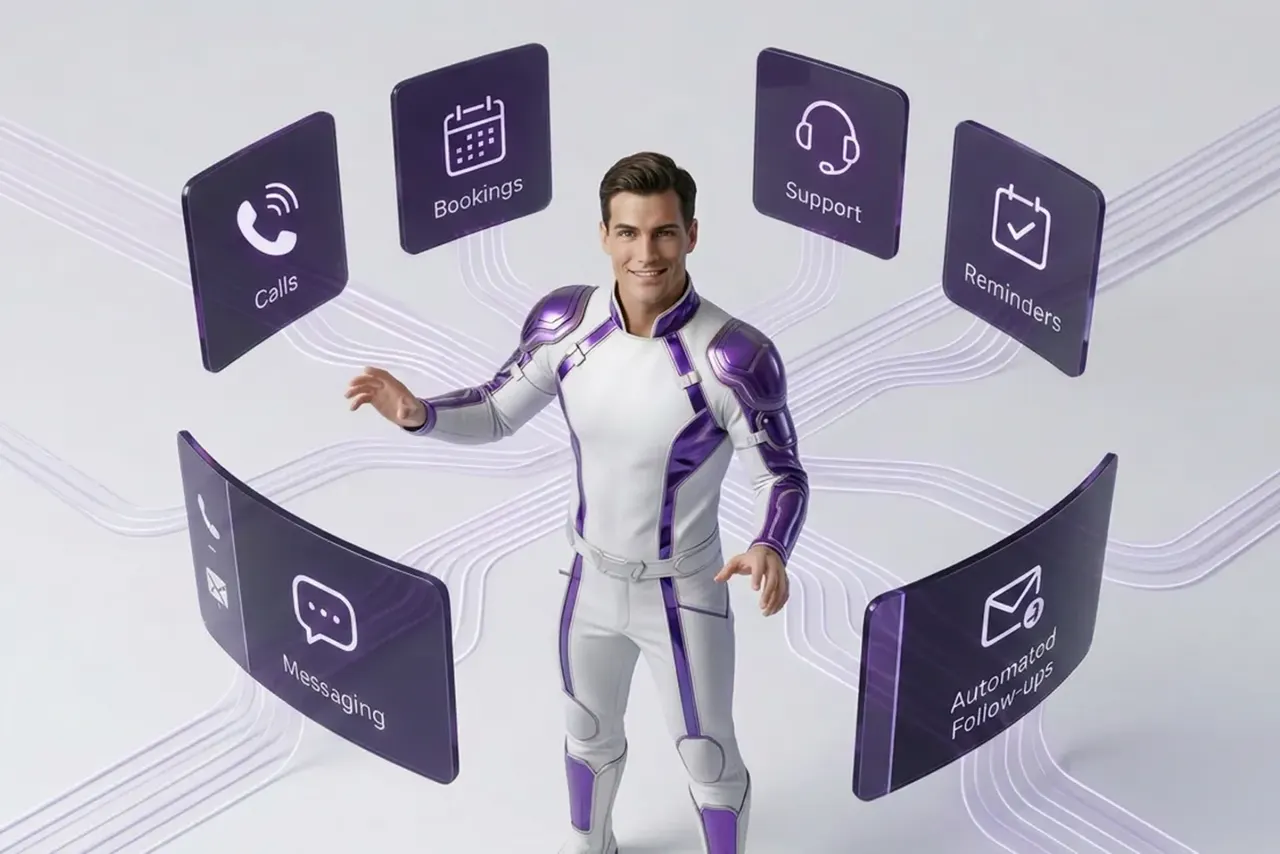 AI Agents & Autonomous AIAI Agents Built Around Real Business Workflows, Data, Tools, and Outcomes
- AI Security, Governance & ComplianceSecure AI. Govern AI. Deploy AI Responsibly.
 RAG SystemsYour organisation has knowledge that is valuable. It can appear in documents, databases, policies, contracts, websites, technical manuals, CRM, research files and internal applications.
 AI Strategy & AdvisoryPractical AI Strategy for Scalable Business Transformation
- AI DevelopmentBuild AI Around Your Business—not the Other Way Around
 Intelligent AutomationAutomate Repetitive Work. Connect Your Systems. Improve How Your Business Operates.
AI for energy and utilities refers to software and analytical systems that use data to support forecasting, anomaly detection, asset management, customer service, document processing, automation, and operational decision-making.
AI models can analyze historical consumption alongside factors such as weather, calendar patterns, holidays, customer segments, geography, and other available variables to estimate future demand.
Yes. AI can be used to estimate periods when demand may reach unusually high levels. Forecasts should be reviewed alongside established planning and operational processes.
Yes. Solar and wind forecasting models can use historical production, weather, equipment, and other relevant information to estimate expected generation.
Predictive maintenance uses historical and current asset information to identify patterns associated with changing equipment conditions or potential maintenance needs.
AI can analyze relevant transformer data and identify patterns associated with potential condition changes or elevated risk. It does not replace engineering inspection or established maintenance procedures.
Yes. AI can analyze available turbine operating and maintenance data to identify performance changes, unusual patterns, and potential maintenance signals.
Yes. Depending on available data, AI can support solar asset performance analysis, production monitoring, anomaly detection, inverter analysis, and maintenance prioritization.
Yes. AI can establish expected consumption patterns and flag material deviations for investigation.
Yes. AI can identify unusual consumption patterns, including patterns that may warrant investigation for potential leaks or operational issues.
AI can identify consumption or operational patterns that may be consistent with a potential leak. It cannot independently confirm that a leak exists.
Yes. AI can analyze meter behavior and identify patterns that differ from expected operation.
No. An anomaly is a signal for review. Additional investigation and authorized decision-making are required before determining the cause.
AI can support forecasting, asset analytics, outage intelligence, fault-pattern analysis, capacity planning, and other decision-support activities.
General-purpose AI should not be treated as an autonomous grid operator. Any system interacting with critical controls requires specific engineering, validation, authorization, cybersecurity, and operational safeguards.
AI can provide information or decision support where appropriately designed, but emergency decisions should remain under established operational and safety procedures and qualified personnel.
Yes. AI can help organize outage information, identify patterns, summarize reports, classify customer inquiries, and support operational analysis.
It can, where the technical environment, data interfaces, cybersecurity controls, and project scope permit appropriate integration.
Yes. AMI data can support applications such as demand forecasting, consumption analysis, anomaly detection, and customer analytics, subject to data access and privacy requirements.
AI solutions can be designed to use GIS information where appropriate interfaces and data access are available.
Yes, where appropriate APIs, interfaces, exports, or other approved integration methods are available.
Yes. CMMS data can support maintenance analytics, work-order analysis, asset health, and related AI applications.
Potentially. Integration depends on the platform, available interfaces, data permissions, security requirements, and intended workflow.
Yes. IoT sensor data can be useful for condition monitoring, anomaly detection, asset analytics, and predictive-maintenance applications.
Yes. Smart-meter information can support usage analytics, demand forecasting, anomaly detection, and related applications.
Yes. AI can help summarize work information, prioritize activities, retrieve documentation, process reports, and support field-service workflows.
Yes. AI can score or categorize maintenance risks and help teams determine which assets or work orders may warrant closer attention.
Yes. AI can classify work orders, extract information, identify patterns, summarize records, and support routing or reporting.
Yes. Document AI can extract structured information, classify reports, identify relevant fields, and route documents for review.
Yes. AI can support document classification, extraction, search, summarization, comparison, and knowledge retrieval.
RAG, or retrieval-augmented generation, allows an AI application to retrieve information from approved organizational sources before producing a response.
Yes. A properly configured knowledge assistant can help employees locate relevant information across approved manuals and technical documentation.
It can, when the solution is designed to expose retrieved documents, references, or source information.
Document lifecycle controls can identify versions, restrict access to obsolete information, and prioritize approved current documents. These controls need to be designed and maintained.
Yes. Access controls can be designed so users only retrieve information they are authorized to access.
Yes. Customer-facing assistants can answer approved questions and route issues requiring human intervention.
Yes, for approved billing information and FAQs. Account-specific or sensitive matters may require authentication and human handling.
Yes, where the relevant outage information is available through an approved system and the assistant is configured to access it.
Yes. Multilingual interfaces and workflows can be designed where the required languages and quality controls are supported.
Yes. Agent-assist tools can retrieve approved information, summarize interactions, classify inquiries, and suggest relevant knowledge.
Yes. AI can automate defined repetitive workflows such as document processing, classification, routing, reporting, and selected customer-service processes.
AI agents are software components designed to perform defined tasks using specified tools, information, permissions, and workflow rules.
They can support maintenance workflows, such as reviewing records, identifying priorities, preparing information, and routing work. Physical maintenance decisions and actions remain subject to appropriate human and operational controls.
Controls can include defined permissions, restricted tools, authentication, logging, monitoring, human approvals, escalation rules, and failure handling.
ZechionAI can support AI governance activities such as use-case inventories, documentation, access controls, evaluation, monitoring, human oversight, and lifecycle processes.
Monitoring can cover model performance, data quality, application behavior, usage, errors, access, and other metrics relevant to the deployment.
Protection depends on the deployment and requirements but may include access controls, authentication, encryption, segmentation, logging, data classification, and secure integration practices.
Data handling depends on the specific solution architecture, contracts, deployment model, integrations, and project requirements. Data-storage arrangements should be defined before deployment.
Yes. Solutions can be designed for appropriate cloud environments subject to technical, security, contractual, and organizational requirements.
Potentially. Integration depends on available interfaces, network architecture, security controls, and project requirements.
Yes. Hybrid architectures can be considered when organizations operate both cloud and on-premises systems.
There is no universal timeline. It depends on the use case, data readiness, integrations, security requirements, scope, testing, and organizational approvals.
Yes. Starting with one measurable problem can provide a practical way to evaluate AI before expanding.
Cost depends on scope, data, integrations, model requirements, infrastructure, security, user volume, development effort, and ongoing support. ZechionAI can scope pricing around the specific use case.
Yes. Custom predictive, classification, forecasting, anomaly-detection, and other models can be developed when the use case and data justify them.
Yes. The appropriate approach may involve existing models, customized models, or a combination depending on the requirements.
Yes. Multi-model architectures can be considered when different models provide useful capabilities for a particular workflow.
Solutions should include appropriate validation, monitoring, error handling, escalation, and human review. The exact controls depend on the impact of the AI output.
Human review is particularly important when AI outputs affect safety, infrastructure operations, legal matters, financial consequences, customer eligibility, or other high-impact decisions.
Performance can be measured using use-case-specific metrics such as forecast error, alert precision, processing time, workflow completion, data quality, adoption, and other agreed KPIs.
Yes. AI can help organize, classify, search, summarize, and route regulatory documentation. It does not automatically establish regulatory compliance.
Yes. AI can identify missing documentation, organize records, support review workflows, and provide information retrieval.
Yes. AI can identify patterns across appropriate consumption data and support customer analytics, planning, and service workflows.
Yes. EV charging history, location, time, weather, customer behavior, and other available information can potentially support demand forecasting.
Yes. AI can analyze operational data, charging and discharging patterns, performance indicators, and anomalies where relevant data is available.
Yes. Applications can include demand forecasting, consumption anomaly detection, potential leak signals, pump maintenance, document processing, customer service, and operational analytics.
Yes. Potential applications include consumption forecasting, infrastructure analytics, maintenance support, usage anomaly detection, customer service, and document processing.
Yes. Municipal utilities can use AI for customer service, infrastructure analytics, reporting, document automation, demand forecasting, and operational decision support.
Yes. Solar, wind, and storage operators can use AI for forecasting, asset performance analysis, anomaly detection, maintenance prioritization, and production analytics.
Yes. Depending on the engagement, ongoing services can include monitoring, model maintenance, knowledge-base updates, integration support, optimization, technical support, and governance support.
Discuss Your Energy AI Use Case
AI programs can start with a focused use case and expand as requirements, data, and measurable outcomes become clearer.
Talk to Zech, live