AI Solutions for Telecommunications
Network Anomaly Detection. Churn Prediction. Customer Support Automation.
Talk to Zech, live

Telephone companies produce vast quantities of operational, network, customer, billing and service data. Collecting more data is not the challenge. It's knowing what to pay attention to, seeing patterns, knowing what to do, and knowing how that relates to the teams and systems that produce the results.
AI for Telecommunications
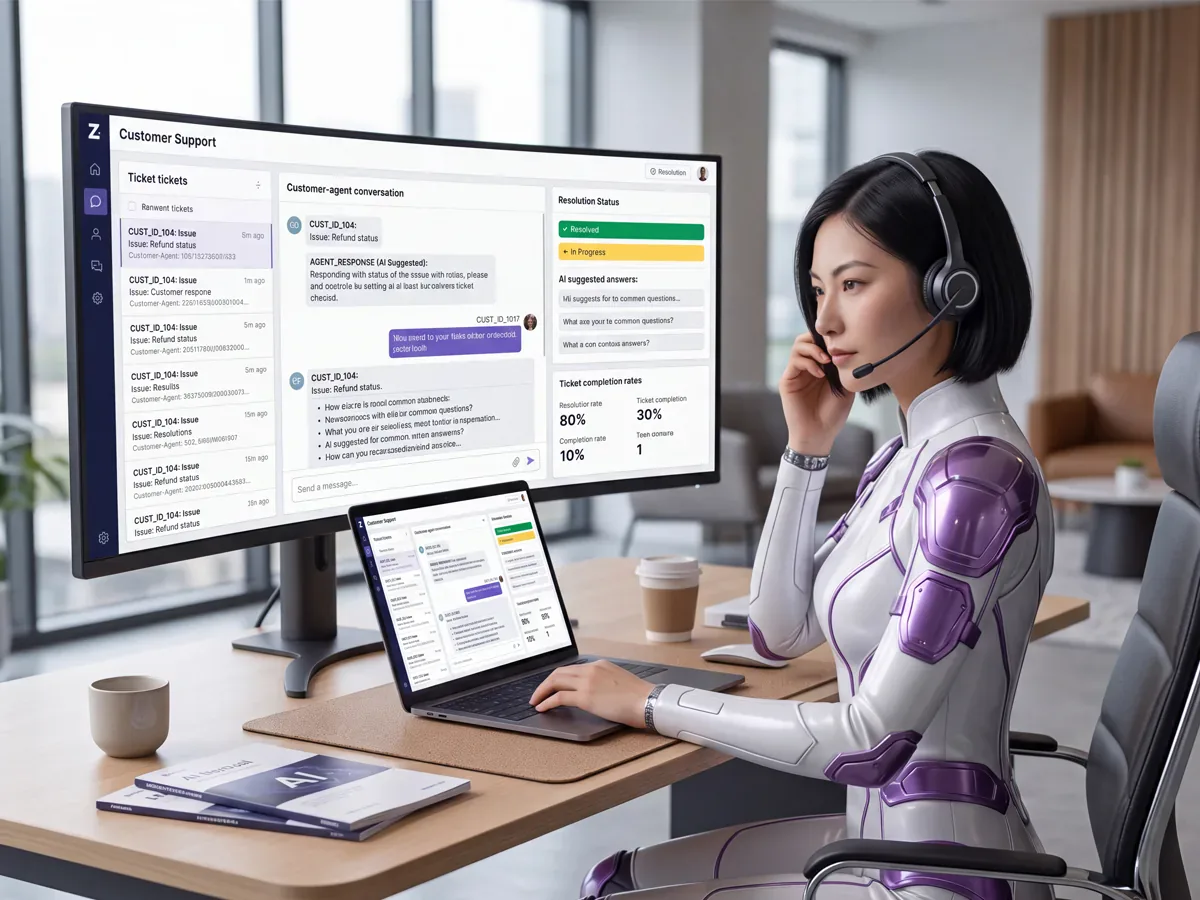
From network anomaly detection to capacity forecasting, customer churn analysis to support automation, knowledgebases to workflow orchestration, ZechionAI enables telecom companies to leverage artificial intelligence in real-world operational challenges.
We do not make assumptions about your company needing to change your technology environment, we work within the current technology that you already have.
Initially use one focus use case, validate its operational value, and grow as the results and infrastructures support it.
Telecommunications is a very data-heavy industry.
There is a lot of information that teams have to review manually at scale, such as network telemetry, alarms, service events, subscriber activity, billing data, customer interactions, service orders, infrastructure data, field-service records and operational systems.
AI can assist organizations in structuring and understanding that information.
With the right design, a well-designed AI system can assist in:
- Identify unusual patterns
- Classify network events
- Prioritize alerts
- Analyze customer behavior
- Forecast demand
- Segment subscribers
- Summarize support interactions
- Retrieve technical information
- Route tickets
- Analyze billing information
- Automate repetitive workflows
- Support engineering investigations
- Generate operational reports
- Assist contact-center agents
- The patterns that are visible on the surface for humans to observe.
The goal is not to place AI in every system, every decision.
The goal is to identify the places where AI can offer valuable analysis, support or automation without relinquishing the rightful accountability for the decisions to those who made them.
Telecommunications Challenges
In what areas are Telecom Teams lacking in visibility?
Telecommunications operation is across interwoven systems. Service quality is impacted in a network event. Customer contacts can be created in a service problem. Tickets are created from Customer contacts. Tickets can reveal reoccurring infrastructure issues. Billing questions can help identify problems with your account or service.
The problem is: how to wire them up.
Network Operations
Teams in the telecom business might need to navigate:
- The ability to obtain high volumes of network telemetry.
- Large numbers of alarms
- Alert fatigue
- Difficult-to-identify abnormal patterns
- Distributed infrastructure
- Capacity planning requirements
- Network performance data
- Repeated incidents
- Root-cause investigation
- Service degradation
- Outage response
AI can help by clustering related events, pinpointing anomalies from normal behavior, prioritising information and drafting an investigation summary.
It must not be used as a substitute for engineering validation.
Customer Experience
In customer facing organisations, they have to face:
- High support volumes
- Repetitive questions
- Long troubleshooting workflows
- Service complaints
- Billing inquiries
- Cancellation requests
- Multiple customer-interaction channels
- Fragmented customer histories
- Do not have a quick way to find customers who might need to be retained
AI can be used to categorise interactions, find approved information, summarise chats, uncover trends in complaints and aids the customer-service process.
Business Operations
Telecom companies also provide services in highly complicated commercial and administrative settings that include:
- Billing systems
- Customer segmentation
- Usage analysis
- Revenue analysis
- Forecasting
- Workforce planning
- Manual reporting
- Data silos
- Legacy platforms
- Multiple operational systems
The actual challenge is to tie together meaningful analysis and automation to processes teams are already running.
All-in-One Telecommunications AI Services
Telecommunications companies can leverage ZechionAI in strategy, development, integration, automation, analytics, assistants, and continuous operation of AI.
AI Strategy & Consulting
- AI Strategy
- AI Opportunity Assessment
- Telecommunications AI Readiness Assessment
- Data & AI Readiness
- AI Consulting
- AI Architecture
- AI Use-Case Prioritization
- AI Roadmap Development
- AI Proof-of-Concept Planning
It doesn't need to be an enterprise-wide AI program to begin with. The focused assessment can determine where AI is technically viable, has an operational use, and makes sense for the organization.
Network AI & Analytics
- Network Anomaly Detection
- Network Performance Analytics
- Network Event Classification
- Network Alarm Analysis
- Fault Detection Support
- Root-Cause Analysis Support
- Network Capacity Forecasting
- Traffic Pattern Analysis
- Network Demand Forecasting
- Infrastructure Monitoring Analytics
- Service Quality Analytics
- Predictive Maintenance Support
- Incident Prioritization
- Network Operations Dashboards
Predictive maintenance support can help detect patterns that may indicate problems with the infrastructure or equipment. Engineering review, operational thresholds, and maintenance procedures of the organization should remain in effect for maintenance decisions.
Customer & Subscriber AI
- Customer Churn Prediction
- Customer Segmentation
- Customer Lifetime Value Analysis
- Customer Behavior Analytics
- Customer Experience Analytics
- Complaint Classification
- Customer Sentiment Analysis
- Service Issue Classification
- Retention Workflow Support
- Customer Risk Scoring
- Subscriber Usage Analytics
Churn models are more like signals of probability or risk than certainty. The value lies in assisting teams in deciding which of the customers, behaviours or service conditions may be worth looking into further.
Customer Support AI
- Customer Support Automation
- Customer Service Assistants with Artificial Intelligence.
- Telecom Knowledge Assistants
- Agent Assist
- Troubleshooting Assistance
- Ticket Classification
- Ticket Routing
- Support Conversation Summarization
- Response Drafting
- Knowledge Retrieval
- Self-Service Support
- Escalation Support
- Contact Center Analytics
It's important to note the difference between customer-facing automation and agent assistance.
Completed or low-risk requests can be dealt with by a customer facing assistant. The agent-assist system may instead present information and suggestions directly to a human agent that must maintain the interaction.
Billing & Revenue AI
- Billing Data Analysis
- Billing Inquiry Classification
- Revenue Leakage Analysis
- Usage-to-Billing Analysis
- Invoice Data Processing
- Billing Support Automation
- Payment Pattern Analysis
- Revenue Analytics
- Exception Detection
AI can flag patterns and exceptions in billing and revenue data, but before acting on it, you need to ensure it aligns with billing rules and contracts, account records, and your business processes.
Intelligent Document Processing
- Contract Document Processing
- Service Order Processing
- Customer Document Processing
- Network Documentation Processing
- Invoice Processing
- Form Extraction
- OCR-Supported Workflows
- Document Classification
- Information Extraction
Document intelligence can help minimize manual classification and extraction tasks while maintaining exceptions and sensitive decisions in the hands of the right people.
Generative AI & RAG
- Generative AI Solutions
- Retrieval-Augmented Generation
- Telecom Knowledge Assistants
- Network Operations Knowledge Assistants
- Customer Service Knowledge Assistant
- Internal Documentation Assistants
- Technical Support Assistants
- Policy & Procedure Assistants
- Enterprise Search
RAG is a method that enables an AI assistant to retrieve data from trusted sources within the organization before producing an answer.
This might be anything from network documentation, trouble shooting procedures, service policies, technical manuals, internal SOPs, and approved knowledge bases for a telecommunications organization.
The effectiveness of the resulting assistant is very dependent on the quality, freshness, structure and permissions of those sources.
Machine Learning
- Machine Learning Solutions
- Classification Models
- Forecasting Models
- Anomaly Detection Models
- Recommendation Systems
- Predictive Analytics
- Risk Analytics
- Time-Series Analysis
- Customer Behavior Modeling
The use of machine learning models can be tailored to particular telecom datasets and operational goals, instead of using a generic model for all problems.
Workflow Automation
- Network Operations Automation
- Customer Support Automation
- Ticket Routing Automation
- Incident Workflow Automation
- Customer Communication Workflows
- Escalation Workflows
- Reporting Automation
- Service Order Workflows
- Internal Operations Automation
DPIPWE can automate Gradually. A workflow could start with a classification and a recommendation of an action, then move onto a controlled execution model.
Data & Integration
- Telecom Data Integration
- API Integration
- CRM Integration
- Billing System Integration
- OSS/BSS Integration
- Customer Data Platform (CDP) Integration
- Data Warehouse Integration
- BI Integration
- Legacy-System Integration
- Cloud Integration
- Event-Driven Integration
Depending on the available API, data structure, security requirements, access control and technical environment of existing systems, ZechionAI can integrate with them.
A specific vendor integration should not be assumed until the environment has been evaluated.
AI Security & Governance
- AI Security
- AI Governance
- Model Evaluation
- AI Monitoring
- Data Access Controls
- Role-Based Access
- Secure API Architecture
- Logging & Monitoring
- Human-in-the-Loop Systems
- AI Risk Assessment
- AI Documentation
- AI Use-Case Governance
- Model Change Management
- Responsible AI Support
Ongoing AI Services
- AI Optimization
- Model Monitoring
- Workflow Optimization
- AI Application Support
- AI Integration Support
- AI Development Support
- AI Governance Support
- Ongoing AI Consulting
Network Anomaly Detection
Identify Unusual Network Behavior Before It's Too Late and Turns into Another Manual Investigation
Telecommunications networks generate a continuous flow of events and measurements.
It's not always the struggle to gather the information. It's identifying the 'normal' changes, the 'unusual' changes, the events that may be related to each other, and the events that require engineering intervention.
A typical AI-assisted anomaly workflow is as follows:
The stages of the process are process stages are:
AI can help with on the network environment and available telemetry, AI can help with:
- Noticing unusual network behavior
- Identifying unusual circumstances in the past
- Organizing network events into groups.
- Minimize repetitive review of alerts
- Prioritizing events
- Correlating multiple signals
- Identifying recurring patterns
- Supporting root-cause investigation
- Preparing incident summaries
- Providing assurance to engineering teams in investigations
Detection quality is related to the coverage of telemetry, data quality, the structure of the network, the amount of historical data, the model design, the thresholds and the validation procedures.
What we don't do
Network anomaly detection is not about no outages, 100% detection, no false alarms, fault prediction or network uptime guarantees.
AI is an extra analytical layer. Engineering staff continue to validate the results and decide what the appropriate action is for operations.
Customer Churn Prediction
Convert Customer Signals into Customer Risk Indicators.
One data point doesn't tell the whole story about customer churn.
Other behavioral signals such as changes in usage, service experience, billing issues, complaints, plan changes, support interactions, and other changes in usage may be helpful.

The following churn analysis workflow can be followed:
Customer Data, Feature Analysis, Risk Scoring, Customer Segmentation, Human Review, Retention Action
Examples of the kinds of signals include:
- Service usage
- Customer support history
- Complaint frequency
- Billing issues
- Contract status
- Product changes
- Service disruptions
- Customer engagement
- Plan changes
- Usage changes
- Interaction patterns
Potential applications include:
- Prioritizing retention outreach
- Identifying service-related dissatisfaction
- Segmenting customers
- Exploring reasons behind churn.
- Supporting customer-experience teams
- Improving retention-workflow visibility
Under a churn model, the exact customer who is leaving is an unknown factor.
It generates an estimate that depends on the data, features, model design and assumptions used.
Customer Support Automation
Many of the questions that arises from telecommunications support teams are repetitive and can be automated, but this is not the case for all interactions.
Provide Customers with quicker access to Approved Information without sacrificing control of people.
The ZechionAI can assist the organisation in identifying which customer requests can be automated and which can be handled by a human.
- 01
Customer-facing support
Possible applications include:
- Service questions
- Billing questions
- Account-information guidance
- Troubleshooting guidance
- Plan information
- Service-status questions
- Appointment information
- Common support requests
- 02
Agent assistance
AI can assist customer-service workers in the following ways:
- Conversation summaries
- Suggested responses
- Knowledge retrieval
- Troubleshooting guidance
- Ticket classification
- Ticket routing
- Customer history summaries
- Escalation recommendations
- Case documentation
- 03
Support workflow
- Customer Request
- Classification
- Knowledge Retrieval
- Response / Agent Assistance
- Validation
- Resolution / Escalation
- Case Documentation
Higher-risk activities, such as sensitive account changes, refunds, authentication-dependent requests, security-sensitive operations and other activities may require authentication, authorization and human review.
Telecom AI Assistants
Don't place one single assistant in all departments, AI assistants can be tailored to various telecom roles.
- 01
Customer Service Assistant
Assists customers with locating approved information and resolving typical customer support issues.
- 02
Contact-Center Agent Assistant
Gives agents the necessary information, summary, possible answers and suggestions for problems.
- 03
Network Operations Assistant
Assists in the operations personnel searching of approved technical documentation, then summarising operations information.
- 04
Engineering Knowledge Assistant
Supplies controlled access to technical documents, procedures, architecture information and troubleshooting resources.
- 05
Technical Support Assistant
Assists teams to find procedures and record information.
- 06
Field-Service Assistant
Can provide approved documentation, work-order context and procedural information to technicians.
- 07
Billing Assistant
Is able to categorize billing inquiries and to access approved billing information.
- 08
Internal Employee Assistant
Facilitates access to knowledge within the organisation in a controlled manner.
Each assistant must have a suitable role, permission model, knowledge source, escalation process and scope of action.
Telecom Knowledge & RAG
Place Approved Telecommunications Knowledge where Teams can use it
Telecommunications companies frequently have important information in manuals, SOPs, network docs, troubleshooting guides, product docs, policies, procedures, training material and on their own internal knowledge bases.
A controlled retrieval layer between such sources and an AI assistant can be provided by RAG.
Example workflow
- Question
- Access Check
- Knowledge Retrieval
- Relevant Sources
- Response
- Source Context
- Human Escalation Where Needed
Potential applications include:
- Network documentation
- Technical manuals
- SOPs
- Troubleshooting guides
- Product documentation
- Service policies
- Customer-support procedures
- Internal knowledge bases
- Training materials
- Engineering documentation
Before retrieval, access controls should be applied, so that at the end of the day, an employee does not get information just because it exists somewhere in the organisation's knowledge environment.
Telecom Predictive Analytics
AI and machine-learning models can be used to aid forecasting and analysis in various areas including:
Network
- Traffic forecasting
- Capacity planning
- Service demand forecasting
- Infrastructure planning
Customer
- Churn risk
- Usage forecasting
- Customer segmentation
- Customer behavior analysis
Operations
- Contact-center demand
- Workforce planning
- Support volume forecasting
- Service-order forecasting
Commercial
- Revenue analysis
- Usage-to-billing analysis
- Predicting customer lifetime value analysis.
Forecasts are estimates. They rely on past data, assumptions, and model selection, and the market conditions and the quality of information available for generating them.
Telecom Data Integration
AI Has to Work With the Systems Your Teams Already Use
Any telecom AI project is not likely to be a standalone initiative.
These systems could be relevant to:

- OSS
- BSS
- CRM
- Billing
- ERP
- Customer data platforms
- Contact-center platforms
- Ticketing systems
- Network monitoring platforms
- Data warehouses
- Data lakes
- BI platforms
- Cloud systems
- APIs
- Legacy applications
ZechionAI's integration is based on the real technical environment.
This means assessing the various APIs, data structures, authentication options, data quality, permissions, security requirements, event flows and operational dependencies before making a decision on how an AI application should be connected.
Telecom AI Automation
A practical and effective framework for automation is:
Learn how to perform every step of the process from Information Capture to controlled action.
- Capture
- Extract
- Classify
- Analyze
- Route
- Review
- Approve
- Execute
- Monitor
The key is that not all workflows have to be executed in an autonomous way.
Some need to stop at classification.
Others may go on to recommending.
Controlled automation can be considered for higher-volume, well-defined processes following adequate testing and approval.
- 01
Network Alert Workflow
Clicking the Network Event button sends the event to an alarms console.
- 02
Customer Support Workflow
- Request by Customer
- Classification
- Knowledge retrieval
- Response
- Escalation / Ticket update
- 03
Churn Workflow
The Customer Signals flow is followed by the Risk Analysis, Segmentation, Review, and then to a Customer Retention Workflow, which ultimately leads to Outcome Tracking.
- 04
Billing Workflow
Data Analysis, Classification, Resolution Guidance, Human Approval, and Customer Response are the three other significant components of Billing Inquiry.
- 05
Service Order Workflow
The classification process is used to assign a service number to the service request.
Telecom AI Lifecycle
The end-to-end AI journey from First Use Case to Ongoing AI Operations.
- 01
Discover
Gain insight into the current business environment, systems, and data sources for the telecom organization, pain points and potential opportunities for AI.
- 02
Strategize
Make sure that use cases are prioritized in terms of business value, technical feasibility, availability of data, risk, and operational readiness.
- 03
Design
Outline the architecture, workflow, data needs, roles, integration needs, controls and human review needs of the AI.
- 04
Build
Create the AI application, model, assistant, workflow, or analytics.
- 05
Integrate
Integrate the solution with accepted systems, APIs, data source, knowledge repository, and process.
- 06
Deploy
Introduce the solution into the right environment, having defined access and operational controls.
- 07
Automate
Automate appropriate portions of the process and retain points of approval and escalation.
- 08
Monitor
Track application behavior, model performance, work flow results, errors, and operational use.
- 09
Secure
Implement proper authentication, authorization, data protection, logging and integration controls.
- 10
Govern
Record cases and uses, permissions, models changes, evaluation process, risks and conditions for responsible use.
- 11
Optimize
Analyze performance and make improvements to models, workflows, prompts, knowledge sources, integrations and user experience.
- 12
Scale
Add validated capabilities to other workflows, departments, or systems when the technology and governance landscape of the organization is right.
Responsible AI for Telecommunications
Telecommunications AI can communicate with operational data and, in certain instances, potentially private data on customers.
To be responsible, deployment must be more than just model selection.
AI Security & Privacy
Security Has to Be Designed Into the AI Workflow
The implementation of an AI solution for telecom can involve customer data, operations data, network data, internal documentation, billing data or other sensitive business data.
Factors for security may be:
- Authentication
- Authorization
- Role-based access
- Encryption where appropriate
- Secure APIs
- Network Segmentation (if applicable)
- Logging
- Monitoring
- Data protection
- Sensitive-information handling
- Access reviews
- Data retention
- Vendor assessment
- Model security
- Quick and efficient data management
- Secure integration architecture
ZechionAI does not consider the availability of an AI model as enough security.
All the architecture should be taken into account, ranging from the users to the applications and APIs, the data stores, the model providers, the knowledge sources, the integrations, the logs, and administrative access.
The reasons to choose Telecomm AI for outsourcing
Harness teamwork to expand the team without having to restructure the organization.
The deployment of an AI architecture, machine-learning and automation team, integration team, and governance team doesn't always need to be a company's first move when it begins testing an AI use case.
In addition, an external team of IT specialists with specialized skills can be brought on board, complementing the existing staff.
- 01
The availability of expertise to support the project
The organization can leverage AI architecture, machine learning, automation, RAG, analytics, integration, and governance without having to invest in all of these capabilities.
- 02
Faster experimentation
A small external group can be tasked with clarifying and sketching out a specific use case and help to keep the process on track before the time and money of a larger group is invested.
- 03
Existing-team extension
ZechionAI can be used in conjunction with:
- Network engineers
- IT teams
- Data teams
- Customer-service teams
- Internal developers
- Operations teams
- Technology leadership
- 04
Integration expertise
Most of the time, AI projects rely on existing OSS/BSS, CRM, billing, data and operational systems.
Integration must, therefore, be part of the project and not an add-on.
- 05
Governance support
Practical processes of evaluation, monitoring, documenting, access and governance can be established with the support of an external partner.
- 06
Flexible capacity
Depending on the nature of the project, the organizations may choose project-based development or continuous support.
Commissioners have the option to ease the initial burden on development.
Outsourcing may help to alleviate the need to hire and build an entire AI development and architecture team in the blink of a second.
Cost is not a requirement for outsourcing to be more cost effective than in-house development. The right model is influenced by the current equipment, project size, requirements and ownership objectives.
Why Partner With ZechionAI?
On the ground implementation of AI in real telecom operations
The principle behind ZechionAI is to solve a defined operational problem first.
A telecommunications company can partner with ZechionAI on:

- AI strategy
- Telecommunications use-case planning
- AI development
- Data analysis
- Network analytics
- Customer analytics
- Customer support automation
- Churn analysis
- RAG and knowledge assistants.
- Workflow automation
- Data integration
- OSS/BSS integration
- AI security
- AI governance
- AI monitoring
- Ongoing optimization
The relationship may start with one workflow and grow as there is a practical need.
ZechionAI is not only intended to replace the external team, but also to complement them.
Partnership Models
- 01
AI Assessment
Be aware of how AI can be integrated into network, customer and operational workflows.
- 02
AI Strategy Partnership
Develop effective AI strategy based on business and tech priorities.
- 03
Project-Based AI Development
Create a single AI app, model, assistant or workflow.
- 04
AI Automation Partnership
Automate and identify repetitive telecommunications processes.
- 05
AI Integration Partnership
Link approved systems and data environments with AI applications.
- 06
Ongoing AI Development
Continue development, optimization and technical support.
- 07
Enterprise AI Partnership
Be able to help bigger programs with multiple workflows, departments, integrations, and governance needs.
Who We Serve
ZechionAI can be helpful for companies in industries like:
- Telecommunications carriers
- Wireless operators
- Broadband providers
- Fiber operators
- Internet service providers
- Cable operators
- MVNOs
- Network infrastructure companies
- Telecom service providers
- Communication service providers
- Contact centers of telecom customers.
- Telecom equipment and service companies
- Enterprise communications providers
These categories may represent groups of organizations that the service is intended for, but are not intended to suggest that ZechionAI currently supports all of these organizations.
Telecommunications Use Cases
Network Anomaly Detection
- Business problem: It is difficult to review large volumes of telemetry and events manually.
- Artificial Intelligence (AI) methods: Identifying anomalies in patterns and focusing on unusual events.
- Human role: Engineers check the findings and decide on the action.
- Operational benefits: Improved visibility of atypical network activity and less manual review.
- Factors to consider: Telemetry coverage, historical data, threshold, false positives, network architecture etc.
Network Alarm Classification
- Business problem: Operations teams can get high volume of alarms.
- AI approach: Use historical and context information to classify and group events.
- Human interaction: Network staff examine priority events.
- Potential operational benefit: More structured alarms triage.
- Considerations: Classification quality is dependent on training data and event context.
Capacity Forecasting
- Business question: What is the demand at each service, at each location and for each customer segment?
- Historical traffic and demand analysis: A traditional approach is to use algorithms and historical data to understand the traffic and its requirements.
- Human role: Network planners compare forecasted and infrastructure plans and changes.
- Operational value: Potential for adding extra information for capacity planning.
- Factors to consider: Customer behavior, market changes, new products, and outages can all have an impact on forecasts.
Customer Churn Risk Analysis
- Business challenge: It can be difficult for the team of customers to decide which accounts to pay attention to.
- AI approach: Interpret behavioral and service signals and generate risk indicators.
- Human role: Customer-experience teams decide the course of action.
- Possible operational benefit: Better focus on retention workflows.
- Considerations: Risk scores are estimates, not predictions with certainty.
Customer Support Automation
- Business issue: Lots of repetitive support needs.
- AI method: Categorize questions, fetch approved content and answer questions on appropriate queries.
- Human role: Escalations, Higher Risk interactions.
- Suggested value to operations: More effective routine question handling.
- Issues to think about: authentication, account access, knowledge correctness, and escalation design.
Agent Assistance
- Business need: Agents might have to access several knowledge bases in customer interactions.
- AI method: Find and summarize relevant information, and suggest answers.
- The Human role: Agent sees what the end interaction looks like and decides what to do about it.
- Potential operational value: Easier access to relevant information.
- Considerations: Accuracy of the answer and freshness of the knowledge.
Ticket Routing
- Business problem: Tickets can be manually categorized and assigned.
- AI approach: Segregate incoming requests and offer/automatically route them based on accepted rules.
- Human role: Review exceptions.
- Operational potential: More consistent routing.
- Significance: Misrouted calls may cause delays in resolution, which is why confidence levels and escalation procedures are important.
Billing Inquiry Automation
- Business issue: Billing inquiries may need to be done manually.
- AI strategy: Categorize queries and retrieve account/billing data, if appropriate.
- Human role: Review complex or sensitive cases.
- Potential operational value: Recurring billing questions are handled in a structured manner.
Some things to consider are access controls and integration of the billing-system.
Customer Complaint Classification
- Business problem: Complaint information can be collected in conversations and tickets.
- AI approach: Identify themes, service problems and sentiments.
- Human role: Customer-experience teams: Research and decide on corrective action.
- Potential operational value: Improved understanding of the common complaint categories.
This is because the context and language quality are necessary for classification.
Customer Segmentation
- Business problem: In a large subscriber base, there are different usage and service patterns.
- AI approach: Analyze customer characteristics and behavior to create useful segments.
- Human role: Business teams determine the use of segments.
- Potential operational value: Improving targeting of customer-experience and service initiatives.
- Considerations: Segmentation must be reviewed for inappropriate/
misleading assumptions.
Network Knowledge Assistant
Business problem: Engineers might have to look for information in large technical documentation libraries.
The AI approach is to use a RAG-based retrieval from approved technical sources.
- Human role: Engineers test information before using in operation.
- Potential operational value: Easier to get to documentation.
Permission and freshness of sources to consider.
Technical Support Assistant
- Business problem: There is a significant amount of time that can be spent searching procedures with the support personnel.
- AI method: Search for the relevant troubleshooting information.
- Human role: Support personnel decide on the action to be taken.
- Potential operational value: Approved procedures are easier to access.
- Considerations: Do not make up procedures that are not available in approved sources.
Service Documentation Search
- Business problem: Information can be spread out over a number of documents.
- AI approach: Search and summarize approved relevant documentation.
- Human role: Users validate the source context.
- Potential operational value: Less manual document searching.
Contact-Center Analytics
- Business challenge: Being able to review lots of interactions, manually, is difficult.
- AI approach: Identify themes, sentiment, topics, escalation trends, and recurring issues.
- Human role: CX leaders explore findings.
- Potential operational value: Enhanced understanding of customer interaction patterns.
Workforce Planning
- Business challenge: The number of contacts and services varies.
- Historical pattern approach: Predict workload based on past patterns.
- Human role: Operations managers confirm forecasts and staffing schedule decisions.
- Discuss the operational potential: Any further planning details.
Service Order Automation
- Business challenge: There may be repetitive validation and routing in service orders.
- AI solution: Identify data, verify necessary details, segment incoming requests, and funnel based on set criteria.
- Human input: Approved exceptions and sensitive changes.
- Potential operational value: Decreased manual processing.
Revenue Leakage Analysis
- Business challenge: Service, usage, contract and billing differences may be challenging to determine.
- AI approach: Identify patterns and anomalies in available data.
- Investigators (Human role): Finance and Operations teams look into findings.
- Potential operational value: Better transparency on possible discrepancies.
However, some factors should be taken into account: Detection does not imply recoverable revenue.
Predictive Maintenance Support
- Business need: Infrastructure teams should be able to detect potential equipment issues.
- AI approach: Identify patterns of past incidents and/or maintenance activities.
- Human involvement: Engineers test possible problems.
- Possible operational value: More information for maintenance prioritisation.
This is because models need to be supplied with relevant historical data and cannot be regarded as a definitive prediction of equipment failure.
Network Operations Reporting
- Business challenge: Large amount of staff time can be consumed with operational reporting.
- AI method: Collect accepted data and create organized overviews.
- Human role: Operations personnel check reports prior to distribution, if applicable.
- Potential value for operations: Minimization of manual reporting.
Customer Experience Analytics
- Business problem: Customer experience signals can be present in various channels.
- AI approach: An analysis of approved interaction, support, usage, and service signals.
- Interaction with humans: CX teams interpret the results.
- Potential operational value: Improved awareness of recurring experience issues.
AI Workflow Examples
- 01
Network Anomaly Detection
The telemetry is compared to the baseline and reported back as an anomaly, then correlated to other events, prioritized, reviewed by the engineer, and responded to.
- 02
Churn Prediction
How well did you do?
- 03
Customer Support
The process of Customer Request, classification, Knowledge Retrieval, Response, Validation, Escalation, and Resolution is repeated.
- 04
Agent Assist
Interaction, Transcription, Intent Detection, Knowledge Retrieval, Suggested Guidance, Agent Review.
- 05
Billing Support
- The path Billing Data
- Issue Classification
- Supporting Information
- Resolution Guidance
- Human Approval
- Customer Response is used to access the Knowledge Base
- 06
Network Knowledge Assistant
- Access Check
- Retrieval
- Source Context
- Answer
- Escalation
What ZechionAI does not promise
AI Should Be Useful. It should also have set boundaries.
ZechionAI is not guaranteed to:
- Zero network outages
- Guaranteed anomaly detection
- 100% accurate predictions
- Guaranteed churn reduction
- Guaranteed customer retention
- Guaranteed cost savings
- Guaranteed revenue recovery
- Bias-free AI
- Zero false positives
- Complete self-contained network operations
- Fully independent Purchasing Decisions.
- Guaranteed regulatory compliance
- The removal of network engineers.
- They are being phased out of the workforce.
- Zero-risk AI
- Perfect forecasts
- Perfect customer matching
- Guaranteed business outcomes
The quality of data, the design of the use case, the architecture of the system, integrations, the implementation, operational processes, the performance of the model, and human oversight are all factors that impact AI results.
The key to good implementation is to first establish what is permitted — and what is not permitted — in the system.
AI services for Telecommunications
- Predictive AnalyticsTurn Historical and Real-Time Data Into Better Business Decisions
 AI Security, Governance & ComplianceSecure AI. Govern AI. Deploy AI Responsibly.
 RAG SystemsYour organisation has knowledge that is valuable. It can appear in documents, databases, policies, contracts, websites, technical manuals, CRM, research files and internal applications.
- AI Strategy & AdvisoryPractical AI Strategy for Scalable Business Transformation
 Intelligent AutomationAutomate Repetitive Work. Connect Your Systems. Improve How Your Business Operates.
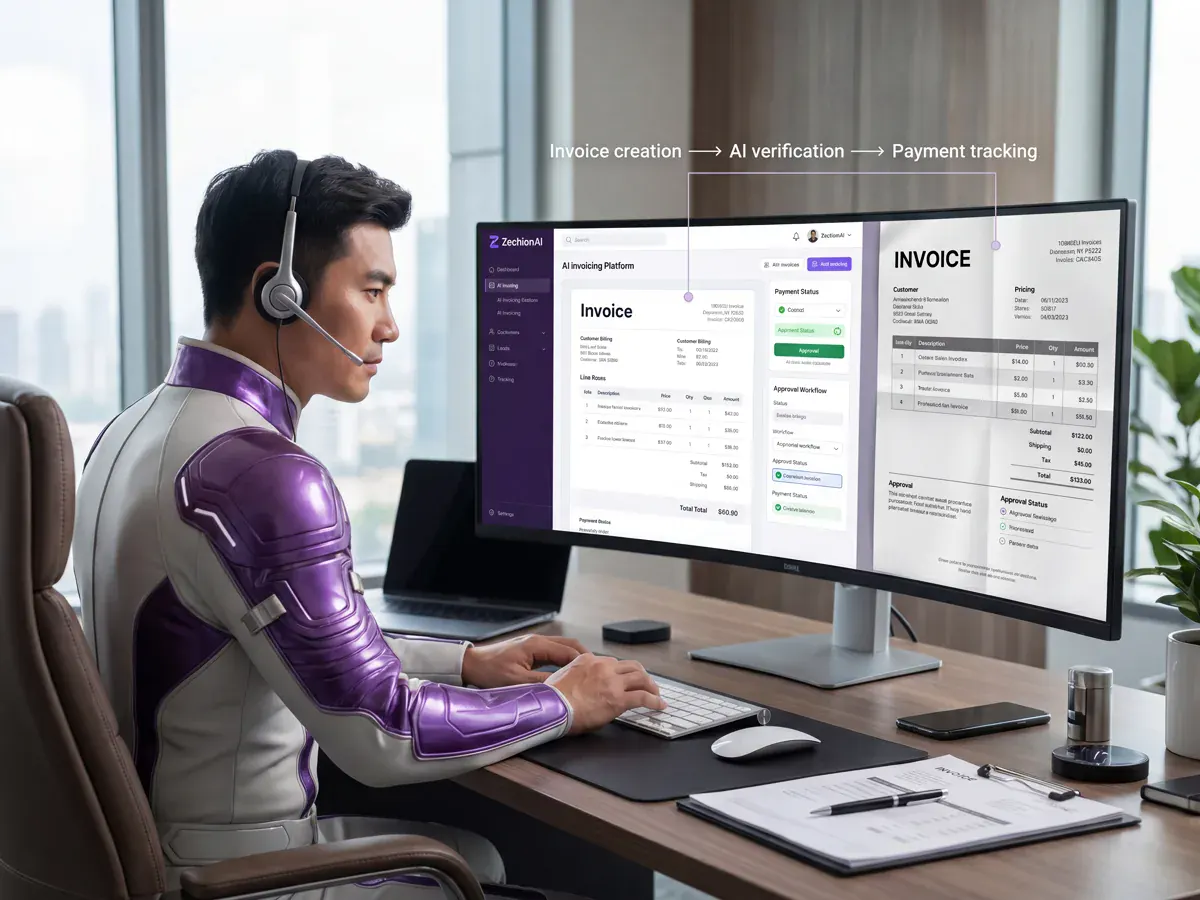 Document Processing & OCRTurn Documents Into Structured Data, Intelligent Workflows, and Actionable Information
 Generative AIGenerative AI can give employees quicker access to institutional knowledge and enable tasks that are information-rich to be automated.
 MLOps & AI OperationsTurn Machine Learning Models Into Reliable, Production-Ready AI Systems
There are several areas where AI can help, such as network analytics, anomaly detection, customer analytics, churn-risk analysis, support automation, ticket classification, knowledge retrieval, forecasting, document processing, billing analysis and workflow automation. The right application will be dependent on the organization's data, systems, operation goals and risk needs.
AI can interpret network telemetry and classify alarms, detect abnormal patterns, predict demand, analyze customer behavior, assist contact centers, search technical documentation to find answers, automate workflows and even offer decision-support data to operations and business teams.
Common use cases range from network event classification and anomaly detection, to customer-support support, ticket routing, knowledge retrieval, reporting automation, to churn-risk analysis and forecasting. Use cases should be chosen for the purpose of solving a problem in a particular operating scenario, and not just because AI is possible.
Yes. AI can be integrated with current systems when technical environment allows for suitable access. APIs, data pipelines, event systems, databases, data warehouses or other approved interfaces may be used for integration.
Not necessarily. AI can be integrated into an existing system. The architecture will rely on the organization's data environment, APIs, security model, legacy systems, operation needs and integration.
Anomaly detection in the network detects anomalies that are not typical or do not match a baseline. The use of AI and machine-learning technologies can be beneficial in sifting through vast amounts of network data and pinpoint events that require deeper investigation.
A model can detect patterns in current and historical network activity and spot anomalies. The method used to implement the telemetry will vary according to the type of telemetry, availability of historical data, network design, model design and thresholds.
Yes. AI can categorize network occurrences, group them, summarize them, and prioritize them. This can be useful for the operations team to concentrate, but is best confirmed by engineering staff.
By leveraging AI, these tools can be used to correlate signals, compare behaviors to a historical database, and determine potential contributing factors. It should typically be considered as investigation support, and not as a definite conclusion about the root cause.
Yes. The forecasting models can use past traffic, usage, demand and other relevant statistics to generate traffic estimates which network planners can use in making capacity decisions.
AI can look for patterns in past incidents and generate risk indicators in certain environments. This isn't to say that it can foretell all failures or give guarantees on when equipment and infrastructure might fail.
It can be utilized for event classification, anomaly detection, incident prioritization, documentation search, reporting, forecasting and investigation support.
AI can understand what the customer signals and what the service signals and give you a probability or risk score about churn. It can inform and/or prioritize attention given to customer-experience issues but is not a certainty that a customer will depart.
Data can include the following, depending on permissions and business goals: usage patterns, support history, complaints, billing information, contract details, service changes, plan changes, engagement, interaction history.
No. Churn models are approximate. Data quality, feature selection, model design, customer behavior, shifting market conditions, and more – all of these influence their performance.
Yes. A model can deliver risk scores that could be used to prioritize some of the customer-experience teams' reviews for a specific account or customer segment.
Yes. AI can categorize the topics of complaints, detect patterns, assess sentiment, provide summaries and provide a better understanding of common service issues.
Machine learning and analytical methods can cluster customers according to a set of selected features and/or behavior. The use of such segments should be decided by the business teams.
AI can categorize customer requests, fetch approved knowledge, respond to appropriate questions, summarise interactions, route tickets, and escalate requests which need human intervention.
Yes, if the question is suitably formulated. Customer facing systems must rely on approved information sources and have clearly defined escalation procedures when an information request must be authenticated, accessed to an account, judged by human action, or handled in a special way.
Yes. Agent-assist tools can offer summary of conversation, knowledge retrieval, troubleshooting information, suggested responses, classification, documentation assistance.
Yes. Interactions can be summarized by speech or text, provided the proper technical and privacy-related measures are implemented.
Yes. AI can categorize the context of a ticket and make recommendations or automate routing by using rules and confidence levels.
Yes. AI can fetch approved troubleshooting procedures and related technical information. Guidance should be verified by human before taking consequential action.
Yes. RAG can integrate an assistant with approved organizational knowledge sources, and with appropriate access controls.
Retrieval-Augmented Generation (RAG) is a hybrid approach that combines information retrieval with generative AI. The system pulls up relevant information from the approved sources rather than merely depending on the knowledge of the model and uses this context to respond.
Yes. The assistant can offer a controlled search of technical manuals, SOPs, network documentation, troubleshooting guides, etc. and other approved resources.
Yes. Customer-service assistants may obtain product, service, troubleshooting and support information that has been approved based on the user's authorization and the policies within the organization.
Yes. Architecture should include access control, so that users are able to access information relevant to their role and/or authorization level.
ZechionAI is capable of integration with OSS/BSS environments where the technical interfaces/APIs, data structures, access permissions, and security requirements of the relevant environments are supported.
Potentially, yes. The integration will vary depending on the CRM or billing platform, interfaces available, authentication, data architecture, and desired workflow.
Yes, if there are interfaces and architecture available. For legacy environments, custom integration, data pipelines, controlled approaches such as middleware may be necessary.
No common data set exists. Use case dependent requirements. For Network Anomaly Detection, possible data types include telemetry and event information, while for churn analysis, it may include customer, usage, support, and service information.
Proper authentication, access controls, data handling procedures, secure integrations, logging, monitoring, retention practices, and other controls suitable for the environment should be implemented to address protection.
Access should be restricted based on authorisation and business need. Permission and authentication controls, data controls and restrictions, secure APIs, logging, and monitoring can be helpful ways to restrict improper access.
Responsible AI involves choosing the right application, safeguarding data, testing the model's performance, keeping records of the systems, ensuring human oversight, tracking results, managing access to the systems, and defining error and change management procedures.
No. The regulatory requirements are dependent on how the organization operates, what jurisdictions it has, what systems it uses, what data, contracts are in place and what laws or regulations apply. The implementation of ZechionAI may be relevant to technical and governance processes, but compliance needs to be assessed on a case-by-case basis.
Depending on the application, monitoring may involve model accuracy or other evaluation measures, error rates, outcomes of a workflow, drift, response quality, access to the model, system performance and user feedback.
An external partner can deliver specialized AI, integration, automation, analytics, RAG, development and governance without having to develop each capability before the project begins.
Yes. The desired model may include collaboration with network engineers, IT teams, developers, data teams, customer-service teams and technology leadership.
Yes. Implementing one modular workflow can be a good approach to test the technical feasibility, operational suitability, governance needs, and outcomes before scaling up.
It can start with an assessment or a strategy engagement, then move on to development, integration, deployment, automation, monitoring, governance, and continual optimization, depending on the needs of the organization.
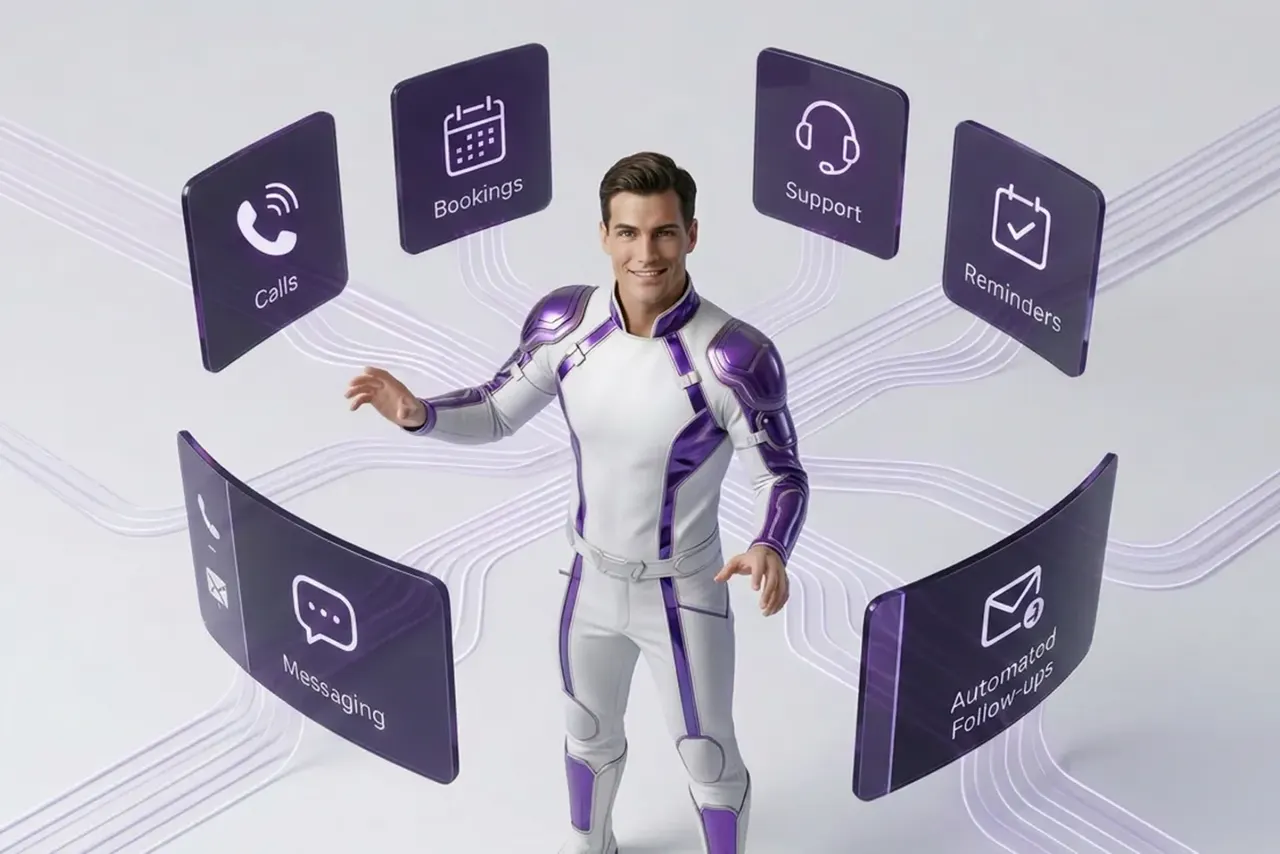
Seamlessly integrate AI into your telecom workflows
Network Analytics. Customer Intelligence. Automation. AI Assistants.
Talk to Zech, live