
AI Solutions for Automotive
Predictive Maintenance. Dealership AI Assistants. Inventory Forecasting.
Talk to Zech, live

ZechionAI enables automotive companies to convert vehicle, customer, service, inventory, and operational data into actionable AI systems, predicting, assisting, automating, and informing.
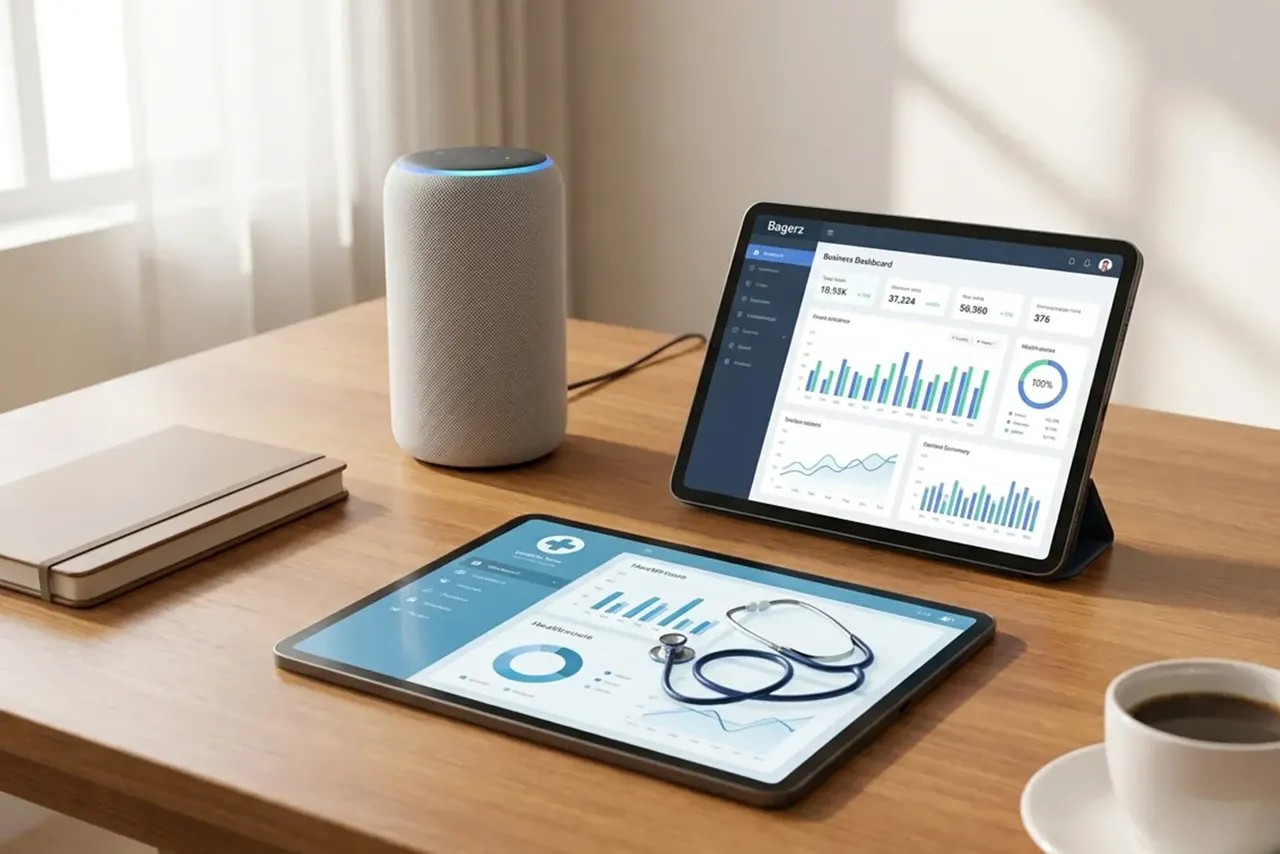
How automotive organizations operate is the foundation of all our solutions, including predictive maintenance notifications, dealership AI assistants, inventory demand forecasting, intelligent workflow automation, machine learning, data analytics, and AI powered business intelligence.
From dealerships, dealer groups, manufacturers, fleet operators, service providers, parts distributors, mobility companies, and automotive tech businesses, ZechionAI can assist you in pinpointing viable AI opportunities, bring the right data, develop helpful workflows, and implement AI while ensuring proper human oversight.
The decision is supported by AI. You have not taken away your people's responsibilities.
Dive into the world of automotive AI solutions!
Automotive AI for True Business Use Cases
6 services
The automotive industry already produces tons of data.
Vehicle records. Service histories. Repair orders. Customer inquiries. Leads. Inventory data. Sales activity. Parts usage. CRM records. DMS information. Warranty records. Telematics. Website interactions. Scheduling data. Operational reports.
It's not about having more data.
The challenge is to make that information into a useful decision and repeatable action.
ZechionAI supports automotive companies by leveraging artificial intelligence, machine learning, predictive analytics, conversational AI, data processing, and workflow automation in real-world business challenges.
This might involve spotting vehicles that need servicing, assisting a dealership after hours with customer queries, predicting part requirements, arranging service calls, prioritising leads, providing management with better visibility or anything else.
The goal is simple:
Leverage AI to support the work of humans, where appropriate, to make it more informed, more organized, and less repetitive, without taking them out of the loop.
Automotive Challenges AI Can Help Address

Automotive companies have many integrated sales, service, inventory, customer, tech and operational processes.
Sales Challenges
- Slow lead response
- Are there lots of repetitive questions?
- After-hours website traffic
- Inconsistent lead qualification
- Manual follow-up
- Vehicle availability questions
- Customer preference matching
- Fragmented CRM information
- Difficulty prioritizing opportunities
- Repetitive reporting
Car salespeople can encounter:
AI can aid in streamlining these processes and delivering more timely and valuable information to sales teams.
Service Challenges
- How many of the following situations do you encounter in your service operations?
- Reactive maintenance
- Missed service opportunities
- There are a lot of appointments requested.
- Repetitive customer questions
- Repair-history analysis
- Technician workload pressure
- Parts availability concerns
- Declined-service follow-up
- Inconsistent customer communication
Lack of visibility of service needs.
By analyzing trends, organizing requests, predicting future needs, and identifying potential issues, AI can help service advisors and managers better optimize their work.
Inventory Challenges
Inventory teams can see that they have to control:
- Aging vehicles
- Slow-moving inventory
- Changing customer preferences
- Regional demand differences
- Seasonal demand
- Rising demand for EVs and hybrids
- Vehicle availability
- Sales velocity
- Pricing information
- Allocation decisions
- Parts stock levels
While relying on historical spreadsheets and manual assumptions remains a viable option, AI forecasting can help provide an additional layer of analysis for inventory managers.
Operational Challenges
In all automotive companies, the team can also face the following challenges:
- Disconnected systems
- Repetitive administrative work
- Manual reporting
- Unstructured documents
- Data silos
- Limited analytics
- Inconsistent workflows
- Difficult-to-search internal information
- Multiple software platforms
- Complex integrations
ZechionAI has taken a different approach to these challenges by tackling them as workflow and data challenges first, and finding where AI can help.
Why AI for Automotive?
Automotive companies can leverage AI to process vast amounts of data and uncover trends and patterns that might be hard to track through manual methods at scale.
AI can (Depending on the use case):
- Examine vehicle and service records to determine history
- Identify maintenance patterns
- Forecast inventory demand
- Classify customer inquiries
- Make recommendations on vehicles according to the appointed criteria
- Prioritize leads
- Summarize service records
- Analyze customer sentiment
- Identify inventory risks
- Forecast parts demand
- Automate repetitive workflows
- Generate operational summaries
- Detect anomalies
- Organize documents
- Support sales and service staffs
- Support management reporting
The value is in bringing AI to a real business process.
Without proper inventory information, a chatbot is restricted.
Without historical data, it's a limited predictive model.
If you have an automation workflow without proper controls, it can cause unnecessary risk.
ZechionAI therefore concentrates on all of the environment: data, workflow, AI, integration, people, governance and continuous monitoring.
Our Core Automotive AI Solutions

1. Predictive Maintenance AI
Predictive Maintenance Capabilities
- Predictive maintenance alerts
- Vehicle service prediction
- Component pattern analysis
- Maintenance scheduling recommendations
- Service interval analysis
- Mileage-based maintenance insights
- Usage-based maintenance analysis
- Repair-history analysis
- Warranty pattern analysis
- Diagnostic data analysis
- Fleet maintenance forecasting
- Service-risk prioritization
- Maintenance trend dashboards
- Technician decision support
Switch from reactive maintenance to earlier detection of needs for services.
ZechionAI can build predictive maintenance solutions, using available vehicle, service, usage, diagnostic, warranty, or fleet data to look for patterns relating to maintenance needs.
A pattern can be identified and flagged for review using a predictive system.
It should not be an automatic judgment that a vehicle is unsafe or automatically replace the expertise of a qualified technician.
Example Workflow
The integrity of the vehicle data is verified by Pattern Analysis, which triggers a Risk Signal to perform Maintenance Alerts, followed by a Human Review and then Service Action.
The specific model, data sources, alert thresholds, and review process is dependent on the organization's vehicles, systems, operating environment and goals.
AI Dealership Chatbots & Customer Assistants are the next step.
When you're ready to ask, you want an answer, and that's before the dealership opens.
ZechionAI is capable of creating a conversational AI assistant based upon the dealership website, customer-service processes, sales processes, service requests, and supported business systems.
Dealership AI Assistant Capabilities
The assistant will be able to assist with:
- Vehicle availability questions
- Vehicle specifications
- Model comparisons
- Feature questions
- Dealership hours
- Location information
- Service FAQs
- Parts inquiries
- Test-drive requests
- Service appointment requests
- Lead qualification
- Trade-in inquiry capture
- Customer intent detection
- Follow-up workflows
- CRM lead creation
- Appointment reminders
- Human handoff
The assistant can be programmed to access authorized dealership information and business rules, instead of randomly adding key information.
Human Handoff
Not all interactions should be automated.
The system can reroute or redirect conversations to a human when a customer requires:
- Complex financing assistance
- Negotiation
- Complaint resolution
- Detailed technical assistance
- Safety-related guidance
- Information pertaining to the legal or compliance aspects.
- A sales representative
- A service advisor
- A manager
The AI provides assistance in areas outside its approved knowledge.
The objective is not to discourage patrons from approaching the employees.
The idea is to enable employees to devote more time to the conversation that matters – the one in which they bring their expertise.
Inventory Demand Forecasting
The decisions made about inventory impact sales, capital usage, customer service and operations planning.
With its ability to analyze historical and real-time data, ZechionAI can create inventory forecasting models that enable inventory teams to better understand their anticipated demand patterns.
Data that may be considered
Depending on availability and authorisation:
- Historical sales
- Vehicle model
- Trim
- Body type
- Geography
- Seasonality
- Pricing information
- Inventory age
- Sales velocity
- Lead activity
- Customer demand
- Regional trends
- EV and hybrid demand
- Vehicle availability
- Days-to-sale
- Dealership-level trends
Forecasting Outputs
AI systems can provide:
- Demand forecasts
- Inventory risk alerts
- Aging-stock alerts
- Demand scores
- Regional demand comparisons
- Vehicle allocation insights
- Stock recommendations
- Slow-moving inventory identification
- Demand trend dashboards
- Replenishment recommendations
Forecasts are a decision support tool.
The inventory manager should have the responsibility of buying, allocating, pricing, and other business decisions regarding inventory.
All-in-One Automotive AI Services
These are ZechionAI's core solutions, but they are far from being the only ones that can be created.
Predictive Analytics
- Demand forecasting
- Predictive maintenance
- Sales forecasting
- Service demand forecasting
- Parts forecasting
- Customer behavior analysis
- Inventory risk analysis
- Anomaly detection
- Forecast dashboards
Analyze historical and operational data to determine patterns, trends, risk and potential future conditions.
Services can include:
Automotive Machine Learning
Create machine learning pipelines for particular business use cases.
Potential applications include:
- Lead scoring
- Demand prediction
- Vehicle recommendation
- Inventory classification
- Service prediction
- Customer segmentation
- Churn-risk analysis
- Parts demand prediction
- Warranty pattern analysis
- Operational anomaly detection
Models can be tested and evaluated using the relevant business data and they can be monitored after deployment.
AI Dealership Assistants
Develop conversational systems for:
- Sales
- Service
- Parts
- Website visitors
- Customer support
- Internal employees
- Dealer groups
- Fleet customers
Customer-facing or workflow support can be achieved with the assistance of assistants.
AI Sales Assistants
Support sales team with opportunities organization and prioritization.
Capabilities may include:
- Lead qualification
- Lead scoring
- Vehicle recommendations
- Customer preference analysis
- Follow-up prioritization
- Conversation summaries
- CRM data enrichment
- Appointment assistance
- Follow-up drafting
- Opportunity alerts
Service & Workshop AI
Use to support a fixed operation:
- Service appointment classification
- Repair-order analysis
- Service-history summaries
- Maintenance reminders
- Declined-service follow-up
- Service demand forecasting
- Technician assistance
- Parts availability analysis
- Workshop workload forecasting
- Customer communication support
Parts Demand Forecasting
Assist parts organisations to comprehend prospective demand through:
- Historical parts usage
- Vehicle population
- Seasonal patterns
- Service activity
- Regional demand
- Inventory levels
- Replacement patterns
- Campaign activity
Possible outputs can range from demand forecasting, stockout-risk alerts, slow moving inventory analysis, and reorder recommendations.
Purchase decisions are still subject of approval by the organization.
Vehicle Inventory Intelligence
ZechionAI can aid dealerships and auto companies in studying inventories on a deeper level.
Potential capabilities include:
- VIN-level analysis
- Inventory aging
- Days-to-turn analysis
- Demand scoring
- Inventory segmentation
- Slow-moving inventory identification
- High-demand vehicle identification
- Location-level demand analysis
- Vehicle movement analysis
- Stock allocation insights
- Lifecycle analysis
- Inventory dashboards
Rather than asking only “How many vehicles do we have?” teams can start to ask “How many vehicles do we have and what are they?”
So what vehicles need attention, where is demand moving and what information should we use to guide our next decision?
AI for Automotive Sales

From initial inquiry to follow-up, ZechionAI can assist the sales lifecycle.
- Lead: Record and manage customer queries.
- Understand: Determine customers' needs, requirements, preferences for vehicles, timing and information desired.
- Qualify: Implement business rules and business scores.
- Recommend: Effectively present relevant vehicle or next-step recommendations using approved information.
- Schedule: Help people make test drive or appointment requests.
- Follow Up: Focus on follow-up possibilities and help with communication.
- Report: Deliver management with helpful sales and engagement analytics.
AI in Auto Repair Shops
AI can help service businesses prioritize customer requests and enhance their level of visibility.
Potential solutions include:
- Service assistants
- Appointment classification
- Maintenance reminders
- Repair-history summaries
- Service demand forecasting
- Customer segmentation
- Declined-service follow-up
- Parts forecasting
- Workload forecasting
- Service retention analytics
- Customer sentiment analysis
- Service reporting
AI can assist service advisors in looking up information quicker, but still allow technicians and qualified service professionals to be accountable for technical decisions.
AI solutions for auto manufacturers
Manufacturers can leverage ZechionAI in production, quality, supply chain, warranty, dealer or customer workflows.
Potential applications include:
- Manufacturing
- Equipment analytics
- Predictive maintenance
- Production forecasting
- Quality analytics
- Process anomaly detection
- Supply Chain
- Demand forecasting
- Parts forecasting
- Supplier analytics
- Inventory planning
- Risk identification
- Warranty
- Warranty claim analysis
- Pattern detection
- Documentation processing
- Trend reporting
- Customer & Dealer Intelligence
- Dealer demand analysis
- Customer feedback analysis
- Service trend analysis
- Market segmentation
- Knowledge assistants
AI for Dealer Groups
AI capabilities can be deployed in a centralized manner in multi-location automotive groups, while still adhering to the right levels of separation across locations and business units.
Potential solutions include:
- Group-wide dashboards
- Dealership comparison
- Inventory forecasting
- Customer intelligence
- Lead routing
- Service analytics
- Inventory aging analysis
- Regional demand forecasting
- Centralized reporting
- Workflow automation
AI can guide leadership by revealing trends and patterns across sites without the need for managers to manually aggregate all the data.
AI for Used-Car Dealerships
There are inventory issues and customer issues with used-car operations.
ZechionAI can support:
- Demand prediction
- Inventory aging
- Vehicle acquisition analysis
- Pricing-support analytics
- Vehicle classification
- Listing assistance
- Customer-to-vehicle matching
- Trade-in data analysis
- Lead prioritization
- Reconditioning workflow support
- Inventory movement analysis
AI recommendations are meant to be used alongside, not in place of, well-informed acquisition and inventory decisions.
AI for Fleet Automation
AI can be used in the following ways in fleet organizations: Vehicle utilization, maintenance, replacement and operational planning.
Potential applications include:
- Predictive maintenance
- Vehicle health analytics
- Utilization analysis
- Downtime prediction
- Maintenance scheduling
- Fleet replacement planning
- Analyze energy or fuel data
- Vehicle lifecycle analysis
- Fleet demand forecasting
- Maintenance workload forecasting
The role of AI in EV & Hybrid Operations
The extra data and customer service aspects of EV and hybrid vehicles.
ZechionAI is capable of assisting organizations in the following ways:
- EV inventory forecasting
- Hybrid inventory analysis
- Customer education assistants
- Service demand analysis
- Charging-related customer support
- Usage-pattern analysis
- Maintenance trend analysis
- Customer segmentation
- Lifecycle analytics
The output from the AI should be informed by the actual information the organization has and should not replace the advice of qualified technical or safety experts.
Automotive Document Intelligence
Many vehicles provide key information in documents that are buried inside.
ZechionAI can assist in processing:
- Repair orders
- Inspection reports
- Warranty documents
- Service records
- Vehicle records
- Invoices
- Supplier documents
- Contracts
- Dealership forms
- Customer communications
- Internal operating documents
AI document workflows can:
- Extract information
- Classify documents
- Summarize records
- Identify missing information
- Route documents
- Turn the unstructured data into structured data.
- Support downstream workflows
Automotive Knowledge & Search AI
It should take an employee no more than a few minutes to find an answer.
ZechionAI can create intelligent knowledge systems from authorized sources like:
- Vehicle specifications
- Service documentation
- Warranty information
- Internal policies
- Parts information
- Technical documentation
- Training materials
- Dealer procedures
- Customer-service knowledge
- Internal operating manuals
If appropriate, retrieval-augmented generation (RAG) can be leveraged to link AI-generated responses to authorized organizational data.
Automotive Customer Intelligence
Customer information can offer helpful indicators throughout the sales/service lifecycle.
ZechionAI can analyze the following:
- Customer segments
- Purchase intent
- Service intent
- Customer interactions
- Sentiment
- Service retention
- Customer engagement
- Churn-risk signals
- Communication patterns
- Vehicle preferences
- Customer journeys
The goal is to be able to meet customer needs without creating an uncontrolled AI environment with customer data.
Automotive AI Analytics
ZechionAI can generate dashboards to gather information from operations in one place.
Sales Analytics
- Leads
- Lead response
- Conversion
- Vehicle interest
- Appointment activity
- Follow-up activity
Service Analytics
- Appointments
- Service demand
- Repair trends
- Maintenance patterns
- Service retention
- Workshop workload
Inventory Analytics
- Inventory age
- Sales velocity
- Demand
- Turnover
- Slow-moving vehicles
- Stock risk
Operations Analytics
- Workflow activity
- Exceptions
- Bottlenecks
- Automation activity
- AI usage
- Operational trends
AI Workflow Automation
The more AI can engage in a controlled workflow, the more useful it will be.
Sales Workflow
Based on the vehicle, the results become apparent, after which a recommendation is made, an appointment made, and the CRM follows up.
Maintenance Workflow
Vehicle Data, Pattern Detection, Risk Signal then Alert and Human Review, leading to Service Action.
Inventory Workflow
The flow of information is from inventory data, through demand forecast, to risk detection, recommendation, and manager review.
Customer-Service Workflow
The AI Assistant will receive and process the customer's question, followed by the identification of approved information and the intent, finally resulting in a resolution or human handoff.
Document Workflow
The steps of documents go to the Extraction process, then to classification, validation, routing and, if necessary, to human review.
Automotive AI Integrations
Where APIs, data feeds, exports, databases, or any other supported connection options exist, ZechionAI can create integrations with existing systems.
These are the possible integration environments:
- CRM platforms
- DMS platforms
- ERP systems
- Inventory platforms
- Service-management systems
- Scheduling platforms
- Telematics systems
- Fleet-management platforms
- Data warehouses
- Cloud environments
- Analytics platforms
- Communication systems
- Databases
- APIs
- Automotive data services
Discoveries should be used to test specific vendor integrations, not simply taken for granted.
From Data to Action
An actual automotive AI system could be designed as follows:
Customer Relationship Management (CRM) + Digital Materials Management (DMS) + Inventory + Service + Telematics + Operational Data.
- Data Processing & Integration
- AI (Artificial Intelligence) / ML (Machine Learning) / Predictive Analytics
- Recommendations, Alerts & Insights
A single integrated solution that combines Dashboards, Workflows, and AI Assistants.
- Human Review
- Business Action
- Monitoring & Optimization
The design of the architecture should be tailored to suit the requirements of each organization's systems, data permissions, security needs and business goals.
ZechionAI Automotive AI Implementation Lifecycle
- 01
Discover
Be familiar with your organization, systems, data, workflows, users, goals, and limitations.
- 02
Strategize
Define the business value, feasibility, data availability, risk, implementation effort, and prioritize the opportunities for AI.
- 03
Design
Outline the AI workflow, data structure, user experience, integrations, controls and success measurements.
- 04
Build
Create necessary AI models, assistants, automations, dashboards, data pipelines, and applications.
- 05
Integrate
Integrate solution to existing business systems and data sources.
- 06
Deploy
Present the solution using an appropriate production process, such as testing and user validation.
- 07
Automate
Automate approved repetitive activities with appropriate controls and human escalation.
- 08
Monitor
Monitor system behavior, data quality, outputs, exceptions, usage and operational performance.
- 09
Secure
Implement suitable access controls, authentication, data protection, logging and integration security.
- 10
Govern
Set up ownership, permissions, review, documentation, monitoring and escalation process.
- 11
Optimize
Enhance models, workflows, knowledge sources, rules, prompts, dashboards and integrations as per usage.
- 12
Scale
Scale effective solutions to other departments, sites, workflows or business units.
Human-in-the-Loop Automotive AI
It is important for automotive AI to assist human expertise, rather than replace it.
Human review is available for:
Responsible Automotive AI
In many instances, automotive organisations deal with information that is commercially sensitive and, in many cases, personally identifiable.
Functionality must be taken into account along with responsible AI.
Automotive industry guidance specifically includes data management, consent, security, vendor due diligence, transparency, staff training and monitoring and human oversight.
- 01
Data Privacy
When implementing AI, there are some things to keep in mind:
- What information is being gathered
- Why the data is needed
- In a food processing operation.
- Who can access it
- The length of time it is kept.
- To whom it is passed to: (vender / subprocessors)
- Whether the disclosure to customers, or consent, requirements apply
- 02
Security
There are a number of controls depending on the implementation:
- Authentication
- Role-based access
- Least-privilege permissions
- Encryption
- Logging
- Monitoring
- Secure APIs
- Environment separation
- Incident-response processes
- 03
AI Governance
Organizations should establish:
- AI ownership
- Approved use cases
- Data boundaries
- Review requirements
- Testing procedures
- Monitoring
- Documentation
- Escalation procedures
- Vendor due diligence
- 04
Accuracy
The business data used to test AI systems should be appropriate.
Upon deployment it is important to track outputs as data, customer behaviour, inventory conditions, workflows and business rules can change.
- 05
Transparency
Organizations can give details of:
- AI interaction
- Recommendations
- Alerts
- Forecasts
- Automated actions
- Human escalation
Why Hire an Automotive AI Development Company?
It is not always feasible to build each type of AI capability in-house.
For automotive organizations that require specialized expertise or extra development capability, or are looking for a quicker approach to testing a particular use case, they can select an external AI partner.
- 01
Specialized Expertise
Leverage access, AI and machine learning, automation, analytics, data engineering, conversational AI, integration and governance without having to build all specialties in-house.
- 02
Faster Pilot Development
Before embarking on a larger-scale AI initiative, begin with a single business challenge.
- 03
Integration Support
Link AI features with current systems, if applicable.
- 04
Reduced Internal Workload
Enable internal IT and technology teams to maintain focus on existing infrastructure projects and allow external IT and technology team to focus on identified AI projects.
- 05
Flexible Scaling
Use just one case and build up as they get more confident.
- 06
Cross-Functional Capability
Integrate various subject areas:
- AI
- Machine learning
- Data engineering
- Software development
- Automation
- Analytics
- Integration
- Security
- Governance
Why Partner With ZechionAI?
- 01
Practical AI Strategy
Not using AI just for the sake of it, but for a useful business problem.
- 02
Custom AI Solutions
Your dealership, fleet, manufacturer, service or automotive tech company has its own workflows. Those workflows can be the basis for solutions to be designed.
- 03
Integration-Focused Development
In some cases, AI can be added to existing systems, so long as it is technically and financially viable, rather than replacing an organization's entire technology infrastructure.
- 04
Human Oversight
Decisions that are important to the business and to safety can be in qualified human hands.
- 05
Scalable Architecture
Start a project and grow it as the organization grows.
- 06
Ongoing Optimization
AI systems need to be monitored and improved. As business needs evolve, models, workflows, knowledge sources, rules and integrations can be enhanced.
- 07
Security & Governance
Security, access control, data handling, monitoring and governance can be integrated into the implementation process.
AI Partnerships in the Automotive Industry
AI Assessment
In-depth evaluation of workflows, systems, data and possible AI opportunities.
Ideal for: Companies who are aware that AI can be beneficial, but are not sure where to begin.
AI Pilot
Develop one cohesive AI solution.
Examples:
- Dealership AI assistant
- Inventory forecast
- Predictive maintenance model
- Service workflow automation
Ideal for: Companies seeking to test a use case before scaling it up.
AI Implementation
Develop and deploy multiple connected AI capabilities.
Best for: Dealership groups, manufacturer, fleet, service network and growing automotive groups.
Managed AI Services
Continuous monitoring, optimization, maintenance, support, analytics and AI workflow enhancements.
Ideal for: Companies seeking a partner to handle their AI environment.
Dedicated AI Team
A dedicated ZechionAI team that helps an organization with their longer-term AI roadmap.
Ideal for: Companies in the automotive sector that are constantly developing AI solutions.
Enterprise AI Partnership
Architecture, development, integration, analytics, automation, governance, security and optimization of AI over the long term.
Ideal for: Large automotive businesses and multi-location companies.
Potential Business Outcomes
- AI isn't a cookie-cutter solution for all organizations.
There are areas for improvement, such as:
- Faster customer response
- Better lead organization
- Improved inventory visibility
- Earlier maintenance signals
- More knowledgeable inventory planning
- Reduced repetitive work
- Better service coordination
- Increased consistency in customer interaction.
- Improved reporting
- Better operational visibility
- More structured workflows
Actual results are dependent upon data quality, system integration, scope of implementation, workflow adoption, operating environment and quality of underlying business processes.
Who We Support
ZechionAI Automotive AI Services can aid in:
- Automotive manufacturers
- Franchised dealerships
- Independent dealerships
- Dealer groups
- Used-car dealerships
- Auto service centers
- Repair networks
- Parts distributors
- Fleet operators
- Commercial vehicle organizations
- Rental companies
- Mobility companies
- Automotive marketplaces
- EV businesses
- Automotive technology companies
- Aftermarket organizations
- Vehicle inspection companies
- Auction organizations
- Automotive logistics companies
And the individuals that make these organisations:
- CEOs
- COOs
- CIOs
- CTOs
- Chief Digital Officers
- Dealer principals
- General managers
- Service directors
- Fixed-operations directors
- Sales directors
- BDC managers
- Inventory managers
- Fleet managers
- Technology leaders
- Data teams
- Operations teams
- Customer-experience leaders
Automotive AI Use Cases
Dealerships
- AI sales assistants
- Inventory forecasting
- Lead qualification
- Service reminders
- Customer assistants
- Service analytics
Manufacturers
- Predictive maintenance
- Production analytics
- Warranty intelligence
- Supply-chain forecasting
- Dealer demand analysis
Service Centers
- Maintenance prediction
- Appointment automation
- Customer assistants
- Service analytics
- Parts forecasting
Parts Distributors
- Parts demand forecasting
- Inventory intelligence
- Demand analytics
- Stock-risk analysis
Fleet Operators
- Vehicle health analytics
- Maintenance forecasting
- Utilization analysis
- Replacement planning
Rental & Mobility
- Vehicle availability analysis
- Demand forecasting
- Maintenance planning
- Customer assistance
Automotive Marketplaces
- Vehicle recommendations
- Search intelligence
- Customer assistants
- Inventory analytics
Automotive Technology Companies
- AI integration
- Recommendation systems
- Intelligent assistants
- Predictive analytics
- Machine-learning development
AI services for Automotive
- Predictive AnalyticsTurn Historical and Real-Time Data Into Better Business Decisions
 Intelligent AutomationAutomate Repetitive Work. Connect Your Systems. Improve How Your Business Operates.
 AI Security, Governance & ComplianceSecure AI. Govern AI. Deploy AI Responsibly.
 Managed AI ServicesKeep your AI running at peak performance — 24/7.
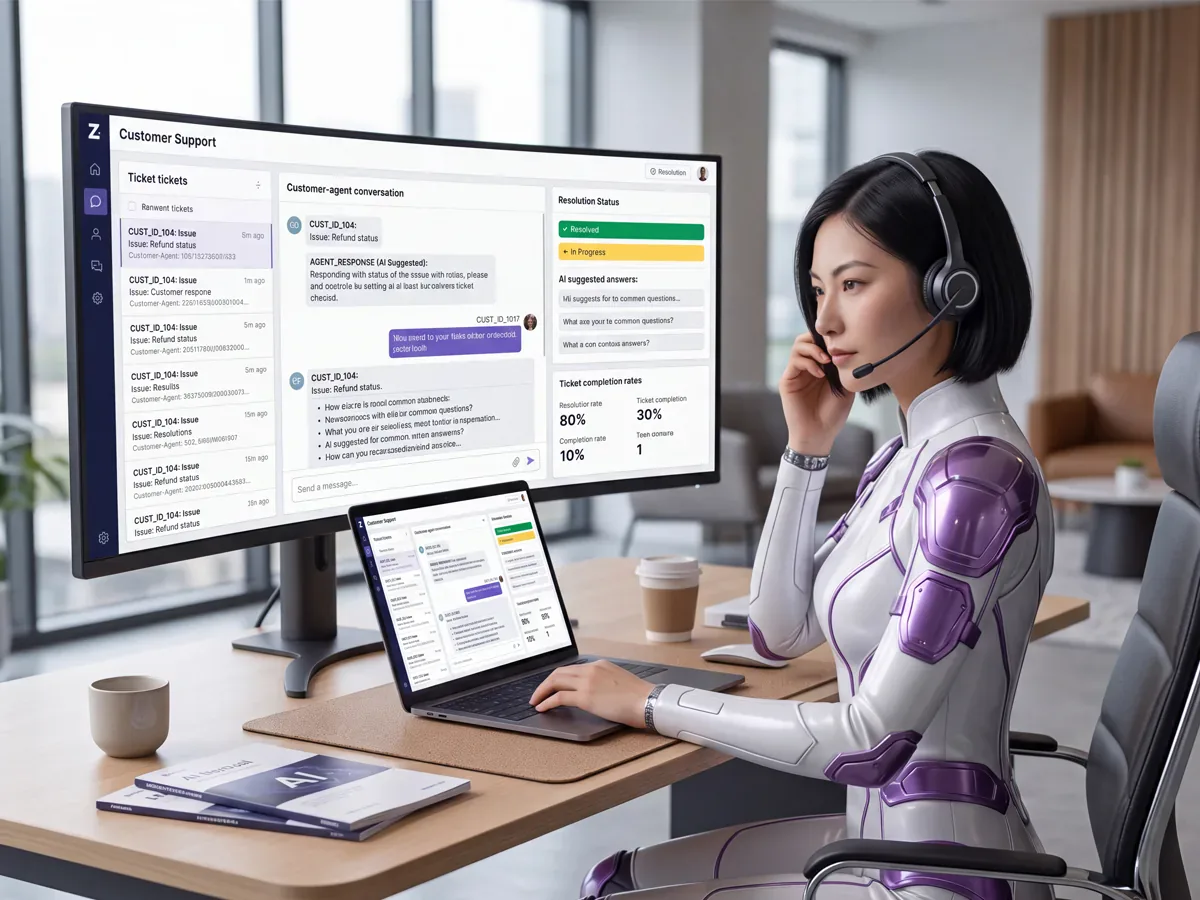 Conversational & Voice AIConversational and voice AI can provide a more natural interface to business services, employee workflows, and customer-support processes.
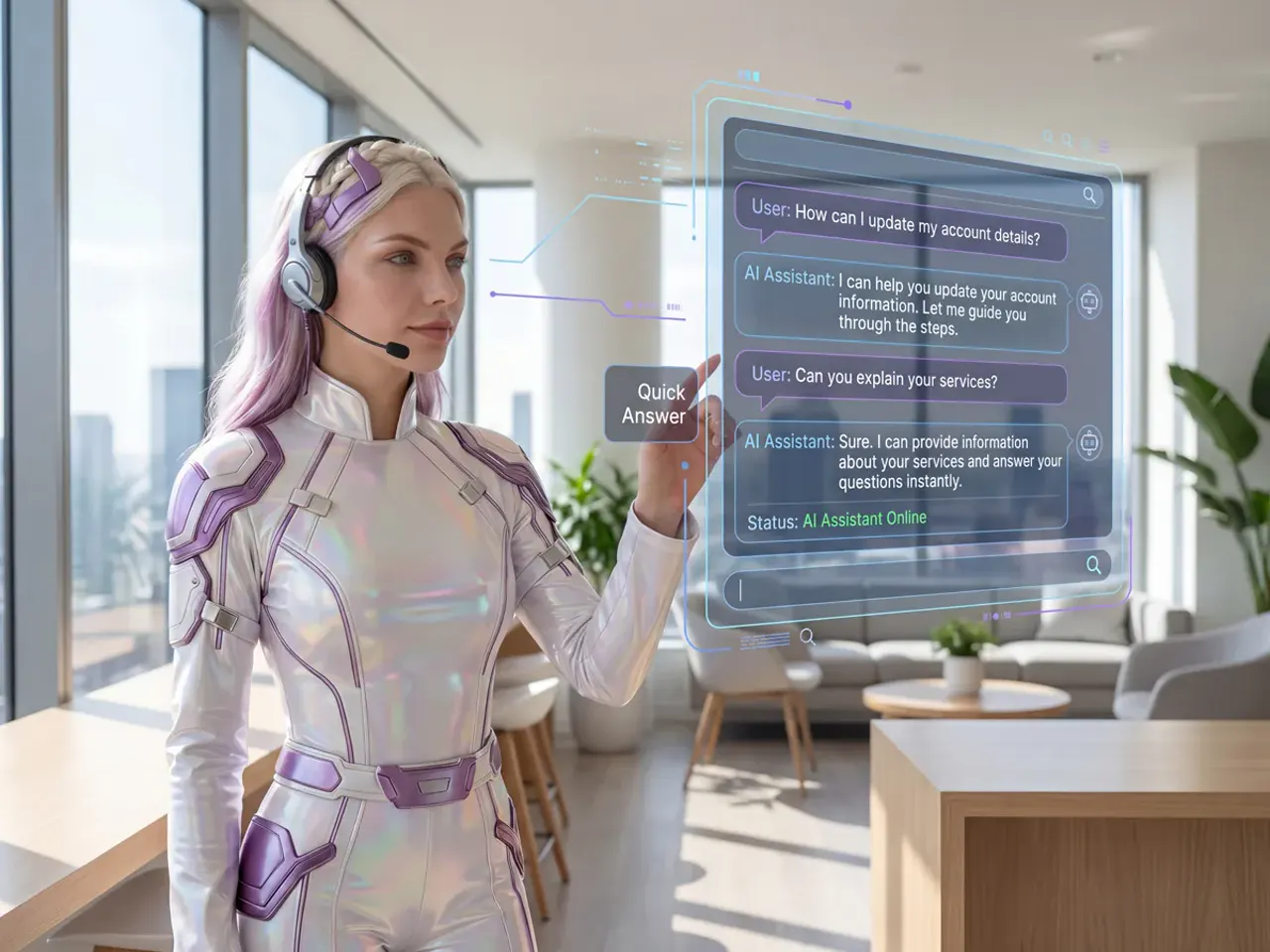 AI Chatbot DevelopmentBuild AI-Powered Conversations That Help Your Business Serve, Sell, and Scale
 AI Strategy & AdvisoryPractical AI Strategy for Scalable Business Transformation
- Data & AI IntelligenceTurn Business Data Into Clearer Insights, Smarter Forecasts, and Better Decisions
AI for automotive companies refers to software systems that use machine learning, predictive analytics, conversational AI, automation, or related technologies to support business workflows. Applications can include predictive maintenance, dealership customer assistants, inventory forecasting, lead qualification, service analytics, parts forecasting, document processing, and operational reporting. ZechionAI focuses on connecting AI to practical automotive workflows rather than treating AI as a standalone feature.
AI can help dealerships organize customer inquiries, qualify leads, answer routine questions, support appointment requests, analyze inventory, forecast demand, summarize interactions, automate repetitive tasks, and provide management analytics. The appropriate use cases depend on the dealership's systems, data, processes, and objectives. AI should support dealership employees rather than replace qualified sales, service, management, or technical professionals.
A dealership AI chatbot is a conversational system designed to communicate with customers through an approved channel such as a website or supported messaging environment. It can answer approved questions, provide vehicle information, capture customer intent, qualify leads, assist with appointment requests, and transfer conversations to employees when human assistance is appropriate.
Yes, when the chatbot is connected to an appropriate and authorized inventory source that provides current information. The system can be designed to answer questions about available vehicles, specifications, model details, and other approved information. Inventory accuracy depends on the quality, freshness, and reliability of the underlying data source.
Yes. AI can analyze customer-provided information and classify or prioritize leads according to dealership-defined criteria. It can identify vehicle interests, purchase timing, requested features, location, appointment intent, or other approved signals. The dealership can then determine how qualified leads should be routed and followed up.
AI can support test-drive scheduling when connected to an appropriate scheduling workflow. It can collect preferred dates and times, identify available options where the underlying system supports availability information, and route or submit the request. Final scheduling rules should be determined by the dealership.
AI can assist with service appointment requests when the necessary scheduling integration is available. It can collect vehicle and service information, understand the customer's request, and route the request into an approved scheduling workflow. Complex technical problems should still be reviewed by qualified service personnel.
Predictive maintenance AI uses available historical and operational data to identify patterns associated with maintenance needs or potential equipment issues. Depending on the use case, data can include service histories, mileage, usage information, diagnostics, repair records, warranty information, or fleet data. The resulting alerts are decision-support signals and should be reviewed appropriately.
A predictive maintenance system typically collects relevant historical and current data, processes that information, identifies patterns, and generates a prediction, risk signal, or alert. The organization then determines what action should follow. Model performance depends on the quality, completeness, relevance, and consistency of the available data.
AI can identify patterns that may indicate a higher likelihood of a maintenance event or service requirement. It cannot guarantee that a particular component will fail at a specific time. Automotive professionals should review AI-generated alerts alongside appropriate vehicle information, diagnostics, manufacturer guidance, and established service procedures.
Yes. AI can support service departments with appointment classification, customer communication, service-history summaries, maintenance reminders, demand forecasting, parts analysis, workload forecasting, and customer-retention workflows. It can reduce repetitive administrative work while allowing service advisors and technicians to focus on work requiring professional judgment.
Automotive inventory demand forecasting uses historical and current information to estimate potential future demand for vehicles or parts. Depending on the organization, factors may include sales history, vehicle type, location, seasonality, inventory age, sales velocity, pricing information, and other approved data. Forecasts can support inventory planning and allocation decisions.
AI can estimate relative demand or sales likelihood when sufficient historical and current data is available. Results depend on market conditions, data quality, geography, pricing, vehicle attributes, and other factors. Forecasts should be treated as decision-support information rather than guarantees of future sales.
Yes. An inventory AI workflow can analyze vehicle age, days in stock, sales activity, demand indicators, location, and other approved information to identify vehicles requiring management attention. Organizations can use those signals to prioritize reviews, pricing analysis, allocation discussions, or other actions.
Yes. AI can analyze historical parts usage, service activity, vehicle populations, seasonal patterns, geographic differences, inventory levels, and other relevant information to estimate future demand. Forecasting can help identify potential stockout risks and slow-moving parts, while purchasing decisions remain under organizational control.
Yes. Used-car dealerships can use AI for inventory analysis, demand forecasting, vehicle classification, customer matching, lead prioritization, listing assistance, acquisition analytics, reconditioning workflows, and inventory aging analysis. AI can provide additional analysis while experienced managers remain responsible for acquisition, pricing, appraisal, and inventory decisions.
Yes. Potential applications include EV and hybrid inventory forecasting, customer education assistants, service-demand analysis, customer segmentation, usage-pattern analysis, and lifecycle analytics. Technical or safety-related questions should be routed to qualified personnel and supported by approved technical information.
Potentially. Integration depends on the CRM's available APIs, data-access policies, authentication methods, licensing, and technical architecture. ZechionAI can assess the existing environment during discovery and determine an appropriate integration approach rather than assuming that every system supports the same capabilities.
Potentially, subject to the DMS provider's available interfaces, permissions, contracts, security requirements, and technical capabilities. ZechionAI can evaluate the specific environment and determine whether an API, approved data feed, export, middleware layer, or another connection method is appropriate.
Yes. ZechionAI can design custom AI solutions around defined automotive business requirements. Projects can include predictive models, AI assistants, workflow automation, data pipelines, dashboards, document intelligence, knowledge systems, and integrations. Scope, architecture, data requirements, security, and deployment approach are determined during discovery.
Yes. ZechionAI can design workflows that combine business rules, automation, AI, integrations, notifications, dashboards, and human approval steps. Examples include lead routing, customer inquiry classification, service requests, inventory alerts, document processing, and reporting.
The goal of ZechionAI's approach is not to replace qualified automotive professionals. AI can automate repetitive work, organize information, identify patterns, and provide recommendations. Employees should remain responsible for decisions that require professional judgment, especially safety-related, technical, financial, legal, or high-impact decisions.
Human oversight can be built into the workflow through approval steps, escalation rules, confidence thresholds, exception handling, access controls, and manual review. An AI assistant may handle routine questions while transferring complex situations to an employee. A predictive system may produce an alert while a qualified professional determines what action, if any, is appropriate.
Security requirements are considered during architecture and implementation. Depending on the project, this can include authentication, role-based permissions, least-privilege access, encryption, logging, monitoring, secure integrations, and controlled data environments. Specific controls depend on the organization's systems, contractual requirements, risk profile, and applicable obligations.
Responsible AI means considering more than model performance. ZechionAI considers data quality, access, privacy, security, human oversight, monitoring, transparency, testing, governance, and appropriate escalation. Automotive organizations should also evaluate their own legal and regulatory requirements and obtain professional advice where necessary.
Yes. A pilot can be a practical way to test a focused use case before expanding into a broader AI program. Examples include a dealership AI assistant, inventory forecasting workflow, predictive maintenance proof of concept, or service automation project. The pilot can establish technical requirements, workflow fit, adoption considerations, and measurable evaluation criteria.
There is no universal implementation timeline. A simple AI assistant or automation may require substantially less work than a predictive model involving multiple data sources and integrations. Timeline depends on scope, data availability, system access, integration complexity, testing, security review, user validation, and deployment requirements. ZechionAI determines a project schedule after discovery.
Managed services can include AI monitoring, workflow optimization, knowledge-base maintenance, model evaluation, dashboard improvements, integration support, troubleshooting, reporting, security reviews, and ongoing AI development. The exact service scope can be structured around the organization's internal capabilities and requirements.
Outsourcing can provide access to specialized AI, data, automation, integration, and software expertise without requiring an organization to build every capability internally. It can also provide additional development capacity for pilots and projects. The right approach depends on the organization's internal team, strategic goals, security requirements, and long-term technology roadmap.
ZechionAI can work alongside internal IT, data, security, operations, and technology teams. The engagement can be structured around a defined project, shared implementation responsibilities, managed services, or a longer-term AI partnership. Clear ownership, access permissions, documentation, security requirements, and handoff expectations should be established before production deployment.

Build a Smarter Automotive Operation With Practical AI
Your next AI project does not need to begin with a massive transformation program.
Talk to Zech, live